
By Nethra Sailesh
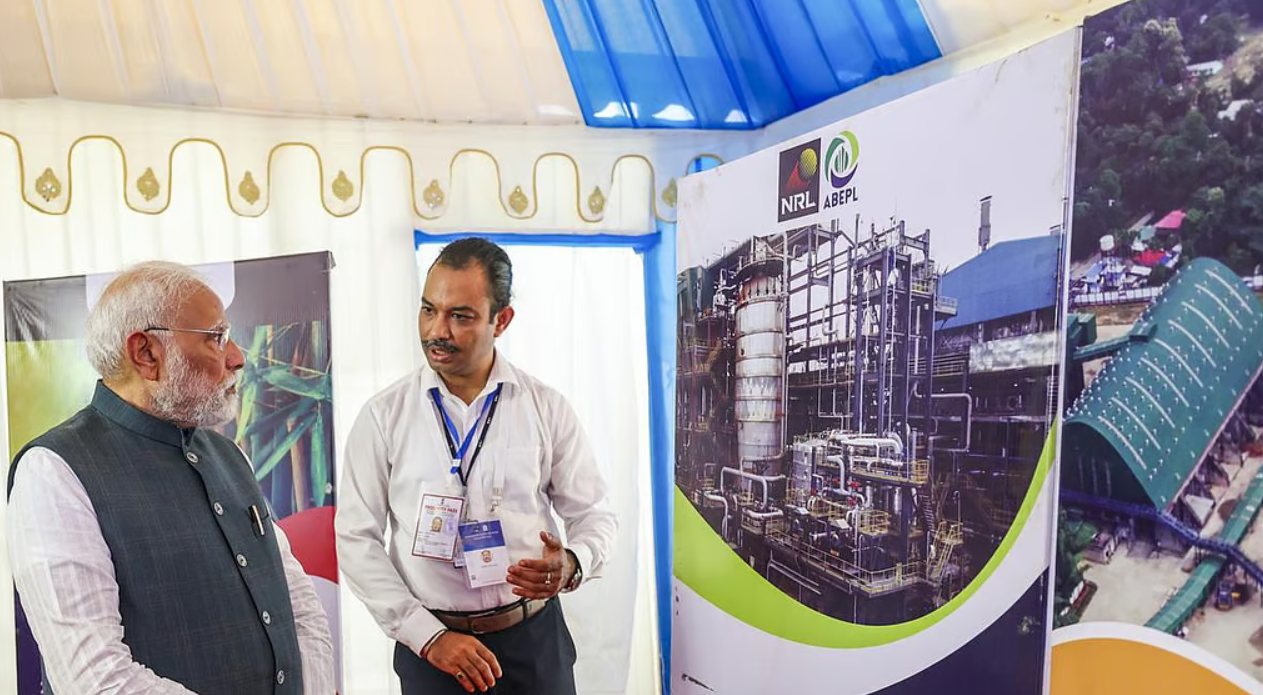
On Sunday, Prime Minister Narendra Modi inaugurated the Assam Bioethanol Plant in Golaghat district, which will produce ethanol from bamboo. He also inaugurated another polypropylene plant at Numaligarh Refinery Limited (NRL).
Polypropylene, which is a thermoplastic polymer, is used in almost all daily products such as mugs, chairs, tables, as well as in automotives, medical and agricultural equipment. In his address, PM Modi stated that this Rs 7230 crore plant will boost the ‘Make in Assam’ and ‘Make in India’ initiatives. It would also support other manufacturing industries in the region.
On the other hand, for the bioethanol plant, bamboo will be procured from other North Eastern states including Assam and Arunachal Pradesh. The Government is also set to make provisions to help farmers grow bamboo.
Until 2017, Bamboo was classified as a “tree” under the e Indian forest Act of 1927. This automatically made it illegal to cut and transport it. However many people in the North East relied on bamboo for their livelihood. In 2017, the BJP government amended the law and classified bamboo as grass and lifting the restrictions Now, the government is also making provisions for small units dedicated to bamboo chipping. Approximately Rs 200 crore earmarked for this sector.
According to the officials at the Numaligarh refinery Limited (NLR) the facility will rceeive around five lakh tonnes of green bamboo annually. From this, the state will produce around 48,700 tonnes of ethanol.
Both projects are a part of the larger plan to make India not only more self-sufficent but also to reduce our energy dependence on other countries and promote clean energy. These developments follow after India launched its ethanol blending mandate, oil companies have to suuply a blend of 20% ethanol and 80% petrol.