
By Mahi Jain
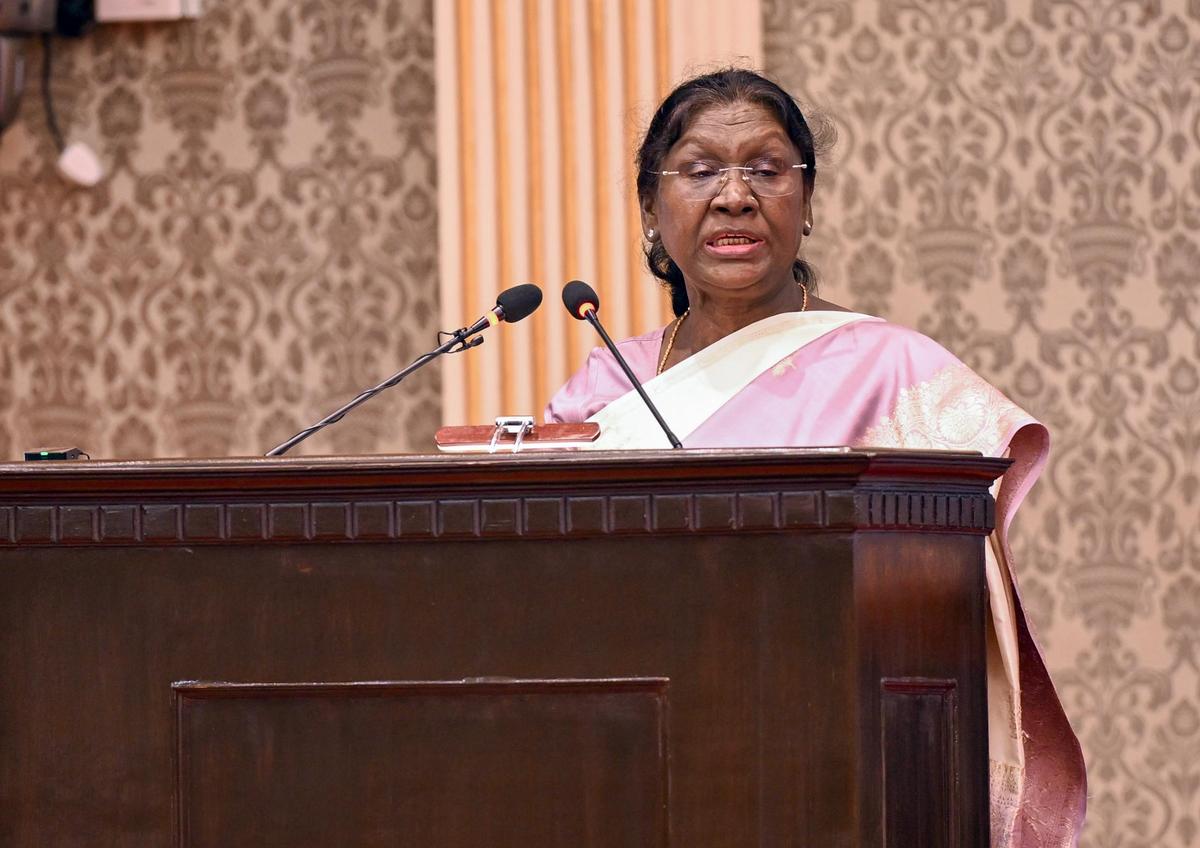
President Droupadi Murmu is all set to launch the women-centric welfare schemes initiated by the Government of Delhi. This is seen as an important move towards strengthening the social security and empowerment of women in the national capital. The schemes have been initiated under the broader idea of inclusive governance. The initiatives are designed to promote the financial, safety, and access-related requirements of women.
The newly implemented programmes have been tailored to address existing gender gaps, with a focus on providing direct benefits and support systems. According to officials, the programmes specifically target women from the financially disadvantaged group, working professionals, and young girls, with a focus on ensuring that the delivery of welfare services reaches the grassroots level. Some of the programmes include measures for financial assistance, access to services, and welfare support.
The launch also has political and social implications, as it brings into focus the growing priority given to gender-sensitive decision-making in urban governance. Involving the President in the launch also brings into focus the national-level priority given to women-centric welfare reforms, which can be interpreted as institutional support for such reforms aimed at inclusive development. Such schemes can be interpreted as part of the larger phenomenon of state governments’ priority for women’s welfare, including subsidies, safety measures, and empowerment schemes.
The rationale for these measures is that they have the potential to improve the female participation rate in the workforce and other social indicators, provided they are implemented successfully. However, it has also been emphasized by policy experts that for these measures to be successful, they must be implemented transparently and with awareness, and monitoring must be done efficiently so that the benefits reach the targeted population without administrative bottlenecks.
As the city of Delhi continues to deal with the challenges of inequality and the delivery of social welfare services, the introduction of these schemes ensures the central position of women’s empowerment in the governance agenda, supporting the argument that the development of cities must include the aspect of gender inclusivity.