
Piyush M Padwale
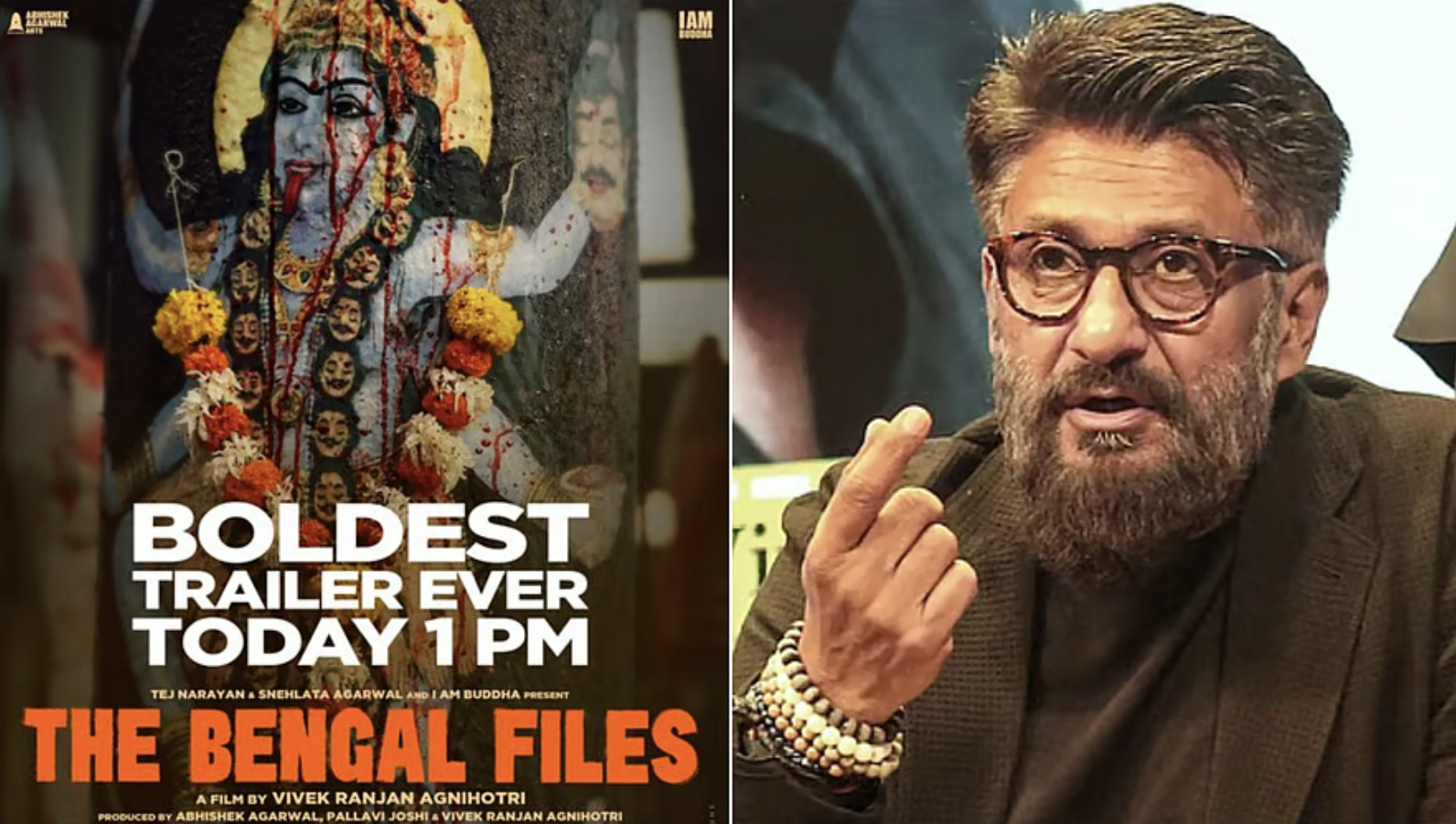
On August 16, 2025, the launch of The Bengal Files trailer was suddenly halted at ITC Royal Bengal, Kolkata. Kolkata Police claimed that director Vivek Agnihotri did not obtain the mandatory permission required under the West Bengal Cinemas (Regulation) Act, 1954 (Section 3) for any public screenings. Under this law, organizers are required to formally notify and seek police approval for public screening events, such as films or trailers shown to the public, to ensure safety, crowd control and legal compliance.
Agnihotri claimed it was blatant political interference, alleging that police entered the venue, stopped the screening midway and confiscated the laptop meant for projecting the trailer,and even cut wires to stop the event. The initial plan for a multiplex launch had been cancelled without explanation, prompting the shift to a private hotel.
Despite CBFC clearance and a Calcutta High Court stay against any ban, police maintained that procedural compliance was missing, i.e., no formal application or permission had been submitted to law enforcement prior to the public screening.
Vivek Agnihotri denounced the shutdown as “anarchy” and “dictatorship”, questioning, “Despite CBFC clearance, Kolkata Police stopped the launch. Is there freedom of expression left in Bengal?” Producer-actor Pallavi Joshi echoed his concerns, asking, “Do filmmakers still have freedom of expression in West Bengal?”
Political reactions to the incident were sharply divided. The Trinamool Congress (TMC) dismissed the claims, labelling the film a BJP project and challenging Agnihotri to make films on Godhra, Manipur, Unnao or Hathras. Meanwhile, BJP leaders, including Union Minister Sukanta Majumdar, accused Mamata Banerjee of conspiring to suppress Bengal’s history and curtail creative freedom.
The Bengal Files, scheduled for release on 5 September 2025, is the third installment in Agnihotri’s Files trilogy, following The Tashkent Files and The Kashmir Files. Starring Mithun Chakraborty, Anupam Kher, Pallavi Joshi and Darshan Kumar, it focuses on the 1946 Calcutta Killings (Direct Action Day) and Noakhali riots, presented as a “Hindu genocide”. Teasers were attached to popular releases such as War 2 and Coolie on Independence day for maximum visibility.
This incident highlights the tense space where legal procedure, artistic freedom and politics collide, leaving us questioning how safe is actually the freedom of expression when history itself becomes controversial.