
By Shivani P Menon
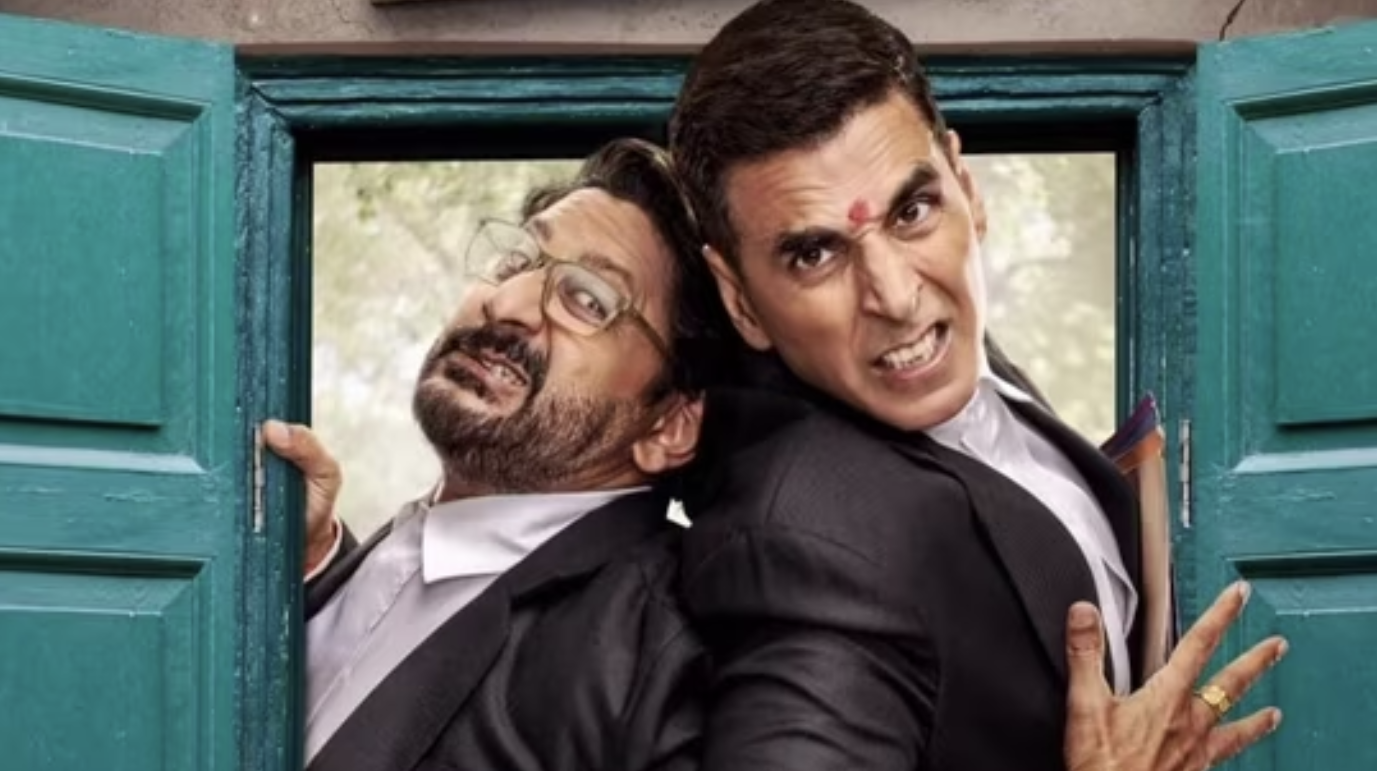
A Pune civil court issued summons to Bollywood actor Akshay Kumar, actor Arshad Warsi, and director Subhash Kapoor after a petition claimed their soon-to-be-released film Jolly LLB is an insult to the judiciary.
Following a plea by counsel Wajed Rahim Khan, who contended that the movie disrespectfully depicts the justice system, the summons was issued. The three have been ordered by the court to make an in-person appearance on October 28 at 11 a.m.
Khan said that in the teaser of the film, the legal community has been portrayed negatively. He particularly objected to a scene where judges are addressed as “mama,” a slang expression, claiming that such a depiction lowers the dignity of the judiciary. The lawyer added that mocking court proceedings in a commercial film has the potential to harm public faith in the justice system.
The controversy started in 2024 when the film’s first teaser came out. The teaser, launched last week, offered audiences the first glimpse of the confrontation between the two lead characters, both named Jolly, played by Akshay Kumar and Arshad Warsi. While the teaser generated excitement among filmgoers, it also drew criticism from sections of the legal community for its satirical portrayal of lawyers and judges.
Akshay Kumar, Arshad Warsi, and director Subhash Kapoor were summoned by Civil Court judge J. G. Pawar on August 18. However, Akshay Kumar’s name was incorrectly listed in the paper as “Arun Bhatia.” The petitioner stated that Rajiv Bhatia was the actor’s real name and asked that the error be fixed in the documents. The petitioner pointed out that the actor’s real name is Rajiv Bhatia, and said the error should be corrected in official records.
Advocate Khan, in his plea, stressed that creative liberty in cinema should not extend to ridiculing constitutional bodies. While satire and humour have a place in films, he argued, the judiciary should not be depicted in a way that undermines its seriousness or credibility.
The case is scheduled to be heard on October 28, when the actors and the director will have to present their response before the court. The outcome of the hearing is expected to set a precedent on the limits of artistic freedom while representing sensitive institutions like the judiciary.