
By Ira Deshpande
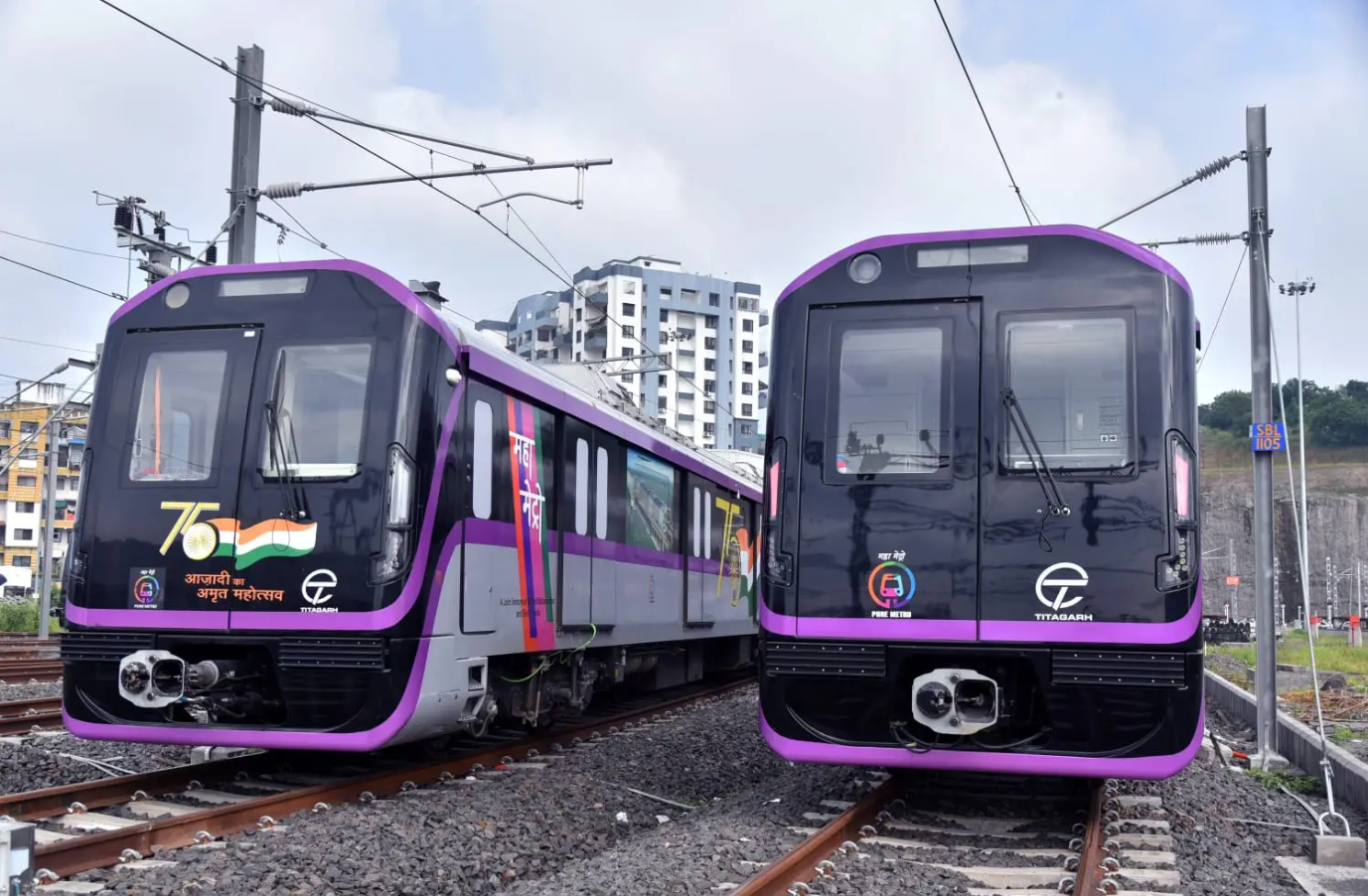
Pune Metro saw its busiest day ever on Anant Chaturdashi, September 6. On that single day, over 5.9 lakh people travelled by Metro. The record came as trains ran for 41 hours straight, starting on September 5 and ending late on the 6th.
In the three days between September 4 and 6, more than 13.2 lakh commuters used the service. Officials said the Metro earned over ₹19.44 crore in revenue in this short span. The number marked a sharp rise compared to 2024. Last year on the same festival day, the ridership was only 3.4 lakh, even though trains had operated for 24 hours.
The highest rush was at Mandai station, which alone saw more than 1.6 lakh passengers in three days. Other busy stations included PCMC and Shivajinagar, both crossing the one-lakh mark. Central hubs like Dapodi, Ramwadi, Civil Court, Vanaz, and Swargate also faced large crowds. On the other hand, outer stations such as Bhosari Phata, Khadki, MG Road, and Phugewadi reported much lower numbers.
This year’s Ganeshotsav was also the first time the underground line from District Court to Swargate was open for devotees. The link gave direct access to key immersion areas in the heart of the city. For many commuters, it meant shorter travel times and less road congestion.
Shravan Hardikar, the managing director of Maha-Metro, thanked the people of Pune for their heavy Metro usage. Additionally, he expressed gratitude to the police, station employees, and auxiliary organizations for controlling the rush. The festival demonstrated Metro’s strength as a dependable public service, he said. He urged people to incorporate Metro travel into their daily routines, describing it as effective, safe, and environmentally beneficial.
The Ganesh immersion always draws huge crowds into Pune’s central areas. Roads get clogged, and movement becomes difficult. This year, the Metro provided a clear alternative. The record ridership proved that many people are willing to shift from private vehicles to public transport when it is convenient. Officials said the achievement is an important step toward building a sustainable transport culture in the city.