
By Piyush M Padwale
Every year, Pune lives and breathes the rhythm of Ganeshotsav, and when it comes to bidding farewell to Bappa, the city transforms into one grand celebration on wheels.
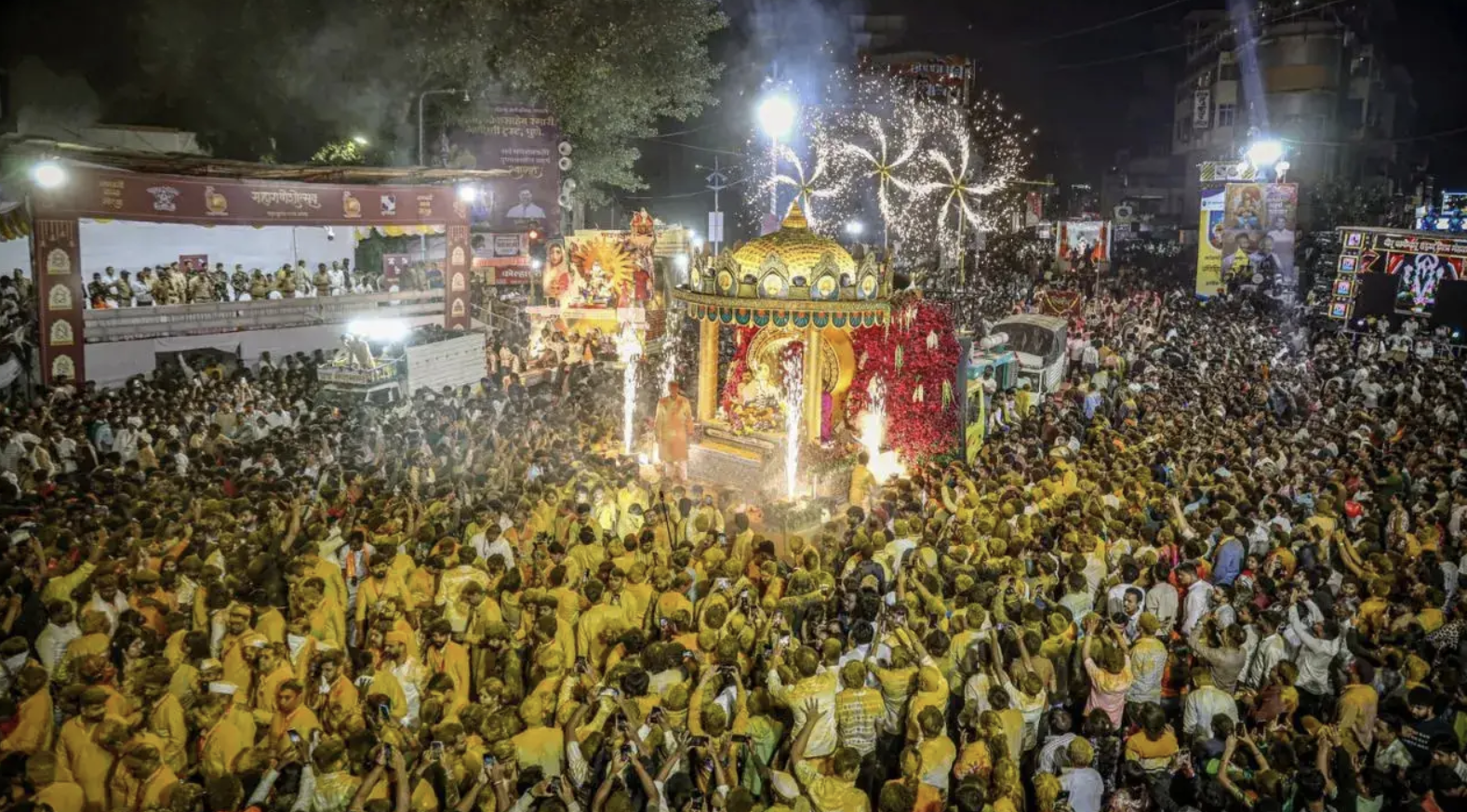
This year, however, the Ganesh Visarjan procession turned into a stampede unlike any other. The immersion began around 9:30 on Saturday morning. The four Manache Ganpatis followed the Kasba Ganpati, who is very significant to them.
The streets were full of color, music, devotion as the idols came out of their pandals. The sky was painted by gulal clouds, dhol-tasha troupes provided the beat, and cultural performances ranging from Malkhamb to dramatic retellings of mythological tales brought their own charm.
But the magnificence brought its own set of problems. Despite an early start, the procession stretched to nearly 34 hours, the longest in at least 15 years. A night-time ban on loudspeakers between midnight and 6 a.m. forced many mandals to pause in their tracks, leading to bottlenecks that carried well into the next day.
The sheer number of people and large dhol-tasha groups: some of which were in excess of the allowed number at checkpoints like Belbaug Chowk, Tilak Road, and Alka Chowk further slowed down the flow. The wait became frustrating at mandals. Time slots didn’t match up and some people got angry when the aarti with police officers were skipped as a protest.
The delays did little to dampen the spirit of devotees though, who stayed put with chants of “Ganpati Bappa Morya” echoing through the streets. The police, led by Commissioner Amitesh Kumar, maintained that their first priority was safety and order. Even though a lot of people showed up, law and order were kept up with the help of drones, metro services, and a lot of people on the ground.
Still, people called for responsibility after it was said that some dhol-tasha members and even police officers had been rude to journalists. By the time the last idol was submerged on Sunday night, devotion and exhaustion had gone hand in hand. The visarjan served as a reminder of Pune’s rich cultural heritage as well as a lesson in the pressing need for improved discipline and management.
Traditions are more radiant, after all, when the happiness they provide is not overshadowed by the time they take up.