
By Swastika Sahu
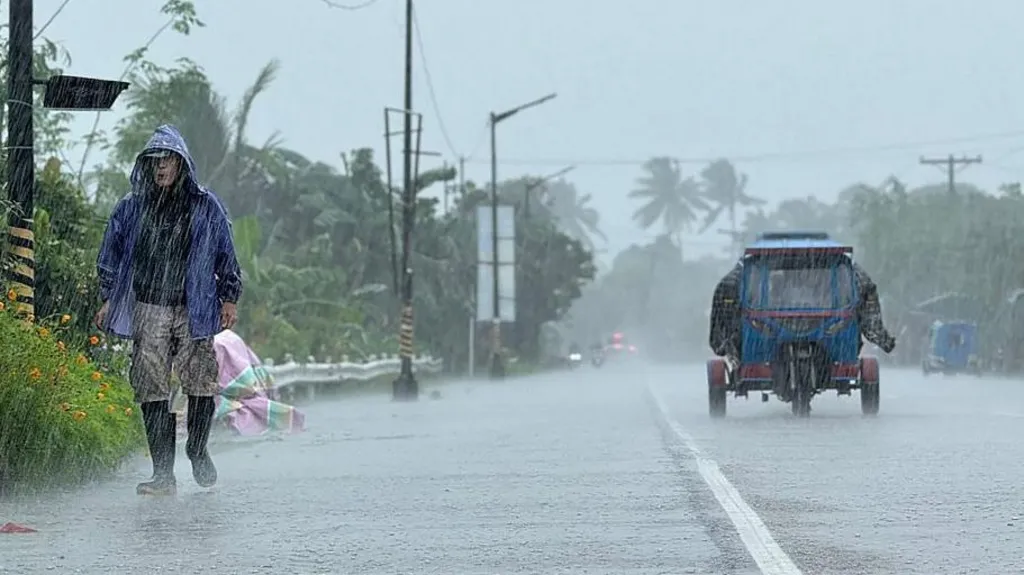
Super Typhoon Ragasa (locally known as Nando), a Category 5-equivalent typhoon and the most powerful storm worldwide this year, is currently wreaking havoc across the Northern Philippines with winds that surpass 267 kph (165 mph) and intense rainfall. The storm has forced the evacuation of numerous residents, while surrounding regions like Hong Kong, Taiwan, and mainland China remain on high alert and are preparing for its potential impacts.
This positions Ragasa as the strongest and most powerful storm globally this year, as reported by Canadian forecaster The Weather Network.
Hong Kong International Airport plans to halt all passenger flights for the upcoming 36 hours, likely impacting thousands of flights. Reports indicate that it would be the longest flight suspension ever implemented at Hong Kong’s airport, expected to start at 6pm local time on Tuesday and conclude at 6am on Thursday.
Taiwan is cancelling both flights and ferry services.
The weather agency in the Philippines has cautioned of a “significant danger of deadly storm surge” with waves surpassing three meters (10 feet). Educational institutions and government agencies, including those in the capital, Manila, have been closed . Authorities caution that Ragasa could lead to widespread flooding, landslides, and considerable damage to homes and infrastructure in the affected regions.
“Coastal and upland/mountainous regions that are exposed to winds may experience slightly stronger/enhanced local winds.” PAGASA (Philippine Atmospheric, Geophysical and Astronomical Services Administration) stated, “Winds are weaker in regions protected from the dominant wind direction.”
Despite not directly hitting the Philippines, Ragasa’s outer bands will bring heavy rainfall and damaging wind gusts exceeding 315 kph (195 mph). In northern Luzon, flooding and landslides may occur as rainfall amounts could surpass 400 mm (15 inches) in certain areas.
Massive waves reaching three meters (10 feet) or higher pose a risk of flooding coastal regions in the Philippines’ Batanes and Babuyan Islands, eastern Taiwan, and subsequently southern China and Vietnam.
Philippine President Ferdinand Marcos Jr. suspended government operations and classes on Monday in Metro Manila and 29 provinces within the Luzon region, according to the Associated Press. Hospitals in the northern region of Cagayan province were placed on alert as well. The typhoon also disrupted electricity on Calayan Island and throughout the whole northern Apayao province.
In China, authorities were planning to move 400,000 individuals from low-lying and coastal regions of Shenzhen—a megacity home to around 17.5 million inhabitants. Northward, trains will be progressively halted on Tuesday across Guangdong province, according to railway officials.
Authorities in Taiwan issued a warning for land and sea, announced the suspension of certain ferry services, and closed nature trails in southern and eastern counties in anticipation of heavy rainfall and flooding. In eastern Hualien County, roughly 300 residents were placed on alert for evacuation.
The Philippines, the primary land area in the Pacific cyclone zone, is among the most disaster-vulnerable nations. Researchers warn that the climate crisis is causing increasingly severe and erratic storms, affecting the most at-risk communities disproportionately.
Last year, Typhoon Saola resulted in a 20-hour suspension of flights at Hong Kong airport, while in 2013, Typhoon Wipha caused a 13-hour disruption in service.