
By Sunita D
The Brihan Mumbai Municipal Corporation (BMC) told the Bombay High Court on Wednesday that it intends to allow controlled feeding of pigeons for two hours each morning at the Dadar Kabutar khana, subject to conditions.
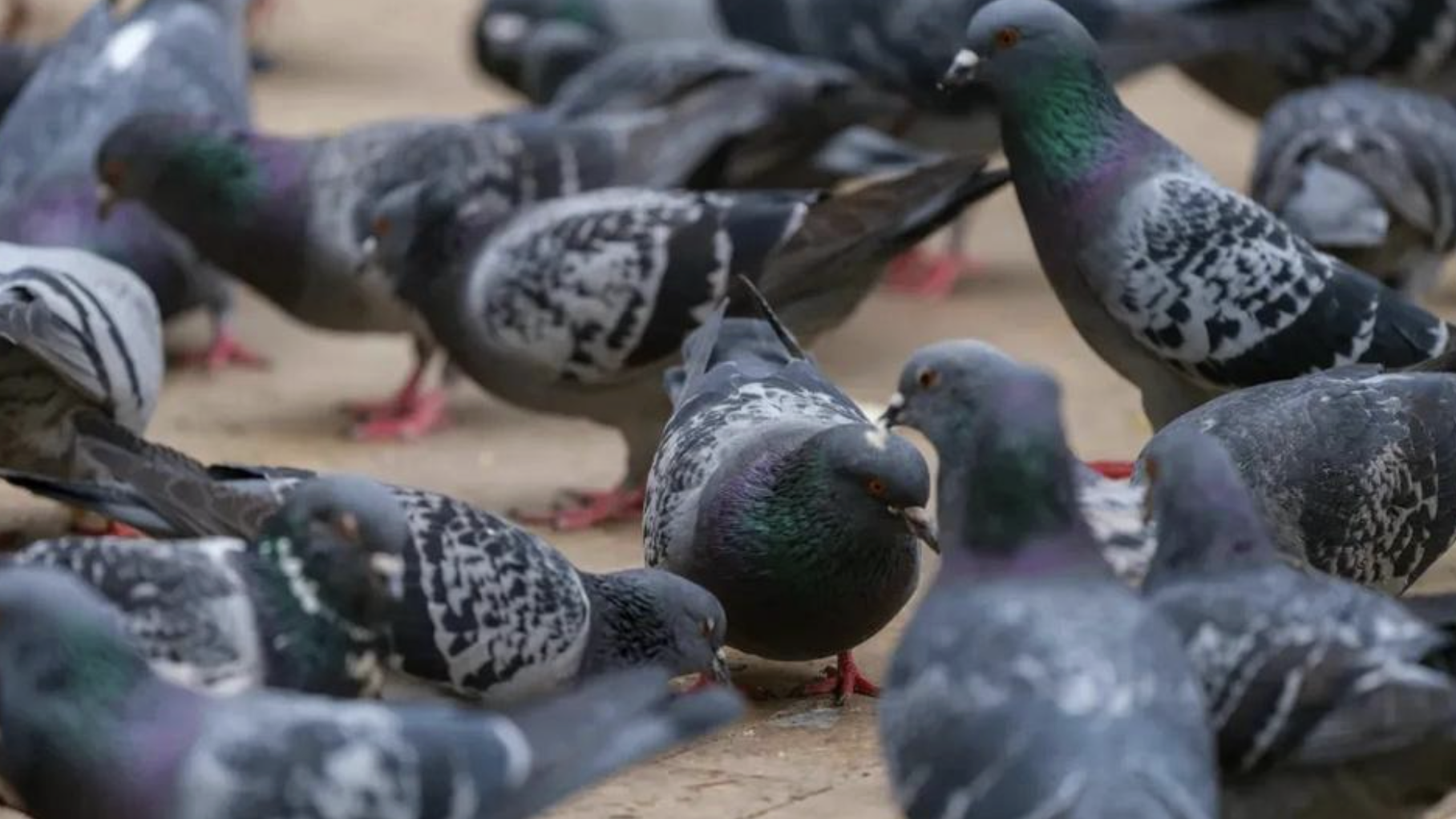
Over the past few weeks, civic authorities have clamped down on the feeding of pigeons in public places in Mumbai, following the directives issued by the state government and the Bombay High Court.
A death and a decision
The issue was first raised on July 3 by Shiv Sena leader Manisha Kayande and Ms BJP’s Chitra Wagh in the Legislative Council, wherein Ms Wagh pointed out the loss of her aunt to respiratory diseases caused by pigeon droppings and feathers. The Bombay High Court then directed the Brihanmumbai Municipal Corporation (BMC) to seal 51 Kabutarkhanas on health grounds, but many activists refused to accept that the birds posed any risk and signed a petition on July 14 to the HC asking for the demolition of pigeon-feeding areas to be stopped, and that the citizens should not be prevented from feeding the birds.
In a verdict on July 24, the court said, “There cannot be anything more vital than human health, and if any hazard is caused due to pigeons’ congregation at feeding areas, the same was a matter of grave social concern.”
On August 4, a day after the BMC reared bamboo poles tied around Kabutar khana and covered the pigeon-feeding site in Dadar, more than 1,000 people, including the animal rights activists and the Jain community members for whom the feeding of pigeons holds religious importance hit the streets of Mumbai in protest.
Jains ‘act of service’
In Jainism, feeding pigeons has been a generational tradition. “We have been doing so for generations. For Jains, feeding pigeons is an act of service,” Jayshree Shah, a Matunga resident living outside of a decades-old Matunga kabutar khana said to Scroll. in. This activity is viewed as pious, a form of jeev daya or compassion for living beings. Currently, there are 15 51 kabutariyas or kabutar khanas in Mumbai, many of which are located near Jain temples or in neighborhoods with large Gujarati populations. Feeding pigeons after visiting the temple has become a traditional part of their daily routine.
The Dadar kabutar khana too is located near a Jain temple. As per records, the Jain temple’s trustees in 1948 sought the permission of the Bombay Municipal Corporation to build a home and a water trough for the pigeons on the traffic island. In 1954, the temple was granted permission to fence the traffic island to protect the pigeons.
Health risks
The 2023 State of India’s Birds report found that the population of pigeons in India increased by 150% between 2000 and 2023.
The Bombay High Court referred to a report by the pulmonology department of KEM Hospital, citing that the increasing population of pigeons and their exposure could lead to “acute interstitial pneumonitis”, a debilitating condition. The report noted that pigeon droppings and their feathers have pathogens that trigger asthma, affect lungs and lead to lung diseases like hypersensitivity pneumonitis. (Cited in MumbaiMirror)
In the same building as Jayshree Shah, lives Bhogilal Manilal Parmar who is tired of shooing away the pigeons swarming around his building. The doctor said that Parmar and his daughter’s breathing problem is due to the pigeon droppings all around their home.
“We moved into this building six years ago,” Parmar said. “Our breathing problems began after that.” (Quoted from Scroll.in)
He had plans to relocate, but the court order has given him pause. “We are hopeful that the kabutar khana will remain shut and we won’t have to move,” Parmar told to Scroll.in.