
By Kritika Gangwar
NASA is planning to launch a ten-day crewed mission around the Moon; this will be the first such mission in 50 years and will come into action by February 2026. The flight marks a huge step toward long-term lunar exploration.
Once slated for launch before April 2026, the mission has been pushed forward, underscoring NASA’s confidence in its hardware and its steps trying to remain at the forefront. There are four astronauts chosen for the journey beyond Earth’s orbit, evaluating the spacecraft’s systems, procedures and safety features. Through this mission, we will get an idea and data for future landings on the Moon which will ensure the success of future projects.
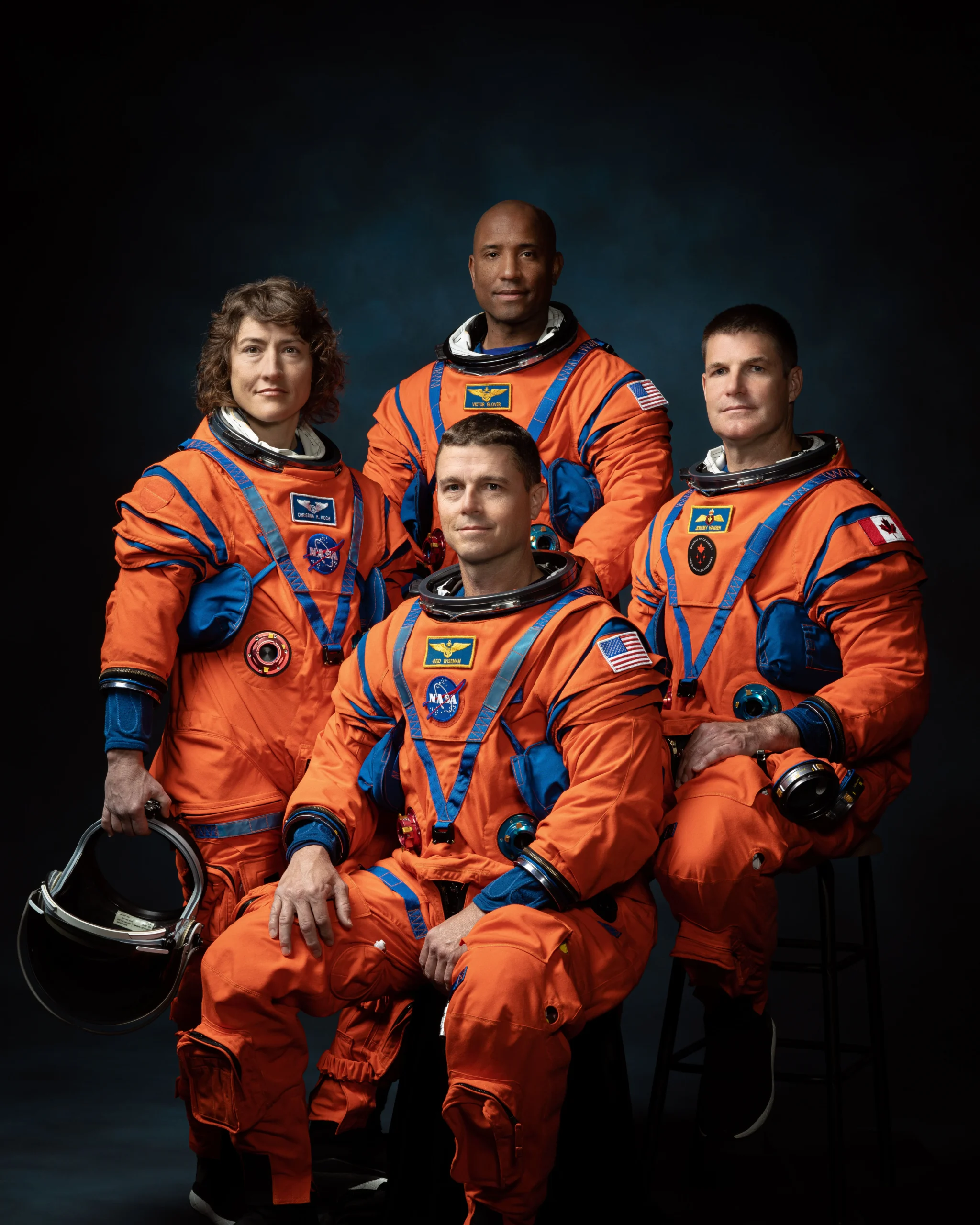
The four astronauts for the mission will be Reid Wiseman, Victor Glover, Jeremy Hansen and Christina Koch. These astronauts are to become the first human beings to travel beyond low Earth orbit since Apollo 17; they will make a round of the Moon without landing.
“We together have a front-row seat to history. Safety is our top priority, but this mission is a major milestone in human space exploration,” said the acting deputy associate administrator of NASA, Lakiesha Hawkins.
NASA’s Space Launch System (SLS) will be launching the Orion spacecraft and the crew. The final tests are underway, and it’s almost ready. After liftoff, the boosters and the core stage will detach themselves from the rocket so that the Orion will deploy its solar arrays.
The ICPS will raise Orion’s orbit, and it will do a system check of 25 hours after the launch. Once verified, Orion will separate and rehearse docking. It will start its engine for a Translunar injection after 23 hours and begin a four-day, 230,000 mile journey to the Moon.
Artemis II will test spacecraft systems as well as enable the research on the effects of long spaceflight on the human body. NASA will study the blood tissues from the astronauts and explore the impacts of microgravity and radiation. After the journey, Orion will return to Earth, the service module will separate, and it will splash in the Pacific Ocean.
This mission will lead to Artemis III, NASA’s moon landing by 2027. This will send astronauts farther than ever before, past 5,000 nautical miles from the Moon.