
By Seekriti Saha
Parisar, a Pune-based non-governmental and civil society organisation which was formed in 1981 stated in its Cycle Track Audit Report that 11 per cent of the cycle tracks are in good condition, 61 per cent are rated to be in poor condition, and the remaining 28 per cent fall under the bad or very bad conditions. The assessment was done from September to October across thirty-five kilometres, constituting 19 roads, showing faultlines in safety, continuity and comfort.
The city-based NGO Parisar is focused on Sustainable urban transport, air quality, heritage conservation, urban biodiversity and policy advocacy. Although the PMC covers 83 kilometres of cycle tracks, only 35km could be traced under the informatory audit by Parisar.
The Pune Municipal Corporation’s General Body on 14th December 2017 approved the Comprehensive Bicycle Plan of Pune, which was planned under the support of the Ministry of Housing and Urban Affairs. The plan included a proposal for a stretch of city-covering cycle network, endorsement for Public Bicycle Shares systems, cycle promotional activity, and participatory review of plan implementation.
The then Municipal Commissioner of Pune and current Secretary Member of Marathwada Statutory Development Authority under Maharashtra Government, Shri Kunal Kumar on 2017’s December said, “ We are closer to implementing PMC’s vision for sustainable mobility in Pune and a healthy environment. Pune can be a city where cycling is safe, attractive, comfortable and a travel mode of choice for children, women, seniors, daily wage workers as well as professionals.”
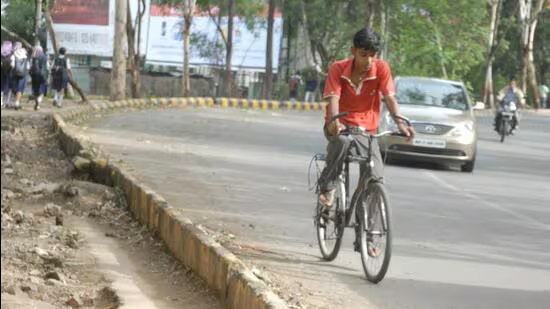
The major concerns with these tracks were that most of them ended abruptly or were obstructed by debris poles or unplanned kerbs. Some routes had more than 10 barriers per 500 metres. Bibvewadi Road had 420 metres of non-existing track. The others showed long gaps. Junctions became the key failure points due to the presence of incomplete ramps and sudden level change becoming a cause of danger.Most tracks were floored with broken tiles, worn-out asphalt and uneven surfaces or strewn with garbage. The roads of Sinhagad Road, Spicer College Road, and Sangamwadi Road were cracked partially, where cyclists were forced to slow down or dismount. The Hawkers, two-wheelers, garbage bins, auto garages, eateries, and construction debris regularly occupied the cycle lanes.