
By Srija Kumar
The Cambodia and Thailand border has again turned into a war zone, with territorial tensions taking shape into a very serious confrontation between the two countries.
This has been based on disputed stretches of the frontier and is a decades-old disagreement over borders.
The countries are accusing each other over who is responsible for triggering the escalation this time. Civilians have been forced to evacuate from frontline villages.
Borders are tightening yet again, and this time the focus has squarely landed on Thai Prime Minister Anutin Charnvirakul. He has failed to offer even a hint of softening; even after fresh clashes broke out on Monday, he dismissed any suggestion of talks, insisting the fighting would stop only when Thailand’s conditions were accepted.
Malaysian Prime Minister Anwar Ibrahim’s mediation attempt sent another wave of unease through a region already stretched thin.
With an election coming next year, projecting strength seems to be resonating with nationalist voters.
Observers believe Anutin’s tough rhetoric has as much to do with political calculations as with national security.
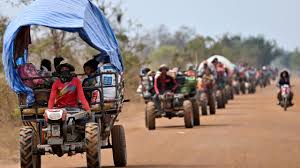
The suffering on the ground is impossible to ignore, as at least 15 Thai soldiers and Cambodian civilians have already been killed. More than half a million people have fled to escape the fear of fighter jets, tanks and drones shaking communities along the frontier. Schools, pagodas, and even the sides of quiet roads have turned into makeshift shelters for families who escaped with whatever they could grab at a moment’s notice.
Seut Soeung, a 30-year-old Cambodian villager resting beside a dusty road, complained how nothing was safe. Local police officers have said that even temples, usually the last place people abandon, are emptying out after low-flying Thai jets were spotted overhead.
The border has always been a disturbed zone, shaped by old colonial boundaries and disputes over ancient temples. However, this flare-up feels different, harder to predict and more frightening than the clashes of the past.
Both countries are awaiting mediation from the United Nations, however a peaceful resolution still feels delicate and uncertain. The hope remains simple: that leaders on both sides choose restraint before even more lives are shattered and humanitarian needs keep growing.