
By Nityanjali Bulsu
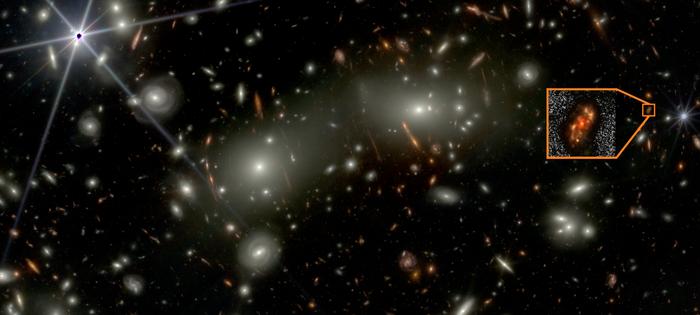
A spiral galaxy, named Alaknanda, was recently identified by astronomers based in Pune on Tuesday. It is identified that the galaxy was formed or probably existed when the universe was about 1.5 billion years old, roughly 10 percent of how old it is in the current times. The finding has challenged the previous ideas about the origin of galaxies.
The galaxy has been named Alaknanda, after the Himalayan river, as told by Professor Yogesh Wadadekar while talking about the discovery.
According to the researchers, the galaxies that were formed so early were often unstable, badly structured, while also being chaotic. But the Alaknanda galaxy is well formed, has a perfectly defined and clear spiral structure, and appears to be stable with long spiral arms that stretch to approximately 30,000 light-years.
Rashi Jain, the PhD student who led the research, said the team was genuinely surprised. They hadn’t expected to find such an organised and mature-looking galaxy from such an early stage in the universe’s history.
It is very unexpected, when it comes to finding such a clear and well formed spiral. Especially in this early epoch. This discovery has given the space world a lot of insights about the sophisticated structures, and the time they were built in the universe, according to Rashi Jain.
The observations and the results of this research have been published in Astronomy and Astrophysics, which is a European journal for research.
The name, Alaknanda, is said to symbolically make the galaxy appear as a distant sister to our own Milky Way galaxy, which is called Mandakini, the name of a river in Hindi.
It is named such to make it sound like the distant sibling of the Milky Way galaxy, which is called Mandakini in Hindi.
The discovery of the galaxy was done with the help of NASA’s James Webb Space Telescope, which is known to be the most advanced telescope when it comes to space findings. The telescope was launched in 2021 and has been responsible for the detection of many of the oldest galaxies known.