
By Shivli Singh
Political and social tensions in Bangladesh rose on Tuesday after another Hindu man was lynched, and the interim government, led by Muhammad Yunus, has attracted sharper scrutiny over concerns about the safety of minority groups as the country heads toward its general elections.
The killing was condemned severely by rights groups and opposition officials who said that the provisional government had violated law and order. The government stated it had taken steps to taper off the bloodshed, and that it would aggressively carry out crackdowns on the assailants, urging people to keep order in the days to come.
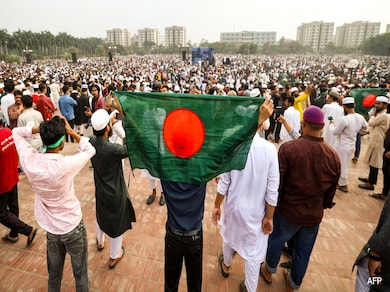
But the episode arrives after the return of Tarique Rahman, the head of the Bangladesh Nationalist Party (BNP) following a 17 year long self-imposed exile, at a politically fragile moment. A newly appointed party member with big political stakes, Rahman takes a key role in BNP and is a candidate for the upcoming elections.
Communal violence and political mobilization have been a powerful double action in terms of pressure on the interim government. While Yunus has repeatedly avowed the administration’s dedication to justice and democratic transition, detractors argue that periodic targets of minorities would undermine popular support for the government’s capacity to provide stability in the regime’s transition.
Rahman’s promises of safety, accountability and reform are intended to tap into public anger, because the BNP, in one stroke, feeds into such anger if his party returns to power. And his reinvigorated active politics have animated the party’s base, and changed the tenor of the pre-elector’s campaigns. Minority communities and civil society organizations have been sounding the alarm for oversight and investigation of the lynching and for a more proactive response and expressed fear that delays could exacerbate division within communities.
International voices now oversee human rights and election preparations on a global scale, And with elections looming, the government of Bangladesh’s Yunus will also have to negotiate the two demands to restore order to public life and establish a proper democratic framework that allows governance to evolve into a legitimate form of democracy, even as political confrontation builds.