
By Tanisha Mohanty
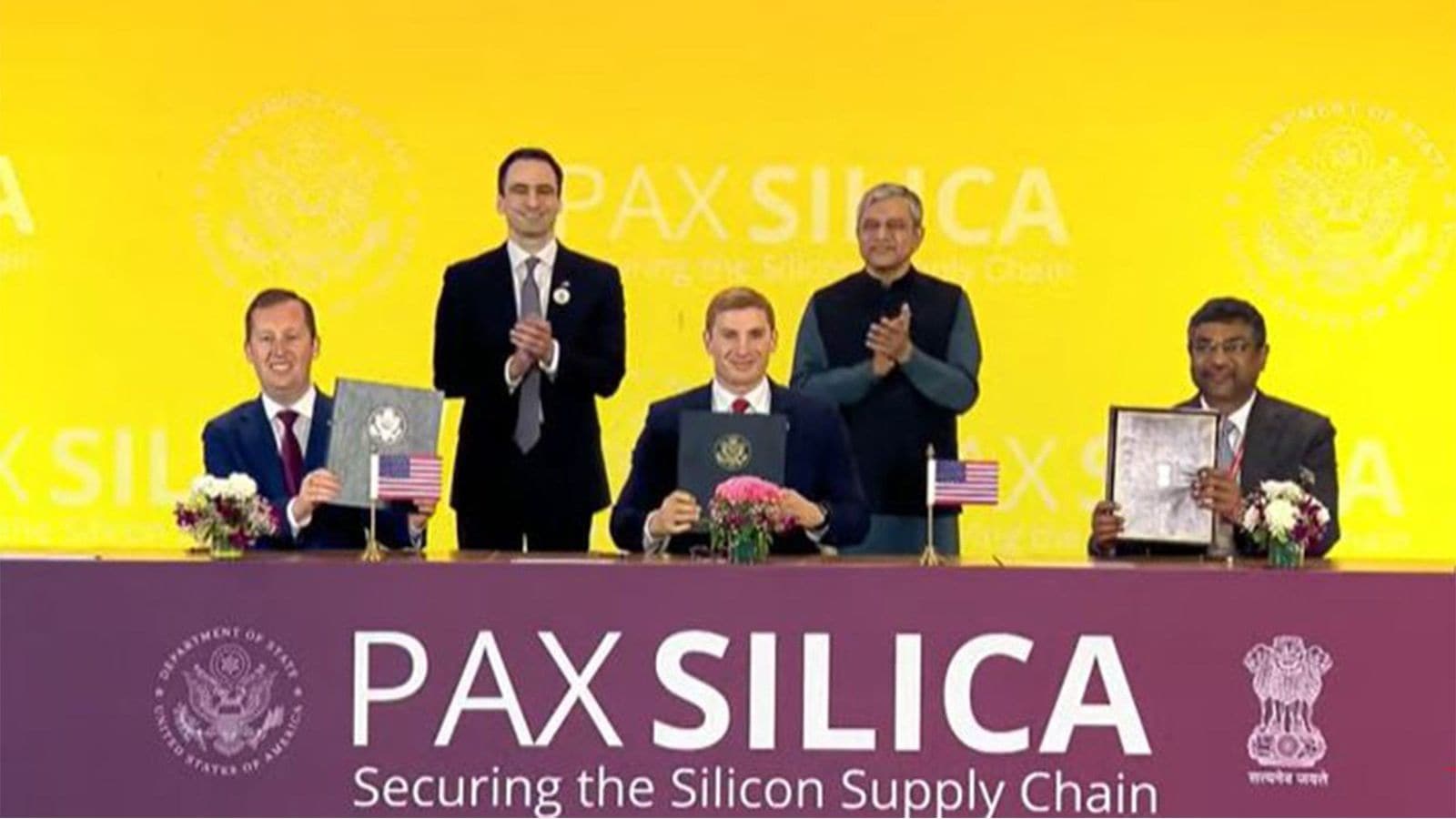
India signed the US-led Pax Silica agreement on Friday in New Delhi. The agreement, which took place at the AI Impact Summit, focuses on fostering a trusted supply chain for Artificial Intelligence (AI) and rare minerals. The deal comes after a strenuous relationship between the two countries owing to the tariff imposition by President Trump.
The declaration seeks to utilise India’s mineral reserves and skilled labour amidst growing AI technologies. The US Ambassador to India, Sergio Gor, said India’s role is “strategic” and “essential”. “India is a nation with deep talent, deep enough to rival challengers. India’s engineering depth offers critical capabilities for this vital coalition. India has made important strides in critical minerals processing capacity, and India and the US are engaged,” Gor further stated.
Initially launched in December last year, it entails trustworthy technological systems, data centers, and foundational models, and also includes “countries of concern” from gaining undue knowledge and access to crucial technologies.
The alliance will help gain partnerships and investment opportunities for India, especially with the underdeveloped AI industry. Union Minister Ashwini Vaishnaw also stated India’s semiconductor and electronics industry will highly benefit from this deal.
The pact aims to reduce dependence on non-member nations and create a secure technological chain. The US Department notes “artificial intelligence represents a transformative force” and will lead to unified economic prosperity owing to a trustworthy system for all participating countries.
Other member nations of Pax Silica include Australia, Japan, Israel, South Korea, Greece, Qatar, Singapore, United Kingdom and the United Arab Emirates. All these countries play a significant role in the semiconductor and mineral reserve supply chains.
In addition to encouraging interdependence between members, Pax Silica aims to overtake China, which currently dominates over 60% of the mineral processing and chip manufacturing industry. While the partnership opens up new opportunities for India in terms of mineral reserves and expansion of the semiconductor industry, it could collide with New Delhi’s domestic development.