
By Mayank Kumar
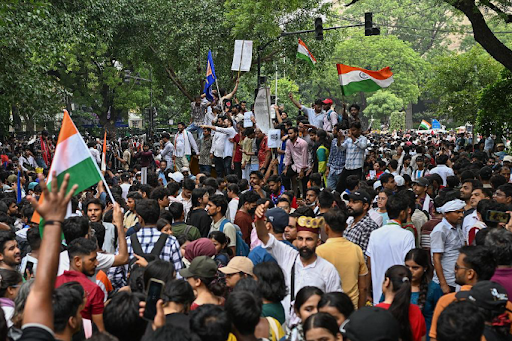
When Sonam Wangchuk finally broke his hunger strike, there was relief. Supporters applauded, students embraced each other, and for a moment, the atmosphere at Delhi’s Jantar Mantar felt lighter.
But for the young people who have spent weeks sleeping on protest grounds, organising volunteers, speaking to anxious students, and negotiating with authorities, the end of the fast was never meant to be the end of the movement.
“If anything, this is where the real work begins,” says Abhijeet Dipke, one of the key voices behind the Cockroach Janta Party (CJP), the student-led movement that has become the face of demands for greater transparency in India’s examination and recruitment systems.
“The hunger strike gave people hope and visibility,” Dipke says. “Now our responsibility is to ensure that this energy is converted into long-term change.”
That, he believes, will not happen through a single protest.
For months, students across the country have expressed frustration over repeated examination controversies, recruitment delays, and uncertainty about their futures. While every examination has its own story, Dipke says the emotion connecting them all is remarkably similar.
“There is a feeling that young people are constantly expected to prove themselves while the system is rarely held accountable. Students don’t just lose an exam when something goes wrong — they lose years of preparation, confidence and opportunities.”
Instead of limiting the campaign to demonstrations in Delhi, the organisation is now preparing for what it calls the “next phase” of the movement — taking conversations back to campuses, building student networks across states, and creating a sustained platform where aspirants can raise issues without waiting for another crisis to erupt.
“We don’t want to become a movement that only appears when something goes wrong,” Dipke says. “We want to become a movement that constantly pushes for better systems.”
That future, according to the organisers, looks less like protest sites and more like public discussions, policy engagement, and student mobilisation.
Volunteers are already discussing regional meetings, awareness campaigns, and collaborations with educators, legal experts, and civil society organisations. The idea is to shift from reacting to individual incidents to addressing larger structural concerns surrounding examinations, recruitment, and youth employment.
“We’ve realised something during these weeks,” Dipke reflects. “Students from different states may speak different languages, but their worries are exactly the same. Whether someone is preparing for NEET, UPSC, SSC, or any other competitive examination, everyone wants one thing — a fair chance.”
The movement has also evolved in another unexpected way.
Initially driven by examination-related concerns, it has gradually become a space where young people openly discuss mental health, financial stress, and the emotional cost of uncertainty. Parents visit protest sites not only to support their children but also to share stories of years spent preparing for examinations whose outcomes often remain unpredictable.
“It’s heartbreaking when parents tell us they have exhausted their savings, or when students say they feel guilty for becoming a financial burden,” Dipke says. “These conversations remind us that this movement is about people before it is about policies.”
For many volunteers, the past few weeks have changed them personally as well.
Students who had never spoken into a microphone now address crowds. Young organisers who had never coordinated public events now manage hundreds of volunteers. Friendships have been built over shared meals, sleepless nights, and endless discussions about what India’s education system could become.
“Movements teach you things classrooms cannot,” Dipke says with a smile. “They teach responsibility, empathy and patience.”
Asked whether he worries that public attention will fade now that Wangchuk has ended his fast, Dipke pauses before answering.
“Public attention always shifts. That’s natural. What matters is whether the people inside the movement continue working after the cameras leave.”
For him, success is not measured by trending hashtags or headline coverage.
It is measured by whether the next generation of students feels more secure than the last.
The organisation plans to continue meeting policymakers while also strengthening its grassroots network. Organisers insist they are willing to engage in dialogue, but they also say they will not hesitate to return to peaceful demonstrations if meaningful progress stalls.
“We are not interested in confrontation for its own sake,” Dipke says. “We are interested in solutions. If conversations move forward, we’ll participate. If they don’t, democratic protest will always remain an option.”
As evening falls over Jantar Mantar, many of the banners remain where they have been for weeks. Some volunteers are packing supplies, while others sit in circles planning their next meetings.
The hunger strike may have ended, but the conversations it sparked are only beginning.
For the students who have found both purpose and community through this movement, the next chapter is no longer about one protest or one individual. It is about building a platform that outlives both.
“Our goal,” Dipke says, “is simple. We don’t want future students to fight the same battles we did.”
And that, they hope, is where this movement will leave its biggest mark.