
By Pragati Saha
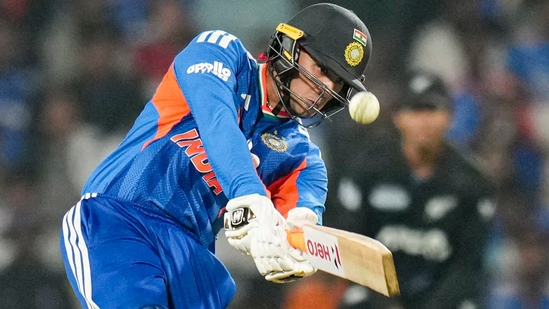
Abhishek Sharma scored 84 runs off 35 balls in a match against the Kiwis in Nagpur; this was what attracted the hype, but the interesting thing is in his career stats. It was during this innings that the left-hand batsman reached the 5000-run milestone in men’s T20 cricket.
He achieved this in only 2898 balls, which set a new record by breaking the previous record of Andre Russell, who did it in 2942 balls. Tim David (3127), Will Jacks (3196), and Glenn Maxwell (3239) are in the top five for this category, highlighting how uncommon it is for a player to maintain such a rapid pace over several decades.
A conversion of Abhishek’s performance into a simple rate of run per ball makes the scale easier to judge. 5000 runs from 2898 balls converts into a strike rate of about 172. This is just what separated good performances on an inning effort; this was clearly not something that was maintained on a daily basis. A strike rate of 170 was what Russel was capable of when he had 5000 from 2942, and the strike rate of the top five was below 160.
The timing of when the record took place also matters, as it happened on the verge of an international event (T20 World Cup), which also impacts the planning of the opponents. Abhishek’s record usually comes with a powerful opening; he aims to win the power play and not just survive it. This puts the captain of the opposing team in a defensive position and makes different decisions for the bowlers, which results in a deviation from what the team wanted in the initial overs.
Regarding India’s T20 strategy, this adds fuel to an emerging question in team selection: whether to include an opener who hits at a rate which is similar to that of a finisher or not. By getting a steady start in the opening partnership, the team can manage the jobs in the end to get it done easier in the upcoming World Cup, where a difference in result often depends on the next two deliveries in that matter.