
By Kashifa Wisal
At least 19 people have died and dozens more injured in Nepal following mass protests led by Generation Z against a controversial social media ban and growing political corruption.
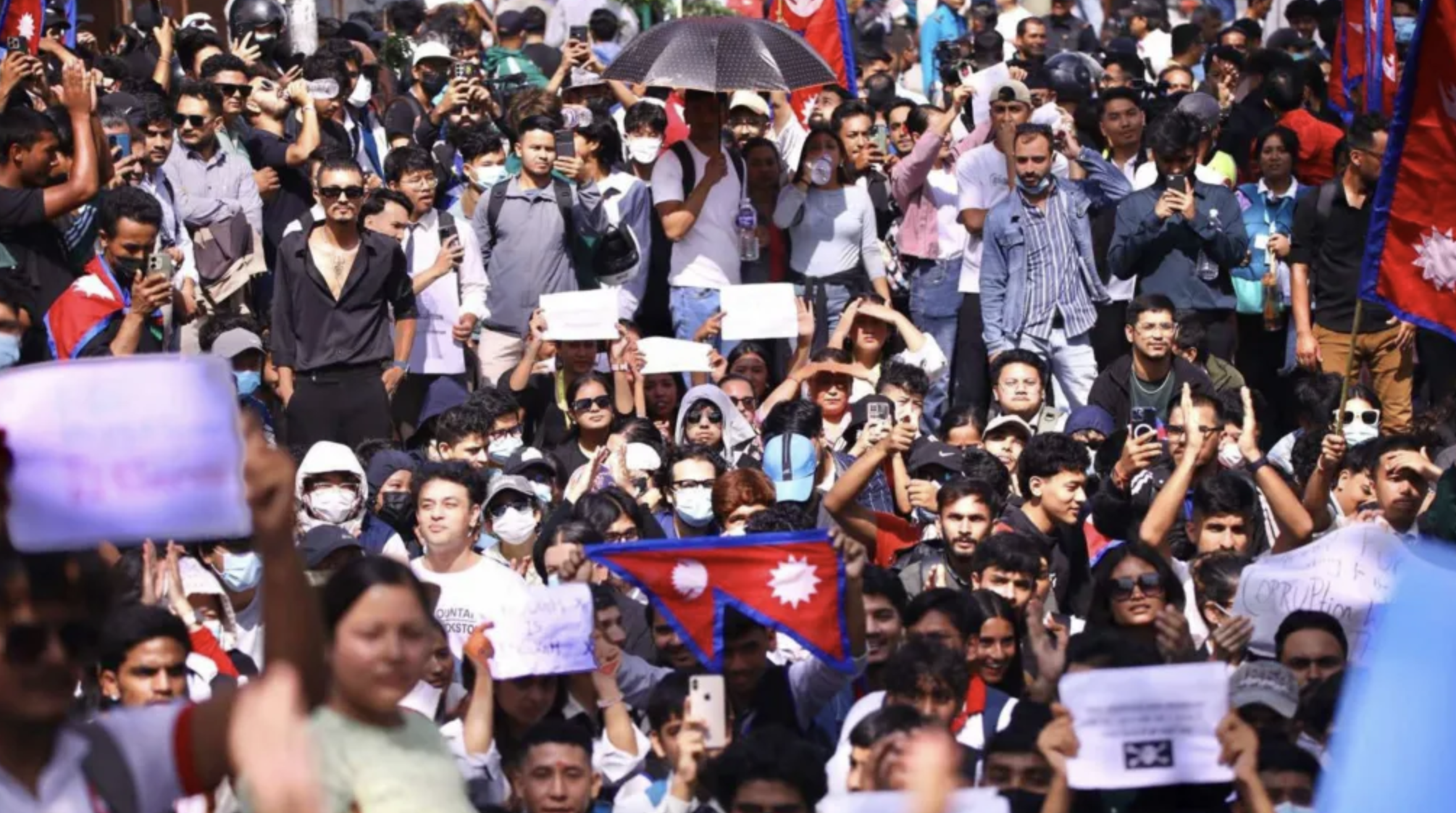
Thousands of young protesters gathered near the parliament building in Kathmandu after the government blocked access to major social media platforms, including Facebook, YouTube, X (Twitter), and TikTok. Authorities said the platforms were blocked for not registering with Nepal’s Ministry of Communication, and to control fake news and online fraud. But protesters say the ban was meant to silence public voices.
Police used water cannons, batons, tear gas, and rubber bullets to stop protesters who entered restricted zones. Most deaths occurred in Kathmandu, while at least two people died in the eastern city of Itahari after a curfew was announced. A hospital official reported tear gas even entered the hospital premises, affecting doctors treating the wounded.
The protests have now grown beyond the issue of social media access. Many young people are angry over what they say is unfair treatment by the government and deep-rooted corruption. A growing number of them have pointed out how children of politicians, called “nepo kids” enjoy special privileges, including education abroad and luxury lifestyles, while ordinary families struggle with poverty and unemployment.
One protester said, “We are not just here because of social media. We are here because we are tired of corruption. We want our country back.”
Placards at the protest had messages like “enough is enough” and “end to corruption.” Hashtags such as #NepoKids and #PoliticiansNepoBabyNepal have trended online as youth voiced their frustration with political families and lack of opportunity.
Youth unemployment in Nepal is around 19.2%. Many young Nepalis have left the country for work. Some have even been recruited to fight as mercenaries in the ongoing Russia-Ukraine war. A widely shared protest placard read, “The leaders’ children return from abroad with Gucci bags, the people’s children in coffins.”
Following the violence, a curfew was imposed near government buildings. The Nepal Army has also been deployed in parts of Kathmandu to maintain order.
The government insists it is not banning social media, only asking platforms to follow local laws. But protesters say this is just another step towards limiting freedom.
The protests are being seen by many as a turning point, with Nepal’s youth standing up against inequality and demanding change.