
By Shivani P Menon
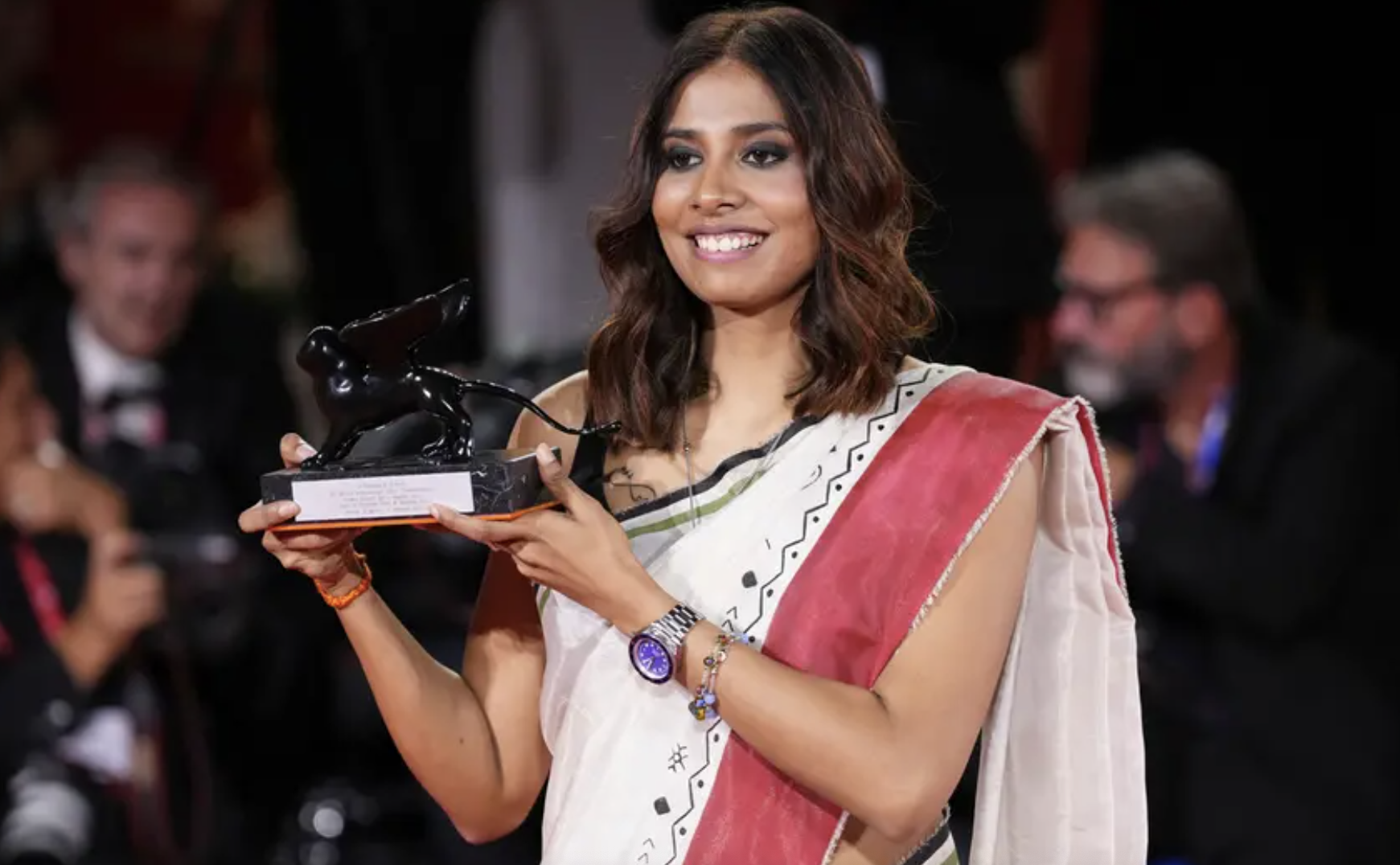
The curtain came down on the 82nd Venice Film Festival, one of the world’s most renowned showcases of cinema, with a glittering awards night on Saturday. In a historic moment for Indian cinema, director Anuparna Roy earned the Best Director award in the Orizzonti section for her debut film Songs of Forgotten Trees, becoming the first Indian filmmaker to achieve this distinction.
The award was presented by French director and jury head Julia Ducournau. Roy, draped in a white saree, called the moment “surreal” as she accepted the honour. She extended heartfelt thanks to her cast and crew, particularly Naaz Shaikhand Sumi Baghel, for bringing her vision to life, and expressed deep gratitude to Anurag Kashyap for backing the film despite its unconventional narrative.
Roy dedicated the recognition to her hometown and her country, thanking Celluloid Films for its faith in the project. She praised her cinematographer and singled out 80-year-old gaffer Debjit Banerjee, acknowledging the entire team as “incredible.”
The festival’s Golden Lion for Best Film went to the American indie Father Mother Sister Brother, which edged out The Voice of Hind Rajab—a powerful Gaza-war drama that received a 22-minute standing ovation but fell short of the top prize.
On stage, Roy also used her moment to speak about Palestine, urging attention to the suffering of its children. She asserted that peace, dignity, and freedom are rights every child deserves, and emphasised that Palestine should be no exception. Even if her words unsettled her homeland, she said, it was something she felt compelled to express.
Her winning film, Songs of Forgotten Trees—the only Indian title in this year’s Orizzonti lineup—follows the intertwined lives of two women in Mumbai. Produced by Bibhanshu Rai, Romil Modi, and Ranjan Singh, the film has been acclaimed for its layered storytelling and Roy’s assured directorial vision.
Reflecting on the award, Roy described the film as a tribute to women who have been silenced, overlooked, or underestimated. She dedicated the win to women everywhere and voiced hope that it would empower more women in cinema and beyond to share their stories. The prize was handed to her by Anurag Kashyap, who hailed the achievement as a milestone for women’s representation in global cinema.
The festival’s conclusion highlighted both established masters and fresh voices, celebrating diverse narratives and excellence in filmmaking. Roy’s landmark victory marks a turning point for Indian filmmakers on the international stage and reflects a broader cultural shift toward embracing new perspectives in world cinema.