
By Lakshmi J
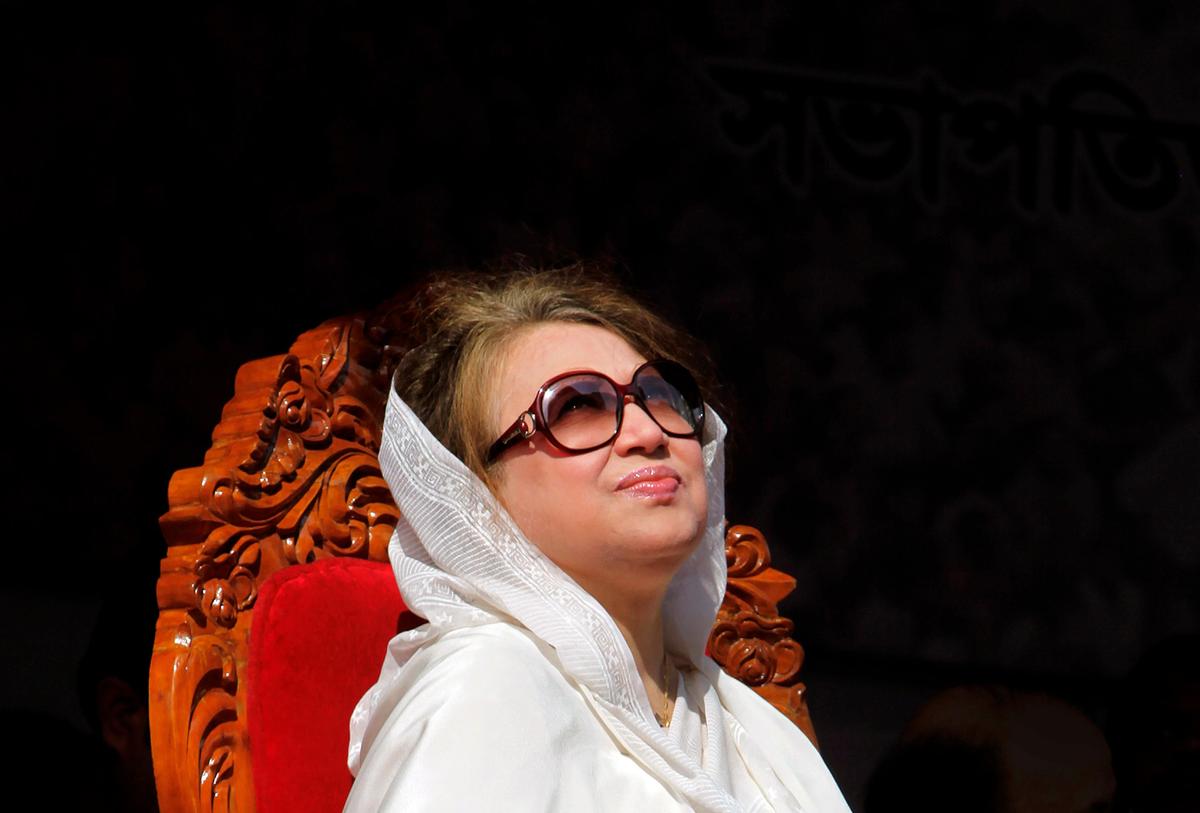
The whole nation of Bangladesh is in mourning today following the passing of Begum Khaleda Zia, who was the first female Prime Minister and a key figure in the country’s political landscape. Khaleda Dia died yesterday from multiple health issues at a private hospital in Dhaka, the capital. She had only reached the age of 80.
The Bangladesh Nationalist Party (BNP), which Zia has headed for numerous years, has confirmed that she is truly gone.
“The country has lost a leader who was crucial to the democratic movement in Bangladesh,” it stated, emphasizing that her death represents an “irreplaceable loss for the nation’s political scene.”
Zia has been receiving treatments for various age-related health issues lately, and her health has been worsening in recent weeks. Party officials stated that Zia was with her family when she passed away.
Khaleda Zia, born in 1945, gained prominence following the murder of her spouse, former president Ziaur Rahman, in 1981.
As the decade drew to a close, history welcomed a name that would be immortalized when she became Bangladesh’s inaugural female prime minister in 1991.
“She was a symbol of resistance and political resilience,” said a high-ranking politician from the BNP when asked for comment outside the hospital. “To her supporters, she was a symbol of bravery in some of our most turbulent times.”
Khaleda Zia later went on to complete two terms as the Prime Minister of the nation while navigating the very competitive political atmosphere that was marked by her rivalry with Sheikh Hasina. This rivalry between the two leaders dominated the politics of Bangladesh for over three decades.
Reports of her death elicited widespread grief in Dhaka, with party followers converging at hospitals and at party offices of the BNP, with people carrying portraits of the former leader and saying their prayers. The government declared a state of mourning, with flags flown at half-mast and suspension of all state programs.
Tributes came in from across the political divide. Writing on behalf of interim representatives of his government, a foreign leader described Zia as “a pivotal figure in Bangladesh’s democratization experience,” but this is not necessarily an endorsement.
Though she loomed large in politics, Zia’s latter days were characterized by an involvement in the law courts and poor health, which ensured she stayed rather inaccessible to the public. It has been always insisted by her supporters that the charges leveled against Zia were political, which has been denied by her opponents.
Bangladesh loses not only a former Prime Minister with the death of Khaleda Zia but one of the last giants of its post-independence political generation as well.