
Amit Jena
Teaching Assistant, Symbiosis Institute of Media and Communication
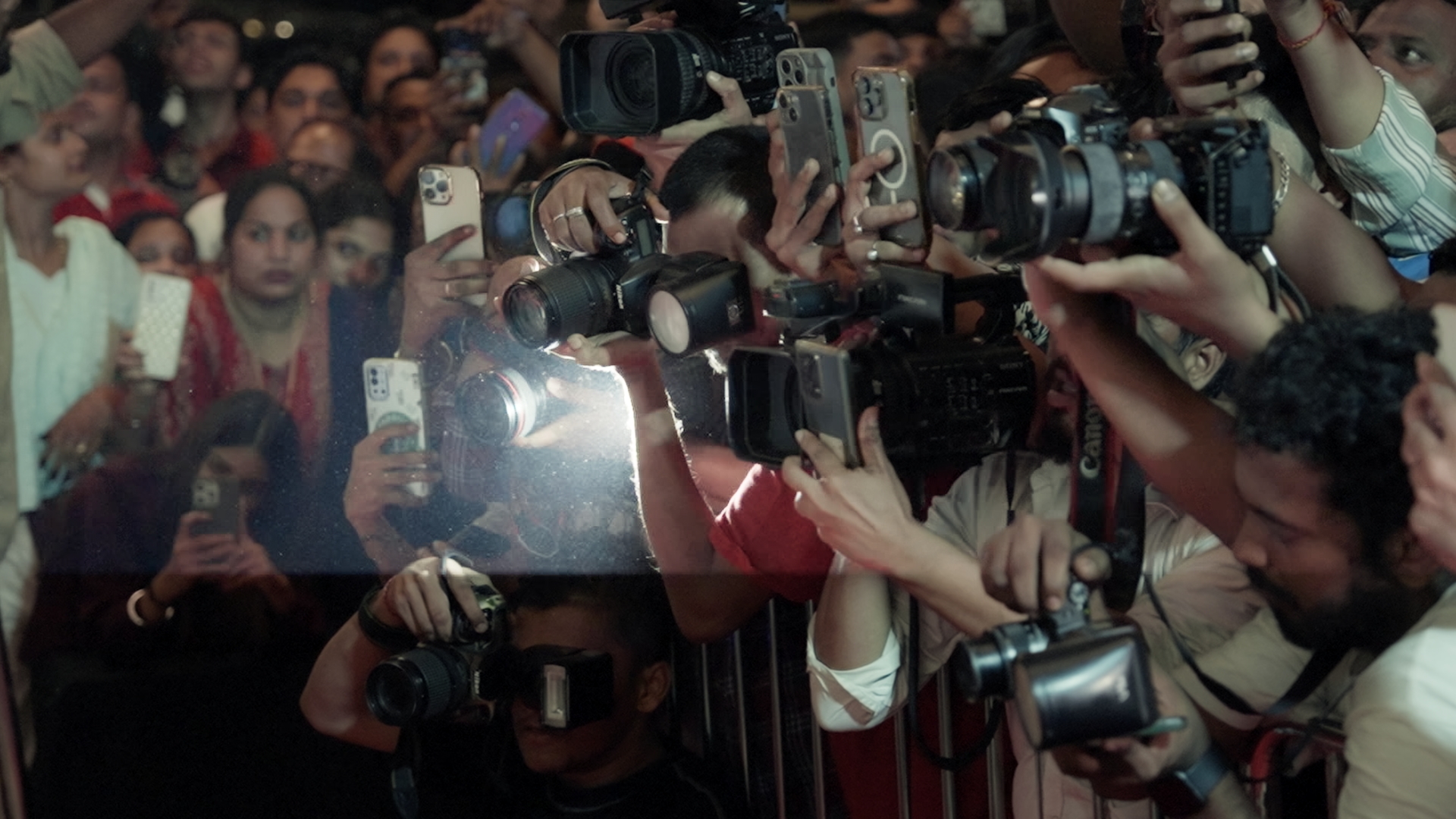
‘P for Paparazzi’ is a short documentary directed by Divya Kharnare. It is based on the life of Manoj, a seasoned freelance paparazzo with a repute, grappling with the realities of a metro city. This film captures his fast-paced routine trailing celebrities around Mumbai’s upscale restaurants and high-profile events that fuels the city’s vibrant page 3 section.
We follow him around the city as he scoots off on tips to capture exclusive photos of Ranbir Kapoor at the airport terminal, then to a hospital where a big industrialist is admitted, and soon after to yet another location – always chasing the next big moment. A never-ending assignment. We see him balancing between his personal dilemma, where he is constantly looking for ways to arrange funds for his brother’s kidney transplant. He tries to contact insurance agents and meets some celebrities informally to present his case. In a shocking moment for both Manoj and the audience, he gets a direct call from Rohit Shetty.
‘P for Paparazzi’ sheds light on the humane side of an infamous profession, which is a product of the glamour industry and the commercialisation of a celebrity’s image and body. Celebrity paparazzi photographers are often criticised for paid promotion, invading privacy and creating a ruckus at public places for clicking photos. But the film focuses on the person behind the camera and gives us a peek into how a migrant individual grapples with professional duties and personal exigencies.
The use of music to heighten a scene, or the immediate transition into slow-motion shots after showcasing Manoj’s chaotic job at a Bollywood event, is intriguing to watch. It is apparent that the rapport created between the filmmaker and Manoj allowed him to speak frankly in front of him and allowed him to enter his personal spaces. Another interesting decision the filmmakers make is not to use the traditional piece-to-camera interview style in between, as Manoj’s phone conversations are sufficient to explain his situation. We feel the loneliness of Manoj when we see him eating his dinner alone, roadside, or his angst about rich people burning money on firecrackers. By the time the film draws to a close, Manoj’s world feels deeply personal — his fatigue, his small joys, his quiet resilience. P for Paparazzi doesn’t ask for sympathy, only recognition. It reminds us that behind every hurried snapshot is a worker trying to survive a city that runs on spectacle.