
By Sinjini Mitra
India’s censor board has certified nearly 18,000 films between 2017 and 2025, and the ratings of these films have revealed a very sharp contrast in the kind of cinemas that are being produced across different regions in India. The certification patterns suggest that while some of the industries may continue to prioritise family-friendly content, others are more inclined towards mature or adult themes.
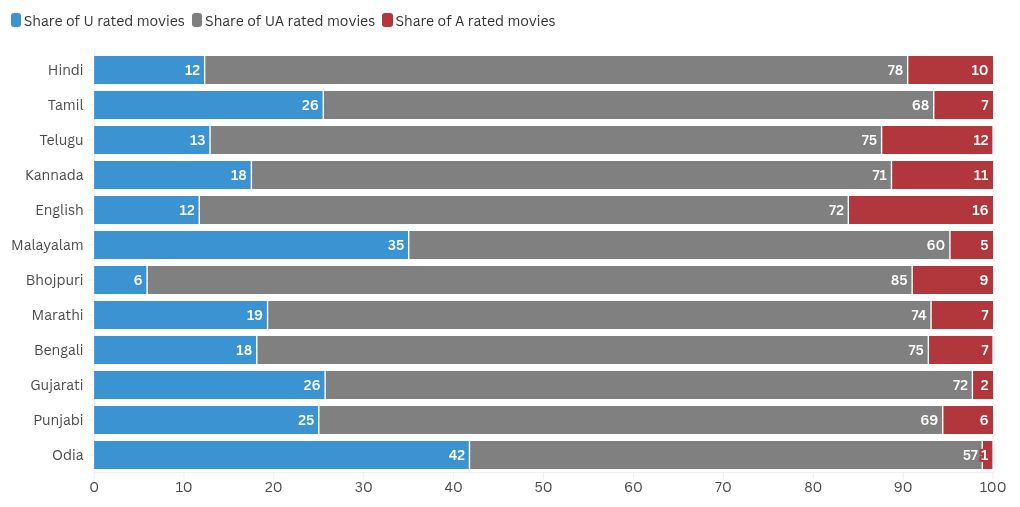
Bollywood cinema, the country’s largest industry, has displayed a more balanced distribution across the categories of certification. It’s been recorded as the largest share of U-rated films in this 8 years period of time, it’s a reflection of the industry’s storytelling style, which often balances realism with themes that are widely accessible to a large number of audiences. The Tamil movie industry has followed closely, supporting its reputation for producing high-cost entertainments that would be appealing to family audiences alongside niche experimental projects.
At the other extreme end, according to the records, it has been found that the Bhojpuri cinemas have the lowest share of U-certified films, pointing to an industry that is more associated with adult themes, melodrama, and sensational content. The wide gap between Malayalam and Bhojpuri output highlights the differences in audience preferences and market structures across various states.
Hindi cinema, the country’s largest industry, displayed a more balanced distribution across certification categories, catering to both the mass family audiences and to viewers seeking darker, adult-oriented stories. Meanwhile, Telugu and Kannada industries stood out for having the highest proportion of A-rated films and over 10% each, making them the only languages where double-digit shares of restricted films were recorded. This trend reflects the rise of heavy action scenes and violent spectacles in South Indian blockbusters, which often attract the younger audiences despite their certifications.
The certification data have highlighted how the regional movie industries are shaped by the culture, their unique production styles, and commercial pressures. Malayalam movie industries continue to strengthen its reputation for quality family-friendly storylines for their big screens, whereas the Bhojpuri cinemas are currently struggling to erase the label of being an adult-centric film industry, which raises the questions about its ability to expand its content, as Indian cinema slowly starts growing its reach globally, these trends offer insight into how different regions project their cultural identities through film.