
By Aditi S Bade
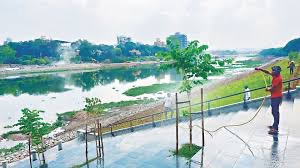
The Mula-Mutha River Rejuvenation Project, initiated by Pune Municipal Corporation (PMC), is meant to rejuvenate about 44 kilometers of the Mula, Mutha, and Mula-Mutha rivers within the municipal limits of Pune. It truly aims to build embankments, barrages, and riverfronts used by citizens to tackle problems involved with the pollution, flooding, and urban encroachments of this grand scheme.
Environmentalists have recently set themselves in opposition to the project because of a reported allocation of 17 acres of defence land in Yerwada within which the project will be executed. While PMC reportedly got the defence Department to transfer the land with intervention by Union Minister of State Muralidhar Mohol and Defence Minister Rajnath Singh, the critics contend that such an intervention in itself, can disturb the natural ecosystem of the river. Civic activist Prajakta Mahajan has petitioned the Prime Minister and the Ministry of defence to reverse the decision, arguing that this will harm the riparian zone of the river irreversibly.
The scheme involves the construction of concrete embankments high between 30 and 40 feet along the banks of the river as well as barrages aimed at controlling outflow. Environmentalists have raised concerns that these types of interventions would pride the river channels and therefore groundwater aquifers with the lower levels of the city. Furthermore, these barrages would create large water ponds that would breed mosquitoes and reduce oxygen at the aquatic life cycle.
There was a call for an appeal regarding environmental clearance granted to the project in 2020 alleging that no scientific study had been done on the rivers’ biodiversity and ecology. NGT considered this but on November 2022 found it was not necessary to set aside the environmental clearance, taking into account the importance of the project to public interest.
However, against all odds, PMC has not halted work on the project. The riverfront development is now expected to fly off the ground with an immediate transfer of 69,569 square meters of land approved for defence purposes. The acquisition is crucial as it allows for an additional 1.6 kilometers of riverfront to help create a “green zone” for public recreation.
This unsolved question opened up the discussion on the Mula-Mutha River Rejuvenation Project, an uneasy compromise between urban development and environmental conservation. While supporters present the project as a major instrument for flood control and creation of public space, the environmentalists charge that the very same project may instead facilitate ecological degradation. Moving forward, it will, therefore, be essential to redress these environmental concerns with transparency and deliberation in order to foster sustainable urban development that acknowledges natural ecosystems.