
By Khushi Namdev
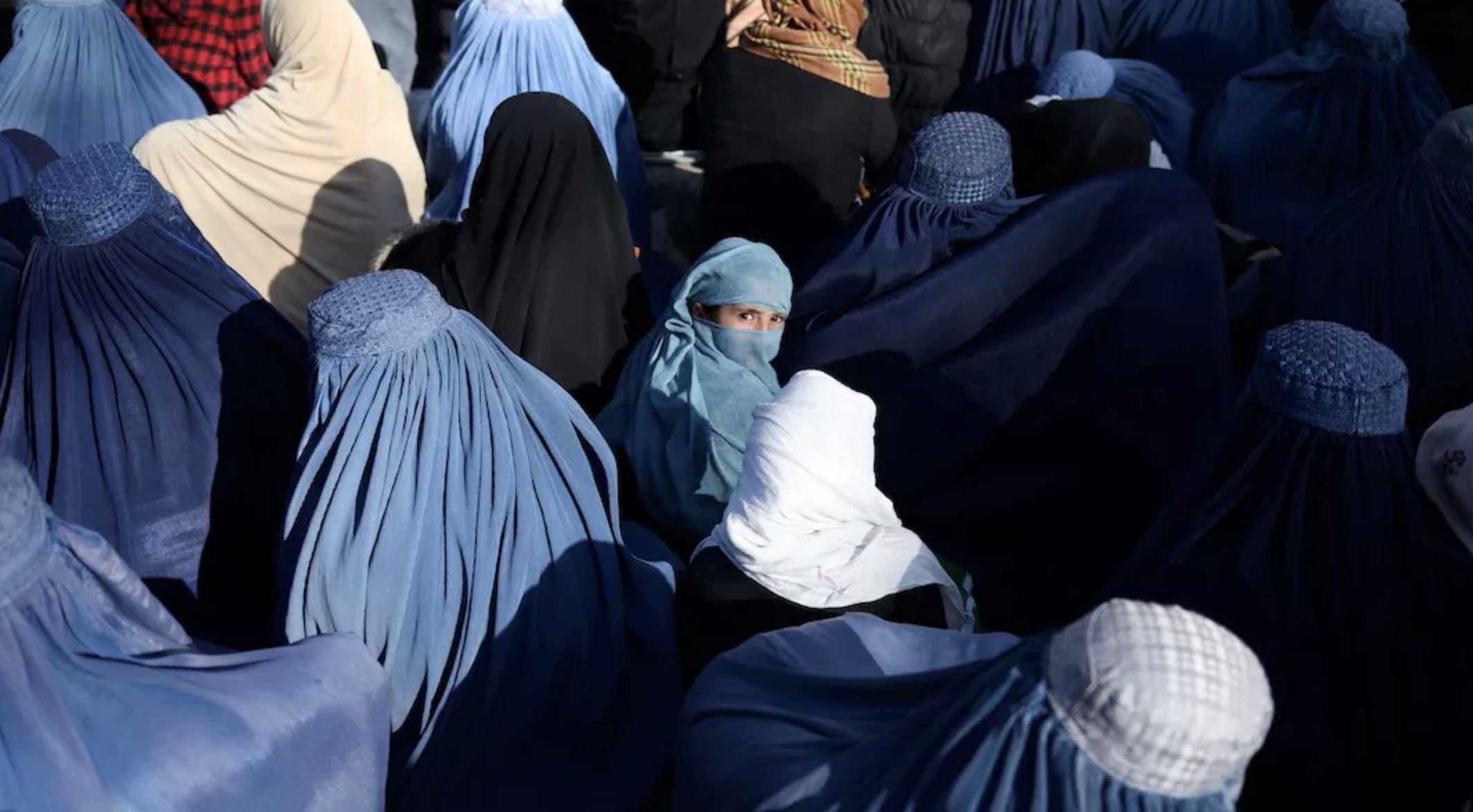
In a recent move, the Taliban government has officially ordered the removal of books authored by women, while also restricting gender studies and eliminating education rights. The imposed law banned the teaching of basic human rights and the discussion of sexual harassment.
The regime has banned around 140 books, including popular titles such as “Safety in Chemical Laboratory,” all authored by women, from the university curriculum. The Taliban stated that the reason behind the ban is based on their interpretation of the Sharia law and related policies. Among the 18 courses removed from the curriculum, topics associated with Gender and development, Women’s sociology, and the Role of women in communication were the most common.
This restriction is one of the latest by the Taliban since their return to power 4 years ago. In an order from their supreme leader, they also banned fibre-optic internet in 10 provinces last week, citing the prevention of immortality.
In continuation of these bans, the regime has also restricted women’s education above the 6th grade, along with the suspension of midwifery courses, which reflects the adversity of Women’s educational rights in Afghanistan. On this, the Taliban government says that they respect women’s rights in accordance with their Afghan culture and Islamic laws.
Zakia Adeli, the former deputy minister of justice before the Taliban’s return and one of the banned women authors, said she was not at all surprised by this move of the Taliban government; in fact, she had anticipated something like this beforehand. She also highlighted the misogynistic mindset and policies of the regime. Furthermore, she said that when women are not allowed to study, their views, ideas, and writing are naturally suppressed.
Henceforth, the educational future of women in Afghanistan seems uncertain; their struggle extends beyond education as their basic rights are being violated, which is a serious concern for Afghan society and the upcoming generations. It leaves us with a critical question of how the world will respond to such propaganda.