
By Mahi Jain
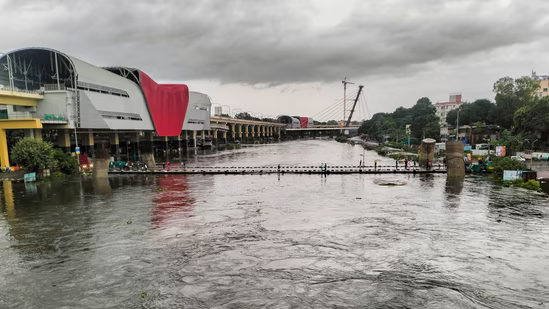
Pune experienced its wettest day of September in 129 years, as heavy rain downpours in parts of the city on Thursday, bringing life to a standstill. According to data given by the India Meteorological Department (IMD), the Pashan observatory recorded 140.6 mm of rainfall in 24 hours, this being the highest amount of rain for a day in September since 1896. Other areas of Pune saw respectable rainfalls as Lohegaon received 112.2 mm and Shivajinagar received 97.4 mm between Thursday at 8:30 am and Friday at 8:30 am.
Meteorologists cite several reasons for the extreme nature of the rainfall; it was the combination of cyclonic circulation over interior Maharashtra, increased local heating of land, which created thermals for the thunderclouds to develop, and moisture inflow from an active monsoon. Some officials mentioned that the heavy local showers appear to be becoming more common, as Pashan received considerably more than areas of central Pune like Shivajinagar.
This rain has brought Shivajinagar’s total rainfall to 237.6 mm in September. Experts continue to say that this heavy precipitation event is yet another example of Pune’s extreme weather associated with climate change.
The storm also shows the mismanagement of rainwater in Pune city. Several roads were submerged, and the city’s traffic was disrupted in several locations. Many residents also pointed out the poorly designed roads, which, instead of aiding runoff, contributed to blocked drains and stagnating water. The city planners received backlash for their inaction on the constant flooding during monsoon periods due to the drainage system, which has proven less than adequate for the purpose.
Pune’s city planners have been on the record sustaining the argument that the monsoon drainage systems should be updated, and it is also illegal to construct any buildings that interfere with the flow of water. If Pune’s planners are to be believed, the city is bound to face the repercussions of unpredictable rainfall without adequate planning.
The below-average rains are a new boundary that the city and the country have to face. The unfortunate reality is that Pune has not updated the methodologies used in its design to account for changes in the Indian subcontinent’s weather patterns, which have proven extreme.