By Smritika Banerjee
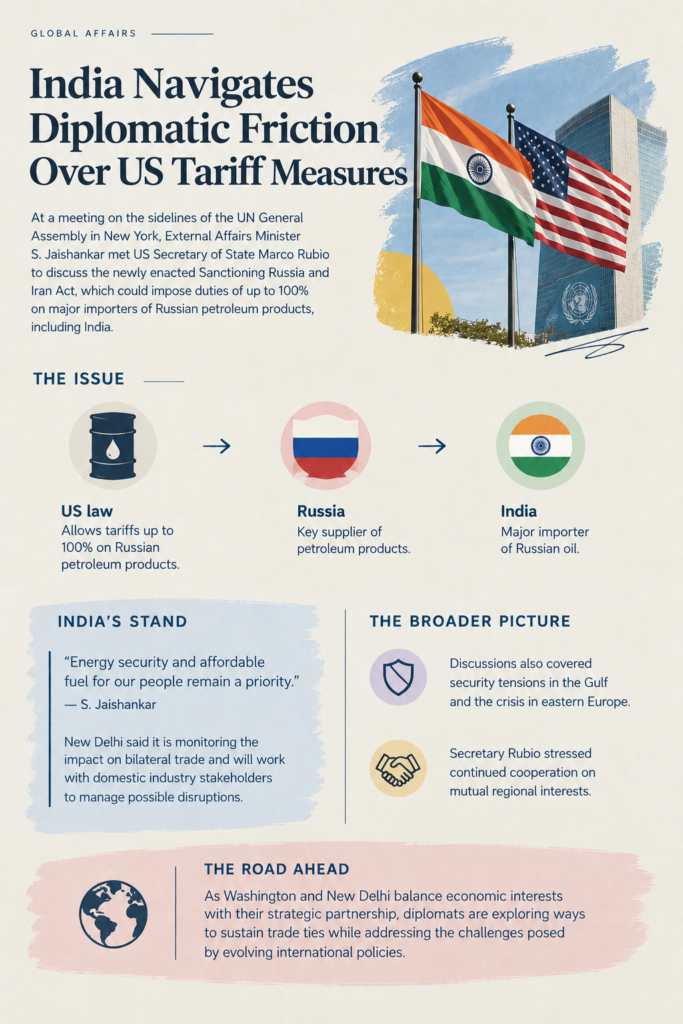
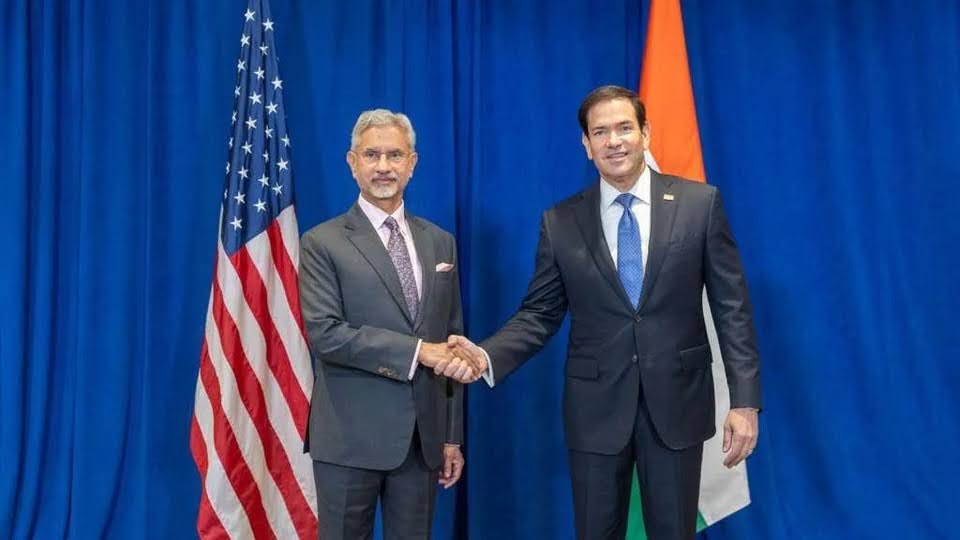
During a bilateral meeting on the sidelines of the UN General Assembly in New York, India’s External Minister S. Jaishankar amid rising economic tensions between two countries met US Secretary of State Marco Rubio. The recently passed Sanctioning Russia and Iran Act, which gives the US executive branch the power to levy penalties of up to 100% on significant importers of Russian petroleum products, including India, was the main topic of discussion.
Jaishankar made it clear that India’s economic priorities remain firm, with ensuring a reliable and affordable energy supply for its people continuing to be a key focus for the government. Restrictive trade policies could upset international energy markets and put more strain on the larger strategic partnership between the US and India, Indian officials said. While Washington views the legislation as a tool to exert diplomatic pressure and limit funding linked to ongoing conflicts in Europe, Indian policymakers maintained that the country’s fuel procurement decisions are guided by market availability and pricing, with the aim of containing inflationary pressure at home.
The two diplomats also discussed wider geopolitical developments, including growing security tensions in the Gulf and the ongoing humanitarian crisis in eastern Europe, beyond trade related concerns. Secretary Rubio stressed the importance of continued cooperation on areas of mutual regional interest, while indicating the national security considerations may influence how trade measures are applied in line with broader diplomatic objectives.
India’s Ministry of External Affairs said it is closely monitoring the potential impact of the policy on bilateral trade and will work with domestic industry stakeholders to mitigate possible disruptions to exports. As Washington and New Delhi seek to balance economic interests with their broader strategic partnership, diplomats are exploring ways to sustain trade ties while addressing the challenges posed by evolving international policies.