
Byl Srija Kumar
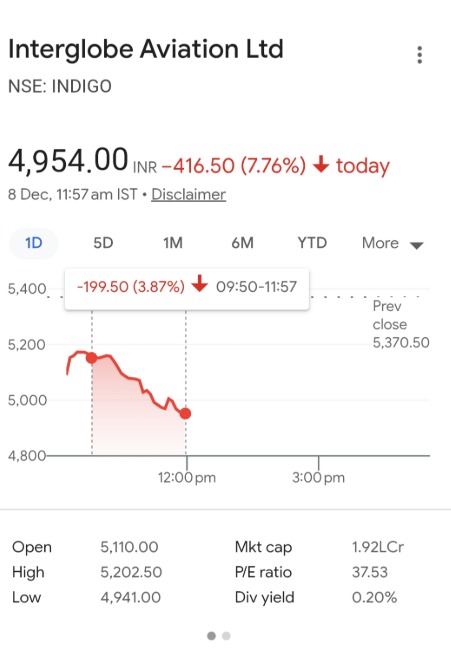
The country’s largest airline, Indigo, is facing a challenging period due to the ongoing delays and cancellations, resulting in a disruption of travel plans nationwide. On Monday, shares of InterGlobe Aviation, IndiGo’s parent company, dropped nearly 7%, marking the seventh straight day of declines. The steady fall reflects the uneasiness of investors surrounding the airline’s recent struggles.
After the new Flight Duty Time Limitations were put into effect, many of the passengers had to deal with long waits and last-minute flight changes.
These rules have set new restrictions on the length of mandatory rest that pilots need to take before being fit to fly. IndiGo failed to adjust its staffing and scheduling in time with the effect of new guidelines; this led to thousands of flight cancellations last week. The disruptions were widespread, resulting in the government stepping in to prevent sudden fare hikes for other companies. Other commercial carriers, especially SpiceJet, benefited from the situation, with its stock climbing up to 12% as travellers switched airlines in search of smoother journeys.
Authorities of the Indira Gandhi international airport in Delhi, assured the public that they were working closely with the airline while requesting passengers to check their flight status before leaving for the airport, while
The DGCA, has issued a notice asking IndiGo to explain its major shortcomings in planning and managing crew under the new rules. They stated that this situation could have been prevented if the airline were better prepared.
Along with these operational setbacks, IndiGo reported a net loss of ₹2,582 crore for the second quarter of FY25, which is much higher than the ₹987 crore loss in the same quarter last year.
Key figures from the financial report include:
Revenue: ₹18,555 crore Capacity: Up 7.8%
Passenger numbers: Up 3.6%
Ebitdar: Down to ₹1,114 crore from ₹2,434 crore
Margin: Dropped from 14.3% to 6%
This data is as reported by Mint.
The airline, hit hard by rising operational expenses and significant foreign exchange losses, is struggling to manage the demand and supply gap. This is despite carrying more passengers and generating higher revenue than the other commercial airlines.
With heavy delays and stricter regulatory attention, IndiGo is navigating one of its most challenging periods. Customers, aviation authorities and investors are now closely observing to see how the airline plans to stabilise its operations along with rebuilding the lost trust.