
Salonee Kulkarni
The political landscape of Maharashtra is complex, and the alliances are shifting. The BMC elections have led to unlikely coalitions and partnerships, while some parties have opted to go alone. Traditional coalitions have fractured.
In the Mumbai Metropolitan Region (MMR), Mumbai is contesting elections with alliances formed by the BJP and Shiv Sena, the RPI Athawale alliance. The NCP alliance is between the Uddhav Sena and MNS under Sharad Pawar. The NCP alliance under Ajit Pawar is contesting elections independently. In Navi Mumbai, most of the political parties have gone solo. The independent contestants are the BJP, Shinde Sena, NCP under Sharad Pawar, NCP under Ajit Pawar, MNS and Uddhav Sena alliance. In Kalyan-Dombivali, the BJP-Shinde Sena are contesting under the RPI alliance, the Uddhav Sena and MNS alliance, and the NCP is going independent under Ajit Pawar.
Party-wise allocation for development funds in the last 3 years:
In the last three years, the majority of the development funds went towards constituencies that were majorly represented by Mahayuti. The BJP-led Mahayuti alliance is predicted to witness a dominating performance in local body polls.
Between February 2023 and October 2025, Rs 1490 crore was sanctioned by the BMC. The funds were allocated for civic developments such as road repairs, health facilities, neighbourhood beautification and drainage upgrades. Rs 1076.7 crore was allocated to BJP lawmakers, and Rs 372.7 crore was allocated to Shinde’s Sena.
In contrast, Rs 13.74 crore was allocated to the opposition, represented by one legislator from Congress, Amina Patel, who represented Mumbadevi, comprising the minority community. 10 MLAs from Shiv Sena, two from Congress, and one from SP were allocated no funds at all. Most of the funds, around 500 crore, were allocated to the ruling party of MLAs.
The funding points out whether funds have been allocated fairly over the past three years. And is the governance fair in India’s richest municipal corporation?
Key things to watch out for:
In pre-poll political messaging, infrastructure is crucial and political parties that are addressing the issue will attain an electoral advantage and visibility.
In February 2023 and February 2024, 21 MLAs represented Mumbai and 15 MLAs from Maha Vikas Aghadi represented Mumbai from the opposition.
The party allocation for the year 2023-2026 was:
- BJP is 1076.72 Crore
- NCP is 27.5 Crore
- Shiv Sena is 372.7 Crore
- INC is 13.74 Crore
Development visibility is a key narrative control, and the money flow determines which political party has an advantage before elections.
Consolidated support for the ruling party alliance among voters as they resonated with the BJP and Shiv Sena, which asserted development initiatives and governance stability.
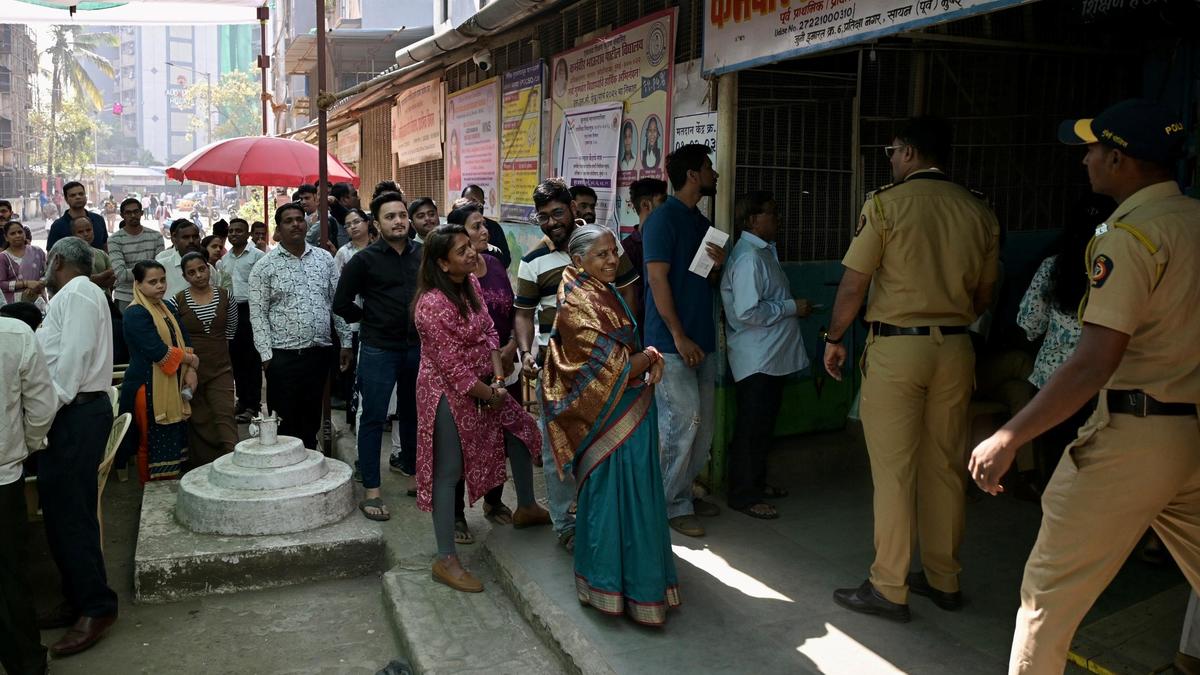
Ghatkopar and Mulund are Gujarati-dominated and witnessed a strong turnout on polling day. This depicts the community’s preference for the BJP.
“A Marathi will become the Mayor, and the saffron wave will come. Be patient; there is no need to hurry – the process has just begun. We are 100 per cent confident. We are not nervous at all because people have awakened and now understand what is happening in the country,” said MP Arvind Sawant, Shiv Sena, Uddhav Balasaheb Thackeray (UBT).