
By Swetha Anil Kumar
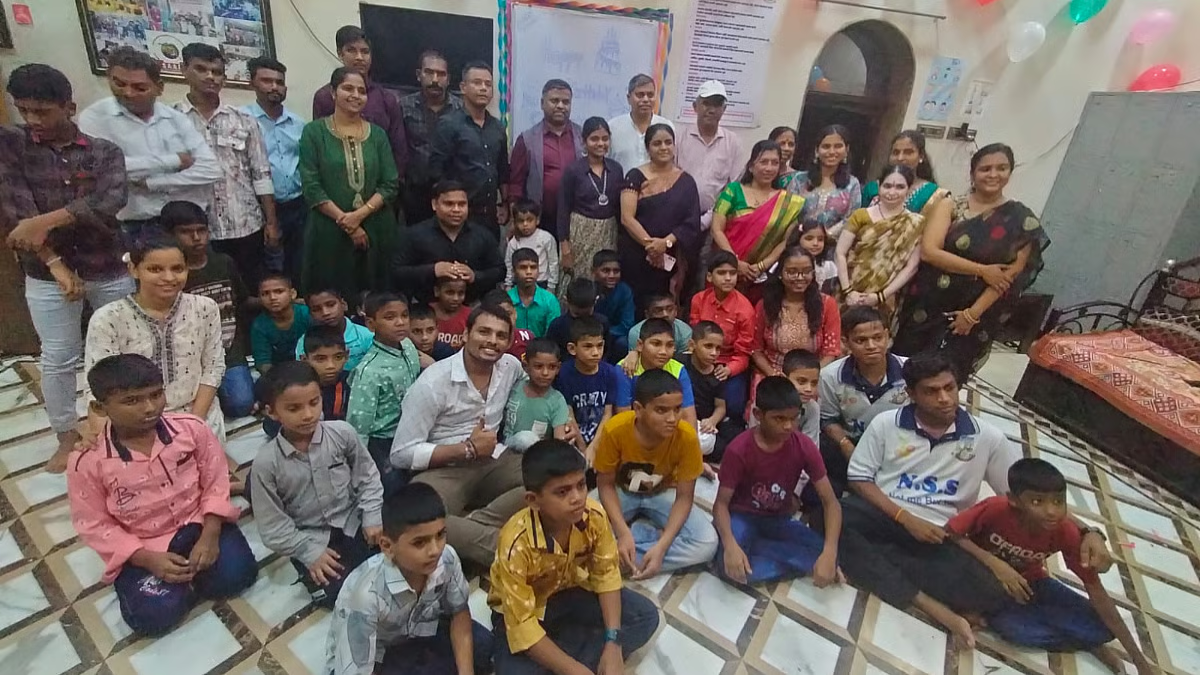
Children living in several homes and institutions in Pune are taking part in organising Ganeshotsav celebrations this year, with activities ranging from making idols and decorations to conducting rituals and cultural programmes.
A report published by The Times of India documented celebrations at Aadhar Anathalaya, Janaseva Foundation and Sparsh Balgram in Pune. The report said children were involved in planning and carrying out various activities during the festival.
At Aadhar Anathalaya, 36 girls make a Ganesh idol using shadu clay before the festival. They also participate in Atharvashirsha recitals, aarti, dance and the preparation of ukdiche modak, according to the report.
The organisation’s chairperson, Siddharth Shinde, said the celebrations at Aadhar Anathalaya are led by the children, who are involved from planning to execution.
At Janaseva Foundation, children participate in activities including making clay diyas, rangoli, cooking, games and cultural programmes.
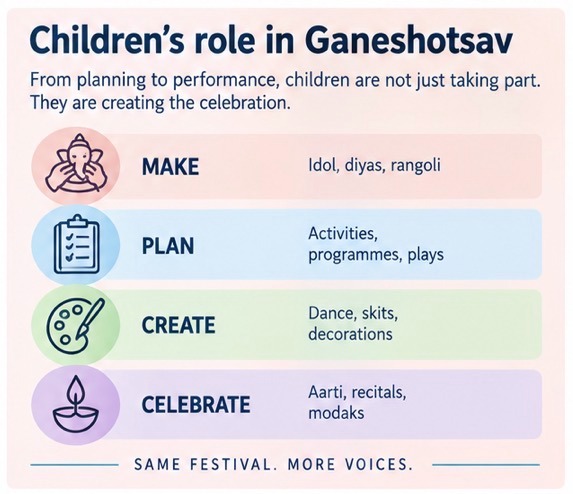
The foundation also encourages children to organise parts of the festival themselves. Janaseva counsellor Sharayu Ghodkhande said this approach is intended to give children a sense of agency. She added that this year, children were producing a play with guidance from volunteers while staff members were taking a less active role.
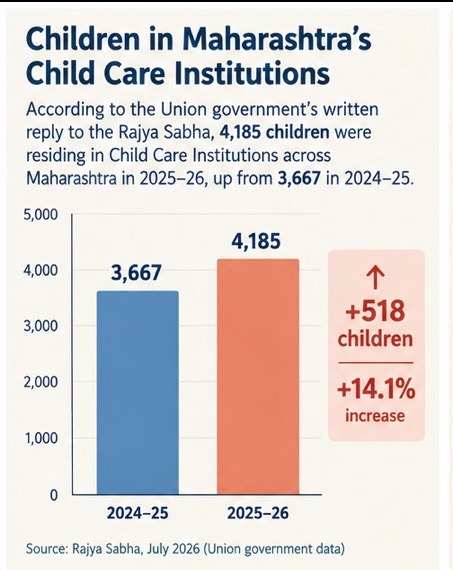
The scale of institutional care extends beyond Pune. According to data by the Union government in a written reply to the Rajya Sabha in July 2026, 4,185 children were residing in Child Care Institutions across Maharashtra during 2025–26. The figure was 3,667 in 2024–25. The data is for Maharashtra as a whole and does not indicate the number of children in care institutions in Pune.
The celebrations take place within a wider child-protection system. Children living in such institutions are not necessarily orphans. Under the Centre’s Mission Vatsalya scheme, Child Care Institutions provide institutional care to children in need of care and protection. The scheme also recognises children’s participation as part of its child-rights framework.
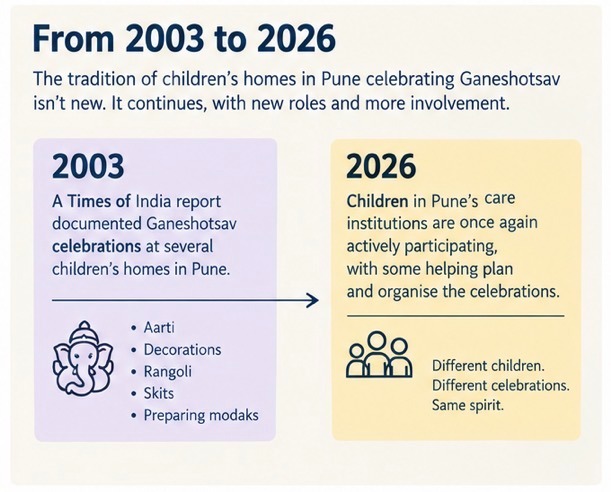
The practice is not new in Pune. A Times of India report published on September 6, 2003, also documented Ganeshotsav celebrations at several children’s homes in the city.
The 2003 report covered the Anaath Hindu Mahilashram in Narayan Peth, Mahila Seva Mandal in Erandwane and the Boys Observation Home in Shivajinagar. Children were involved in activities including aarti, decorations, rangoli, skits and preparing modaks.
The recent report shows that children’s homes in Pune continue to include children in the organisation and celebration of Ganeshotsav. While the scale and activities vary between institutions, children participate in both religious rituals and cultural programmes as part of the festival.
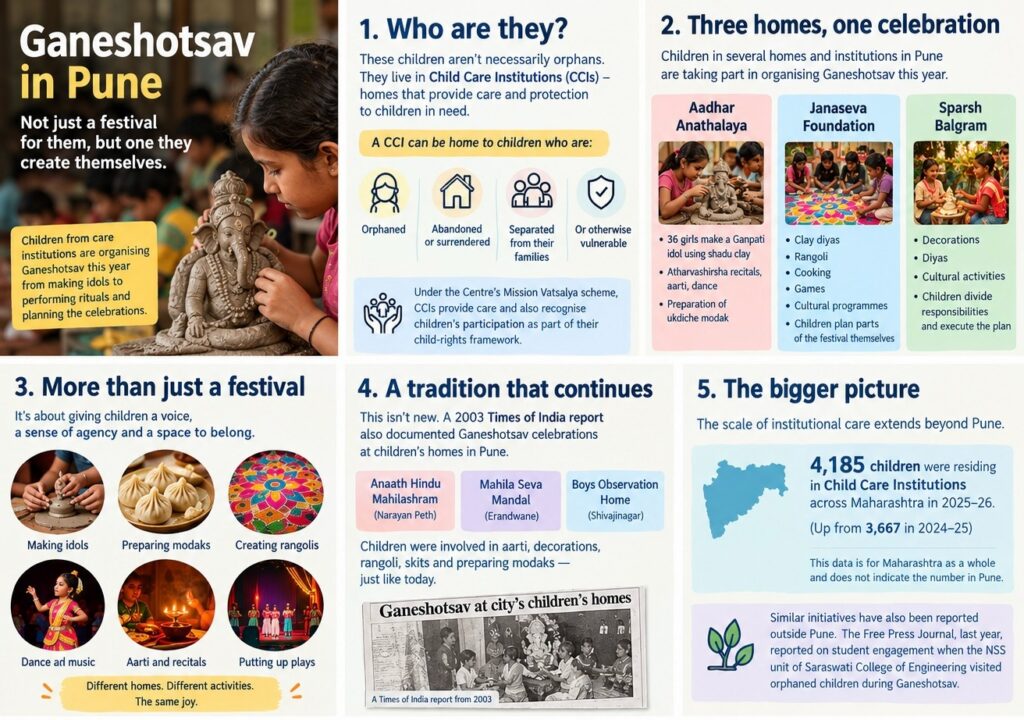
Similar initiatives have also been reported outside Pune. The Free Press Journal, last year, reported on student engagement when the NSS unit of Saraswati College of Engineering visited orphaned children during Ganeshotsav to conduct an eco-friendly visarjan ceremony, plant saplings on the premises, and organize interactive games to promote environmental sustainability and social responsibility.
The extent of children’s decision-making, however, can vary between institutions. Questions around who chooses the idol, plans the programme, manages the budget and decides the activities would require further reporting from the institutions and the children themselves.
For now, the celebrations provide a glimpse into how children’s homes in Pune mark one of the city’s major festivals, and the different roles children take on during Ganeshotsav.
Multimedia Video: https://drive.google.com/drive/folders/1sTkeugZLmAQxjeXyaQDkfTtLOhM10grd
Caption
SCOE NSS volunteers celebrate Ganeshotsav with care home children in 2025. Photo : Free Press Journal