
By Tanisha Mohanty
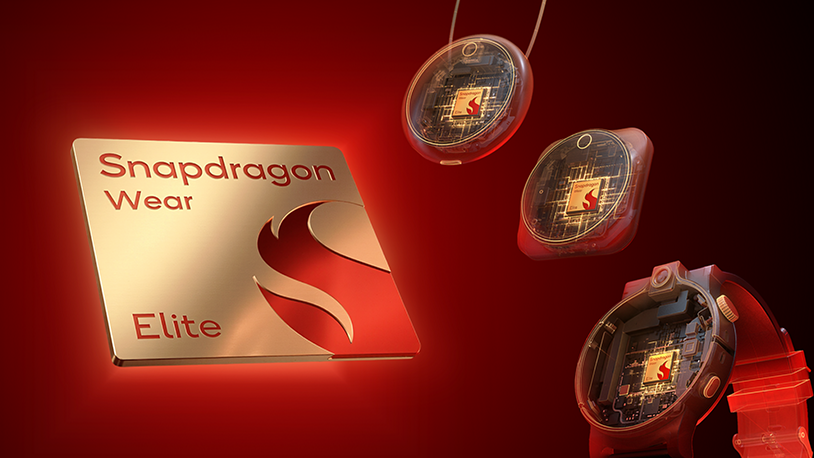
At the 2026 Mobile World Congress (MWC), American semiconductor giant Qualcomm launched a new Snapdragon Wear Elite chip, created to charge wearable devices and integrate AI into next-gen devices.
Instead of cloud computing, the chipset will allow on-device, AI-assisted task handling. The chip will also enhance performance and form a “personal AI” experience for users. Qualcomm says that the platform will work with Linux, Android, Samsung and Google OS. Commercial products powered by the chip are expected to launch in the upcoming months.
The company stated the Snapdragon Wear Elite comprises an integrated Neural Processing Unit (NPU) chip, enhancing AI integration. The Hexagon NPU will reduce latency, enhance privacy owing to local execution of AI tasks such as voice assistants, contextual suggestions, sensor analysis and real-time translation and transcription.
Connectivity will also become multi-modal, consisting of six types of wireless connections, including 5G Redcap and Ultra-Widebend. Miniscule sub-systems within the main chip, which Qualcomm termed as “low-power islands”, will minimise energy withdrawal for all functions.
It is also the first wearable to include Ultra-Wideband connectivity–opening the door for proximity and “unlock” functions to be seamless. Largely catering to AI configured wearables, unlike older processors, the company also aims to use the chipset for AI integrated pendants, pins and glasses.
On par with Apple’s chips, the Snapdragon Wear Elite will be the first to tackle AI capabilities and integrate them with wearable devices. Especially with the fast-moving AI industry, the chipset will give consumers quicker, more intelligent AI interactions right on the wrist without continual reliance on the cloud.