
By Tanisha Mohanty
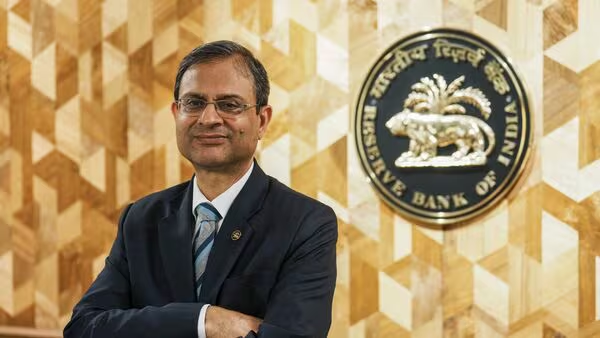
The Reserve Bank of India (RBI) will continue with the same repo rate of 5.25 % as decided in the first monetary policy meeting of the year, following the 2026 Union Budget. RBI Governor Sanjay Malhotra announced the unanimous decision of the monetary policy committee on Friday.
This indicates India’s GDP growth and inflation control, especially after reduced tariffs on goods by the United States. Repo rate refers to the interest rate at which the RBI lends money to the commercial banks for a short term. The RBI chose to stabilise the repo rate after a series of rate cuts in the previous year.
In the bi-monthly policy meeting, the RBI Governor also explained its neutral stance, which implies the aim is neither to cause fast economic growth with rate cuts nor slow growth through higher rates. “After a detailed assessment of the evolving macroeconomic conditions and the outlook, the MPC voted unanimously to keep the policy repo rate unchanged at 5.25 per cent…the MPC also decided to continue with the neutral stance,” he explained.
Malhotra further added that a plan to reimburse consumers for losses resulting from small-value digital transaction frauds up to Rs 25,000 would be put out. According to him, draft guidelines on loan recovery and misselling by lenders would also be released.
The stable repo rate will help maintain the economic growth and allow consumers and businesses to make planned spending decisions. This translates into consistent EMIs, consistent deposit rates, and more transparent financial planning for investors and consumers in the upcoming months.
Furthermore, EMIs for personal, auto, and home loans are unlikely to increase in the foreseeable future, but they are also unlikely to decrease further with no rate cut.
The RBI also commented on the projected GDP growth for the current financial year at 7.4 % and a GDP growth rate of 6.9 % in the first quarter and 7% in the second quarter, indicating stable economic growth.