
By Prachi Mishra
Retail inflation softened to a four-month low of 5.22% in December 2024, primarily because of the decrease in food items, particularly vegetables, the National Statistics Office said on Monday. This leaves some leeway for the RBI to reduce interest rates in the near term.
The Consumer Price Index (CPI) based inflation slowed for the second consecutive month after breaching the RBI’s upper tolerance limit of 6% in October 2024. It was reportedly 5.48% in November 2024 and 5.69% in December 2023.
The RBI has kept the repo rate at 6.5% since February 2023, maintaining the inflation rate well within its optimum range of 4%, with an increase or decrease of 2%. In December, the central bank raised its inflation projection for the fiscal year to 4.8% from 4.5%, citing lingering food price pressures.
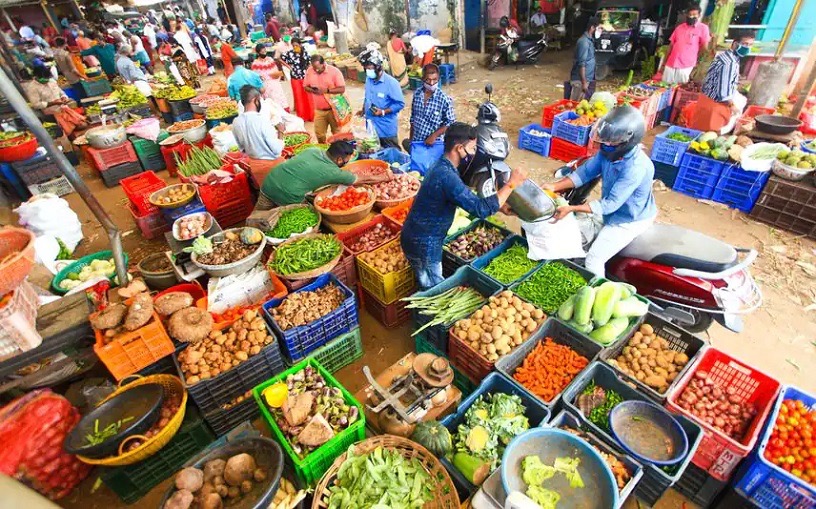
The food crate inflation reduced from 9.04% in November to 8.39% in December. Major dips have been seen in prices of vegetables, pulses, sugar, confectionery, and cereals. Yet, food inflation, which comprises 39.1% of the CPI basket, is still high.
The top items with the greatest year-on-year inflation in December included peas at 89.12%, potato at 68.23%, garlic at 58.17%, coconut oil at 45.41%, and cauliflower at 39.42%. Jeera at -34.7%, ginger at -22.9%, dry chillies at -10.3%, and LPG at -9.3% were at a low rate.
Rural and urban inflation stood at 5.76% and 4.58%, respectively. The inflation rate was at 7.63% for Chhattisgarh, while for Delhi, it was 2.51%.
Economists do not rule out the chances of a rate cut by RBI during its February 2025 monetary policy review, but with utmost caution. Paras Jasrai, Senior Economic Analyst at India Ratings and Research, said the February policy review coincides with the Union Budget and may influence monetary decisions. Moreover, he said that the RBI may prefer to wait for one more policy review before making rate adjustments.
Akhil Mittal, senior fund manager at Tata Asset Management, said he was seeing early signs of moderation in vegetable prices, which may help bring inflation below 5% sooner than expected. He further added that it could create space for the RBI to shift focus from inflation to supporting growth, especially given the post-COVID slowdown.
Despite easing in recent times, food inflation has averaged 8.4% this fiscal, higher than the 7.5% recorded in 2023-24, said Crisil Principal Economist Dipti Deshpande.
With general inflation and food inflation at a four-month low, the Reserve Bank is to strike a balance between controlling inflation and measures that can stimulate growth. The monetary policy review in February will be watched for a shift in stance.