
Dr Abhishek Roy
Assistant Professor
SIMC, Pune
They say, “take a picture; it lasts longer.” Yet Shreyas Mandhare’s mini-documentary “The Last Photo” questions whether what endures truly represents us—and whether we have any control over our posthumous image. To explore this idea, Shreyas structures the 12:41-minute film into six segments, crafting a conceptual narrative on the anatomy of a posthumous portrait and the culture of photography before the digital era transformed it. With subtle humour, the director examines the nuances of documenting and preserving the final images of loved ones, treating the practice as both a socio-cultural tradition and skilled labour of love.
The Iconography of Dominance: The first chapter of the documentary focuses on the visually ambiguous “Side Profile” photograph of Satish ‘Bhai’ Gaikwad, displayed at his family’s pan shop, which has become the sole visual memory of the deceased local goon. Retrieved from the police station, the image continues to assert its past authority even in the present. From a semiotic standpoint, this image presents the classic photographic paradox: the photo’s denotation (the literal, objective record, perhaps a mugshot or mechanical police document) is inseparable from its powerful connotation. The police origin suggests a factual, non-coded iconic message. However, when mounted in the public square, this same photo asserts past dominance in the present, transforming the objective record into a coded iconic message that communicates a social reality—the lasting power of the deceased. The photograph, by certifying that the man “that-has-been”, simultaneously ensures the subject’s immortality within the community’s consciousness, even as it highlights his mortality.
The Containment of the Overwhelming: The second chapter recounts the tale of “The Scary Uncle”, whose stern portrait, peering over his spectacles, frightened the children so much that it had to be moved from the drawing room to the bedroom. The portrait, likely intended as a formal image of respect or memorial (representing general cultural interest or homage), instead triggers a piercing, subjective, and highly disruptive emotional response in the viewers, often arising from an accidental detail or a quality unintentionally captured by the photographer. In this case, the look over his spectacles seems to function as this affective detail, forcing a confrontation that transcends mere liking. The subsequent movement of the portrait from the drawing room (a semi-public space for displaying the idealised family image and achieving social unity) to the bedroom (a more private space) reflects the family’s attempt to manage this overpowering affective force. The display of framed photos in living rooms is related to the materialisation of memory and is used to express respect for the deceased. However, as it culminated in this case, if an image is too disturbing or unsettling, the family may attempt to control or suppress its narrative simply by hiding the photograph from the public.
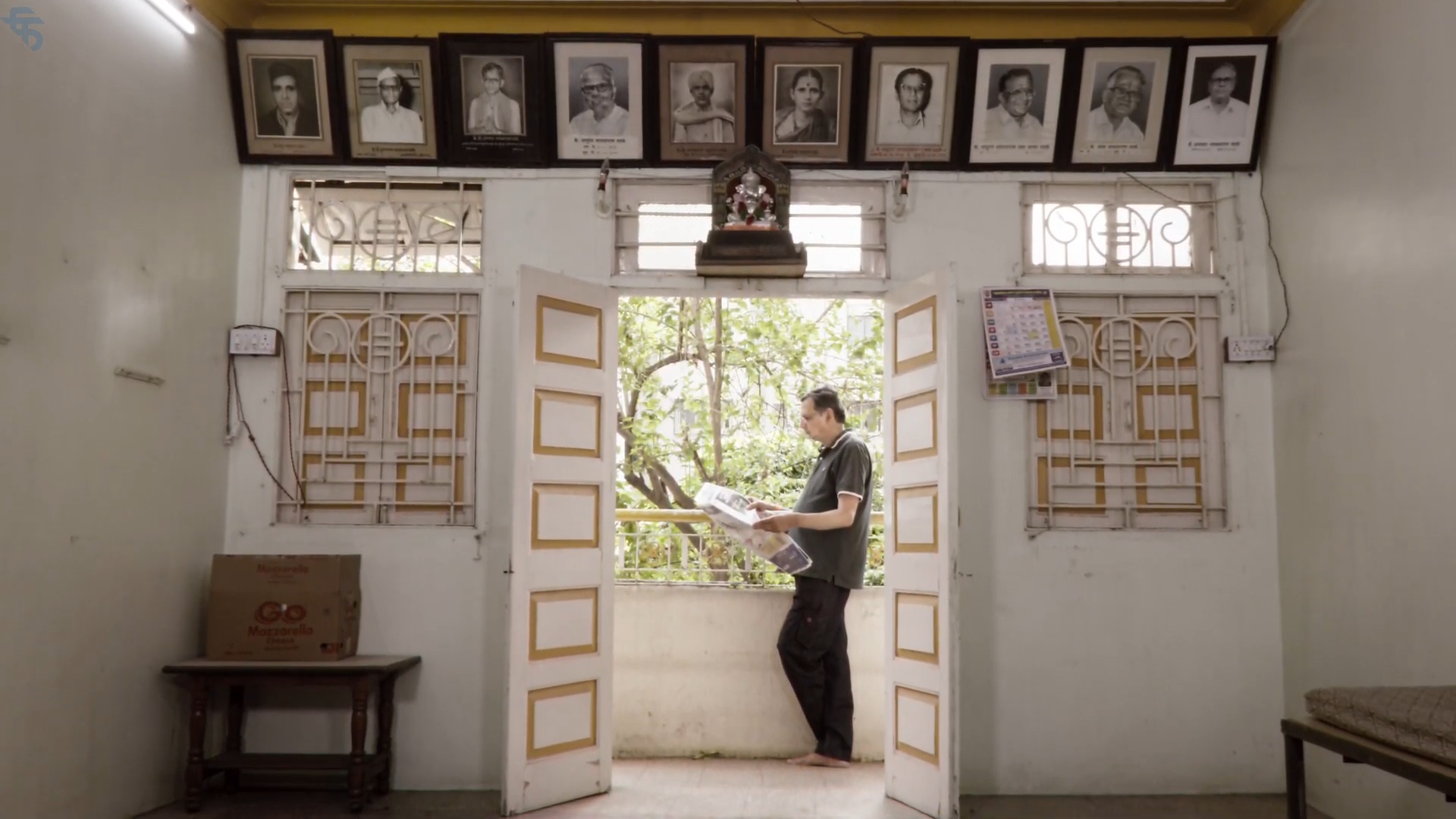
Homage, Continuity, and the Token Presence: The third chapter informs us about the ancestral home of “Two Parents and Eight Sons”, where numerous ancestral photographs are displayed as enduring markers of memory and homage to a past that remains integral to the household. The chapter epitomises the profound connection between photography, family memory, and the projection of continuity. This wholesale display of ancestors visually asserts the existence of a past that is still a part of the house, serving as a fundamental practice in the construction of family memory. Family photographs are essential because they memorialise, to restate symbolically, the imperilled continuity and vanishing extendedness of family life. These photos function as ghostly traces that supply the token presence of dispersed or departed relatives. They are memory texts used as relics to make memories that provide meaning to the present. The collective display aids in the continuous reconstruction of the family image and memory by reinforcing the feeling of being rooted in a good past. This use of multiple images forms a visual narrative, much like a family album, which constructs a shared family story. This communal homage reinforces the family structure that is tied tightly to the existential themes of time’s passage and loss.
The Loving Act of Remembrance and Manipulation: The fourth chapter, “The Death Photographer”, explores the commercial practice of visually preserving the departed, wherein families would summon photographers to capture the final image of the deceased before sending it to Milind “The Doctor” Pattekar. Milind would then artistically manipulate the photograph—opening the eyes, refining the features, and cropping it neatly for a frame. This is followed by an amusing section on the bizarre requests received by contemporary, digitally skilled image manipulators working with Photoshop, ranging from altering elements in a picture to making the dead smile, dressing them in stylish clothes, or even inserting them into wedding photographs.
The initial act of photographing the dead is directly linked to the function of early photography, where the cult of remembrance of loved ones, absent or dead, offers a last refuge for the cult value of the picture. The image, by certifying that the individual has indeed existed, ensures a continuation of their presence. However, the subsequent manipulation—opening the eyes of the dead, making them smile, or adding them to wedding photos—is an explicit effort to correct the ontological truth of the image and align it with an idealised social necessity; specifically, trick effects, where the manipulation of the image exploits the viewer’s cognitive habit of accepting the photograph’s denotation as fact. The goal is to transform the image’s raw, undeniable message of mortality into a polished, socially functional image that promotes an idealised narrative. Family images are continuously created and recreated to symbolically restate the imperilled continuity and vanishing extendedness of family life. When a photograph of a deceased person threatens this ideal (by looking too dead, absent, or unconnected), the “Doctor” uses tools to fabricate a desirable identity for the absent subject.
The bizarre requests for Photoshop edits exemplify the lengths to which modern photographic practice goes to construct and maintain an ideal family image. The ability to manipulate digital images easily means that photography can now deliver a “fantasy” and appearance that does not happen in the real world. This practice constructs a “false” reality to meet client demands, thereby illustrating that photographs are constantly being cropped, retouched, doctored, and tricked out. Unlike language, photographs possess a powerful presumption of veracity, which makes digital manipulation, even when obvious, a powerful tool for self-promotion and constructing distorted realities, a concept magnified in the digital age.
The Regeneration of Memory: The final chapter is a visual anecdote of “The Almost Magazine Model” that shifts the focus from manual and digital correction of death to the affirmative power of memory and the subjective experience of time. It is a loving exercise by a grandson who recreates his grandmother’s favourite photograph from her youthful days—one she had cherished in an old album throughout her life. In doing so, the act of revisiting her past becomes a shared memory in the present, filling the viewers with a quiet warmth of love, longing, and remembrance. The grandmother’s youthful favourite picture, preserved in an album for her entire life, serves as a “memory text” or a relic used to make memories. The original image testifies to her past existence, serving as a “certificate of presence”. The grandson’s loving act of recreation—making her look like an almost magazine model—is a profound exercise in memory work, where the past is actively manufactured in the present. The act simultaneously evokes the past moment of youth while affirming the grandmother’s present existence, collapsing the lacerating distance of time that is usually inherent in the photograph. This final chapter showcases the positive dimension of image construction: the grandson uses the camera, which is often characterised by Susan Sontag as “an aggressive tool of appropriation”, to engage in a loving act of preservation and idealisation, allowing the grandmother to affirm her idealised sense of self and identity. The recreated image becomes a monument to the shared familial history, giving deeper meaning to their lives today.
This documentary philosophically dissects the functions of the photographic image and our relationship with the image as a representational object, moving seamlessly between the semiotic construction of myth and the phenomenological engagement with loss, memory, and the self. The text illustrates the photograph’s paradoxical status as both a public signifier of coded meaning and a potent, private trigger of primal affective responses related to time and death. Additionally, the philosophical framing, theme-driven structure, associative editing, and subtle comic treatment draw the audience in, enabling meaningful engagement with the text and its conceptual message conveyed through the moving images and visual cues. Taken together, the sequences demonstrate that photography remains a powerful magic, not just an art, uniquely positioned at the intersection of cultural codes and existential truth.