
By Tej SH
In the state of Karnataka flows a river by the name of Netravati. Originating from Kudremukh in the Chikkamagaluru district, the river flows through Dharmasthala and various other towns in Karnataka. Netravati essentially sustains the cities of Bantwal and Mangaluru. However, the Yettinahole Water Project would disrupt the flow of the river and cause severe ecological damage.
Planned and executed by the Government of Karnataka, the project aims to construct dams across Netravati and its tributaries. This would take place in the midst of the Western Ghats, with the river eventually joining the Arabian Sea. While the government’s stated aim is to provide drinking water to areas like Kolar and Chikkaballapura, the project has been opposed by many ecologists and environmentalists because the dams are being constructed in ecologically sensitive regions.
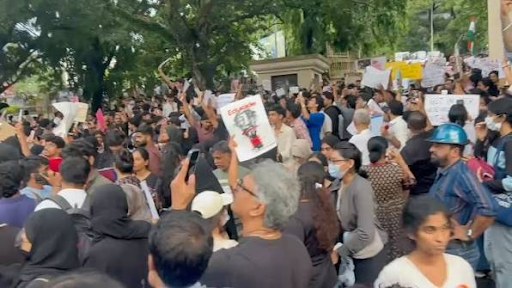
Even as the project has advanced at a rapid pace, the demand for the resignation of former Union Education Minister Dharmendra Pradhan reached an all-time high. Protests and agitation by citizens demanding his resignation reached all corners of India, Mangaluru included.
Asked whether he would attend the protests demanding Pradhan’s resignation, student Tejaswi Rao said he would join them but would also like to contribute to the cause against the Yettinahole Water Project. He said the issue had remained in the shadow of other concerns for far too long.
Similarly, Rishith Poonja, a resident of Mangaluru, voiced his concerns about the water project as well as the protests led by the Cockroach Janata Party. He said both issues deserved attention, but that he had never seen a comparable level of agitation and awareness around the water project. He added that opposing the Yettinahole Water Project made far more sense to him, as it was far more important for the future of Mangaluru as a city.
Gopika Gokul, a former student, raised her own concerns about the protests. “No, I will not be joining. If you’re detained and the police file an FIR, it’s done. You’re blacklisted for life. No government jobs, no private MNC jobs, and it can even revoke the privileges of your passport. I don’t want to end up here working for minimum wages,” she said.
In response, Anwika, a Mangaluru resident, said both issues were extremely valid. It was, she said, deeply saddening to see the state of affairs the country was descending into. Protesters, whether demonstrating against Dharmendra Pradhan or the Yettinahole Project, were being detained and beaten by the police for simply exercising their constitutional rights.
Anwika added that the rot had reached the core of every institution. In coastal Karnataka, she said, the mismanagement of funds, poor disaster management, corruption in the Municipal Corporation, and a rise in crimes and abuse against women and children were all becoming increasingly visible. Alongside these, issues such as fuel adulteration, communal tensions, droughts, and water shortages in the summer continued to plague the citizens of Mangaluru.
Along with Anwika, many people from Mangaluru, especially students, are now planning to leave the country. These students believe the job market is already stacked against them, and with the water that sustains Mangaluru now being diverted, they see little reason to stay.
Speaking with the crowd, particularly students, it became clear that the current generation believes it has drawn the short end of the stick. They feel the very institutions meant to protect them have failed to do so, and are instead endangering students’ lives.
Bhuvan, an ecologist who has been opposing the Yettinahole Water Project, has also raised his voice against the former education minister. He said a strong nation is built by people who speak up, think critically, and protect democratic institutions, not by blind loyalty to any government or political party.
With the Yettinahole Water Project and the CJP protests marking a tipping point in political agitation in Mangaluru, students say they expect a better future from their representatives.