
By Sunita D
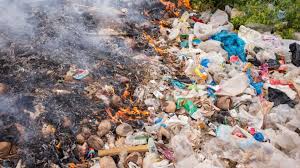
In many parts of Pune’s Takale Wasti, four-year-old’s peddling around heaps of garbage is a common sight. Sobha Devi, who migrated to Maharashtra a year ago, says the black-spot has been there since she moved, others claim it has existed for over a decade, while some residents say they’ve seen it all their lives.
While villages surrounding the locality receive a door-to-door garbage collection through tipper trucks, Takale Wasti still longs for one. Forcing more than 70 houses to collect their garbage and burn.
On Wednesday, data shared by the Pune fire brigade revealed that the number of garbage fires in the city rose by more than 20% in 2025 as compared to the previous year, with an equally worrying spike from 636 to 735 in garbage fires.
The garbage dumps, located in and around the Wasti, collect more than 10 kg of waste every day: everything from vegetable peelings to glass bottles, plastic packaging, batteries, broken toys and discarded clothes.
“During the monsoon, it is this garbage that floods the road along with rainwater and blocks our way back home”, a 47-year-old resident, Kanta Devi shared. “In other seasons, we collect the waste and burn it, but during the monsoon, I somehow call for a truck at my expense to collect this waste and dump it elsewhere”, Kanta Devi’s landlord, Raghunath Takale, noted.
Residents of the Wasti with limited formal education, who frequently breathe the air fueled with toxins released from garbage burning, widely fail to view these dumpsites as apocalyptic places, dark monuments to the city’s failures to deal with the mounting problem of waste management and pollution.
The city’s air quality slipped into the ‘poor’ category with an AQI of 123 on Thursday. Medical professionals warned that smoke from garbage fires posed serious health and environment pollution risks. “Due to lack of awareness and the absence of a proper disposal system, they believe they are disposing of waste but instead they are contributing to air pollution. Micro particles are being released into the air, which are far more dangerous than garbage entering the soil and making it infertile. Breathing problems are often attributed to bird droppings, but it is actually poor air quality that is contributing to these issues”, Dr. Abhijit Patil, Radiologist professor at Symbiosis medical college of women and research centre, stated.
Commenting on construction waste also being discomposed in the Wasti, the doctor added, “Cement sheets release asbestos, while millboard releases dust particles which, if inhaled, cause irritation and can eventually lead to cancer.” Apart from poor waste management the Wasti also suffers from other sanitation issues like inadequate access to safely managed and appropriately equipped public toilets. The toilets at the Wasti are not gender segregated and there are only 4 toilets, which is inadequate considering the size of the local population. This situation leads to privacy concerns, health risks, and reduced toilet usage especially for women and children.