
By Nethra Sailesh
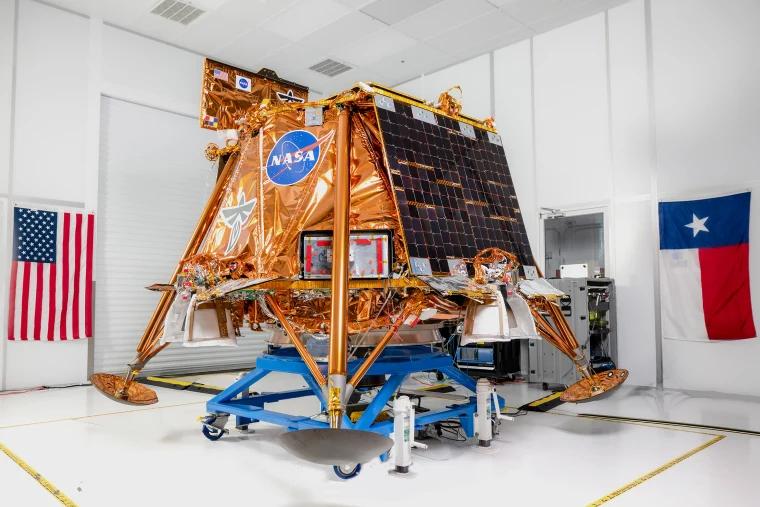
The world’s second ever commercial vehicle Blue Ghost has landed on the moon’s surface. It was launched on January 15 by the private US aerospace firm Firefly Aerospace.
Its main mission is to explore the sea of crisis or Mare Crisium, a lunar basin on the Moon’s surface that was formed by an asteroid years ago.
The project is a collaborative venture by NASA as well as private companies.
BlueGhost, since its landing, has already started sending images of the lunar surface back to Earth. Its first ever image was of the sun while the second was an image of the earth as a blue dot. The mission will function for about 2 weeks, and comes under NASA’s Commercial Lunar Payload Services (CLPS) initiative. NASA had awarded Firefly a contract worth $93.3 million to deliver a total of 10 NASA-sponsored science and technology demonstration payloads to the Moon. According to a report in The New York Times, NASA will pay $101.5 million to Firefly if all 10 payloads reach the lunar surface safely.
Historically, National space agencies have also faced difficulties with lunar landings. Only 5 countries’ national space organizations have successfully conducted lunar landing missions, which include Russia, the US, China, India, and Japan.
Another spacecraft called Athena is set to land on the moon’s south pole launched by the private firm Intuitive Machines. It’s the first company to successfully conduct a lunar landing. The mission, however, was short-term due to technical difficulties.
On the other hand, Blue Ghost, after orbiting the moon for 2 weeks, successfully landed on the surface. Dr Simeon Barber, a planetary science researcher commended this mission and explained the importance of a private venture like this and how it paves the way for other private firms to use it as a launch pad to conduct further off space explorations.
There have been so many attempts by private firms to carry out similar landings. But this collaboration between the public and private sector paves the way for more commercial competition which will hopefully lead to us seeing cheaper lunar missions and a significant reduction of costs.