
By Nethra Sailesh
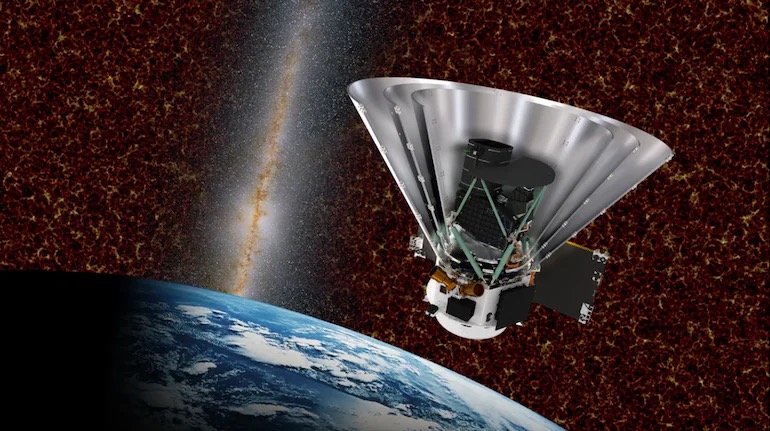
NASA will launch its new telescope, SPHEREx, which is designed to scan millions of galaxies within the universe. To search for life across the universe, this “mega” telescope that is more powerful than the James Webb Space Telescope, will be launched on the SpaceX Falcon 9 rocket.
This mission was set to take place on February 28, 2025, but the latest reports on the NASA official blog state that it has been delayed with the launch set to take place on March 4.
SPHEREx, which essentially stands for Spectro-Photometer for the History of the Universe, Epoch of Reionization and Ices Explorer, is specifically designed to locate ice in areas where thick interstellar dust grains are present, which are also called molecular clouds. Molecular clouds are essentially where planets and stars originate from. In short, it will locate water and other organic molecules across 450 million galaxies within the universe.
To narrow its purpose down further, SPHEREx, over the course of its two-year mission, will conduct a comprehensive scan of the entire sky every six months. It will survey optical and near-infrared bands, to create a colourful, 3D map. Additionally, with the telescope’s new scanning ability, the map it makes will be in 102 colour bands, which will be one of the richest maps made of the entire sky. This will help identify organic and chemical components better.
NASA has also reported that the functioning of the satellite will be done using the technology of Earth satellites and planetary satellites to facilitate data collection. In terms of building the technology, NASA worked in collaboration with scientists from the California Institute of Technology, NASA’s Jet Propulsion Laboratory, Johns Hopkins University, the University of Arizona, the Harvard-Smithsonian Centre for Astrophysics, and Ohio State University.
According to NASA, the data from this mission is set to be publicly available on the NASA/IPAC Infrared Science Archive which will give scientists and researchers more access to information about the cosmos.