
By Dhruvi Shah
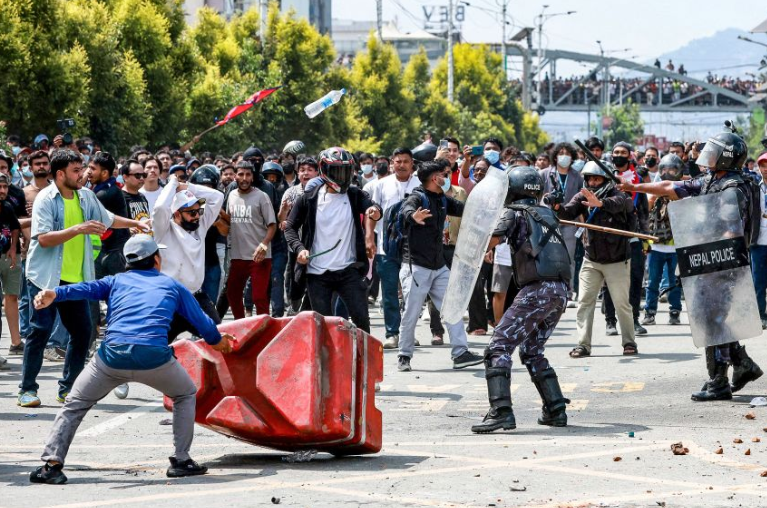
Nepal witnessed an unprecedented upheaval after the government blocked 26 social media platforms spurring violent “Gen Z” protests. The protests led to 19 fatalities and over 100 injured amongst the protesters. It reveals a deep frustration amongst the youth of Nepal regarding unseriousness on issues like corruption, opportunities and further imposing authoritarianism.
The instability has sent shockwaves globally and, in particular, has ignited strong concern from India. On September 9, 2025, the Ministry of External Affairs (MEA) urged Indians in Nepal to stay indoors and away from areas the protests were erupting, and hence follow the directions of local authorities.
The MEA encouraged citizens to consider postponing any planned travel until the situation stabilises. Emergency helpline numbers were disseminated through the Indian Embassy in Kathmandu.
For India, the implications are multi-faceted. The fallout has already brought border security concerns, with Sashastra Seema Bal (SSB) being placed on higher levels of vigilance throughout a 1,770 km open border. While this is needed to prevent the spillover of violence, in a more long-term light, heavy and immediate restrictions on movement through borders may disrupt the historically free and open movement of people.
According to a news magazine, Spotlight Nepal, India remains to be a big job market for the Nepalese. Hence, it could be assumed that this situation might escalate the rise of Nepali migrants coming into bordering Indian states – Bihar, Uttar Pradesh, Uttarakhand, and West Bengal, seeking safety or work. Instability can also increase levels of arms and contraband smuggling, which is a recurring issue along porous borders.
If the situation persists, India, as Nepal’s primary trading partner, might also face economic costs, namely through border blockades and curfews that threaten to choke supply chains of food, medicines, fuel. The tourism sector, a paramount profitable sector to both economies can also take a nosedive, impacting revenue in Nepal.
The possibility of instability posing a threat to Indian investments in hydropower, road and transmission line projects will also be of concern, and the potential instability in Nepal may have implications for the India–China relationship, particularly with respect to China’s growing involvement in Nepal.
Some analysts suggest that New Delhi may actually need to adopt the role of stabiliser, urging the need for dialogue amongst various factions in Kathmandu while ensuring that India maintains its non-interventionist stance and rhetoric.