
By Sinjini Mitra
In a move that threatens to derail India’s regional connectivity ambitions, the United States has revoked the sanctions waiver that was granted for Iran’s Chabahar Port, a project seen as central to New Delhi’s trade and strategic outreach in the Central part of Asia.
It marks another setback for India, coming soon after the revival of trade talks were put on hold and US President Donald Trump’s praise for Prime Minister Narendra Modi. Washington has withdrawn the sanctions waiver granted for Iran’s Chabahar Port. The waiver, which had allowed India and other countries to carry out developmental work at the port without facing any penalties from the US, will cease to be effective from September 29, 2025 onwards.
The US declared that its withdrawal was originally allowed in 2018 through the Iranian freedom and counter-proliferation Act (IFCA) which presented an opportunity to India to follow its old proposal to build chabahar into a gateway to Afghanistan and central asia.
A statement was released by the US Department of state office of the spokesperson on 16th September, Washington stated that revocation was part of president Trump’s maximum pressure policy for the isolation of the Iranian regime, Warning was released that any people who continues to participate in such activities will expose themselves to sanctions “Once the revocation is effective, persons who operate the Chabahar port or engage in other activities described in IFCA may expose themselves to sanctions under IFCA” it said (Quoted by Mint).
The announcement concurred with the resumption of the stalled India-US trade negotiations the same day, complicating New Delhi’s diplomatic balancing act. The talks were overshadowed by a record-high 50% duty imposed by the US on labour intensive Indian exports since 27 August 2025, putting 86,5 billion dollars worth of shipments at risk.
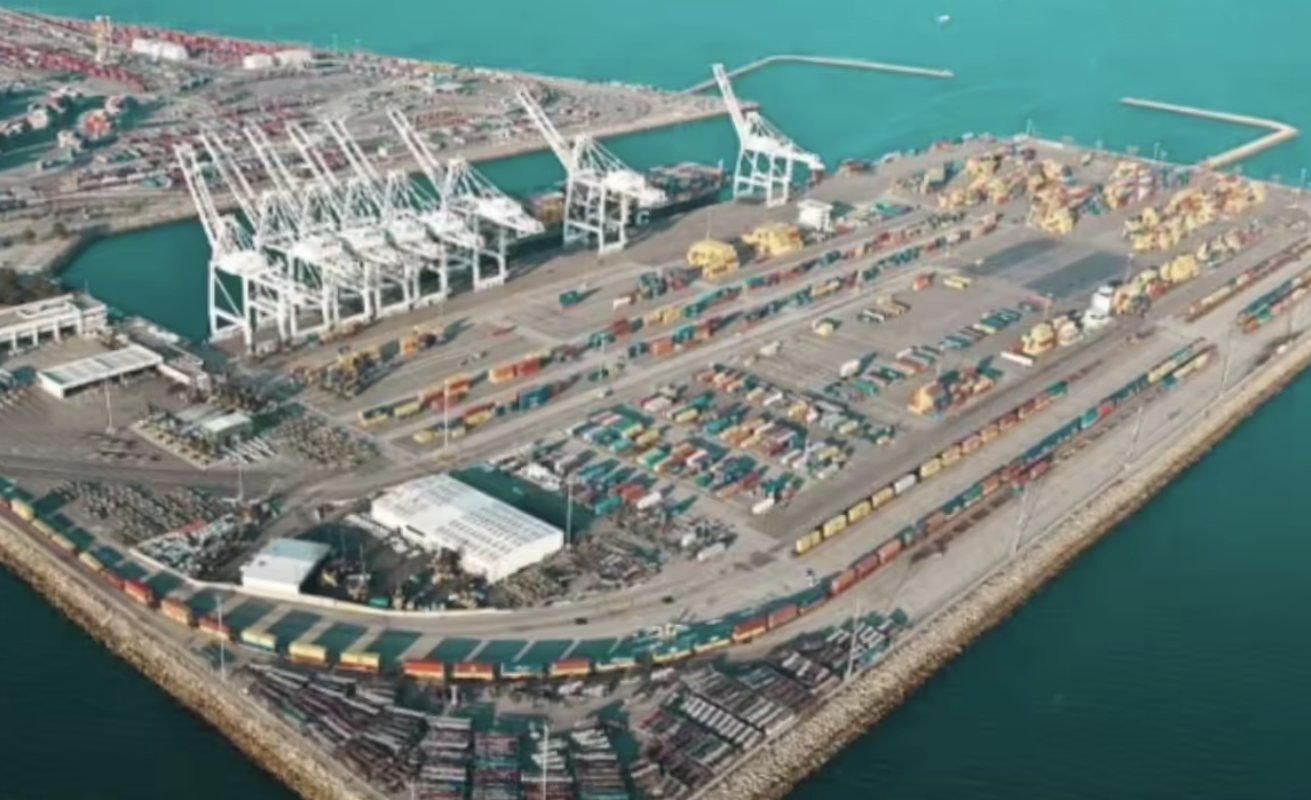
For India, the revocation strikes at the heart of the project which was first envisioned in the year 2003 as a gateway to Afghanistan and Central Asia. Just 140KM away from Pakistan’s china run Gwader port, Chabahar was seen as a crucial counterweight in the International North-south Transport corridor linking the two countries India with Russia and Europe.
Over the years the port has done the shipments of wheat, medicines and other essentials to Afghanistan. Plans were underway to increase the trade of textiles, pharmaceuticals, engineering goods, and other edible products, which strengthened India’s access to landlocked markets.
“The exemption for Chabahar was a recognition of its role in Afghanistan’s reconstruction and regional stability. That rationale no longer applies,”(quoted by Mint) was stated by Dr Amit Singh, an associate professor at Jawaharlal Nehru University’s Special Centre for National Security Studies.
The action also risks India’s inaugural long-term foreign port deal signed in May 2024. In the 10-year contract, Chabahar was to be operated by Indian Ports Global Limited (IPGL) for $120 million, with an additional $250 million in credit available for associated infrastructure. All these investments, as well as Indian participation, are now at risk of being penalized by the US.
The waiver represents Washington’s determination to ratchet up constraints on Tehran’s financial networks and militarism, even if it damages allies like India. For New Delhi, the reversal occurs at a sensitive time, endangering not only economic aspirations but also its overall geopolitical equation in the region.