
By Aarit Gupta
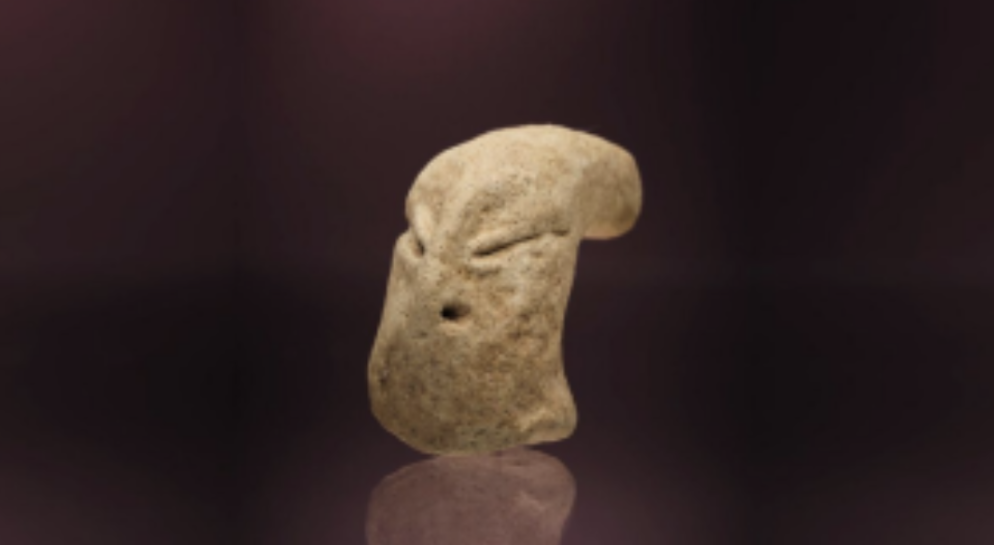
An astounding archaeological discovery in northern Kuwait has made waves and created great effect in the ‘Near Eastern prehistoric studies.’ At one of the oldest settlements in the Arabian Peninsula—the Bahra 1 site, a small clay figurine head has been discovered by the international team of Kuwaiti and Polish archaeologists which appears to be a little more than 7,000 years old, It has some unique features such as having little to no mount with a weirdly elongated skull, a nose that is flat and eyes that are tilted. After being compared with the local Coarse Red Ware ceramics that are a trademark feature of the other find from the Gulf, it is deemed to be unique and different as it is made from Mesopotamian Clay.
Mesopotamia, which was earlier known as the Ubaid culture, was in existence between 5500 and 4900 BCE. It is this time period that the figurine seems to belong to. One fact that stands out is that this figurine is found in the Arabic Gulf region while much similar figurines—known as “ophidian” or “lizard-headed”—have generally been discovered in Mesopotamian locales. The one revelation that this discovery has made to the world is that the geographic influence of the Ubaid artistic and symbolic culture existed far beyond what was earlier documented.
Another striking discovery that makes the figurine something to be researched about deeply is that it was not a grave or a temple where it was found but it came from an ordinary area where daily activities took place—processing of shells and preparing bread and food. However, the figurine seems to have a lot of symbolic meaning despite its normal environment of discovery.
At the University of Warsaw, Agnieszka Szymczak, of the Polish Centre of Mediterranean Archaeology revealed:
“The discovery of the figurine was a total surprise for the whole team, as it was the first such find not just among the over 1.5 thousand small finds excavated from the Bahra 1 site but also from the Arabian Gulf region.”
Professor Piotr Bieliński at the same place reflected on its impact and what it meant beyond it’s discovery now:
“The presence of this figurine at our site raises intriguing questions about its purpose and the symbolic, and perhaps ritual, meaning it may have had for the community inhabiting this settlement.”
Dr. Salman Al-Mutairi, who was not involved with the dig but is a, Kuwaiti archaeologist explained:
“This figurine shows the Gulf was not isolated; it was part of a much larger cultural network in which ideas and symbols traveled along with goods.”
It is not only the discovery of the figurine that is striking and something to be researched about but we also have to see beyond its individual features as the discovery underlines the cultural exchanges which might have been at work in prehistoric Arabia during the Sixth Millenium BCE. As investigations including the differentiated analysis of materials and context continue— archaeologists hope to know and learn a lot about the Ubaid expressed belief, identity, and artistic tradition through this small clay headed figurine and seek to unlock new information about how prehistoric societies worked.