
By Salonee Kulkarni
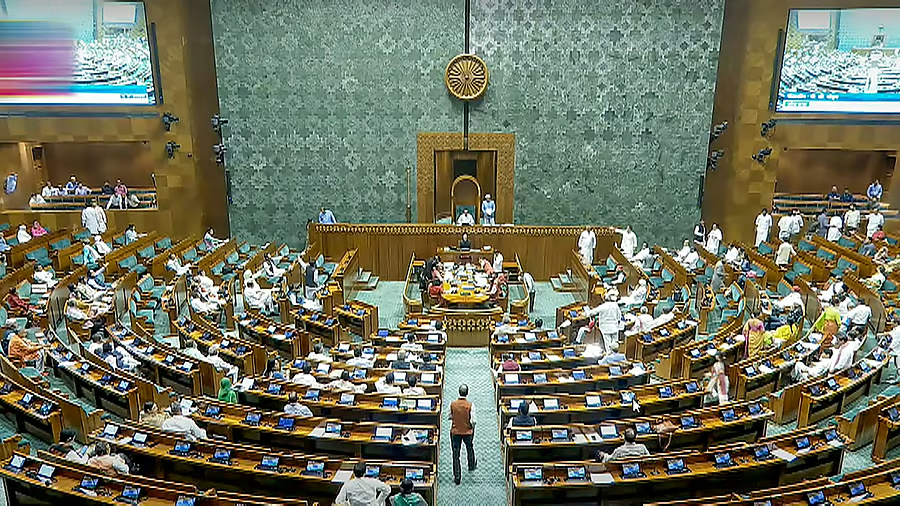
The Lok Sabha passed the Jan Vishwas Amendment Bill, 2025, on 18 August after the approval of the Union Cabinet. The Bill has been referred to a Select Committee of the Parliament. The members will draft a report before the commencement of the next session. The speaker, Om Birla, will choose the members.
Piyush Goyal, Minister of Commerce and Industry, tabled the meeting, stating, “certain enactments for decriminalizing and rationalizing offenses to further enhance trust-based governance for ease of living and doing business.”
A new mechanism has been proposed through the bill, which ensures an “improvement notice” for first-time offenders. Immediate penalties are no longer applied. However, if an offense is repeated numerous times, a monetary penalty is applied.
Global businesses encountered legal difficulties prior to the enactment of the Jan Vishwas Act, 2023, which is the basis for the proposed Jan Vishwas Amendment Bill, 2025. Through the law enacted in 2023, 42 central legislations had been decriminalized and certain minor offenses rationalized. 183 criminal provisions were revoked, encompassing 19 ministries and departments.
The Act aims to reform and evolve according to the current business environment. The next step towards the reform in the act, by passing the Jan Vishwas Bill 2.0, aims to decriminalise more than 100 provisions. This was discussed earlier in the budget speech, which took place on 1st February, 2025, by the Finance Minister, Nirmala Sitharaman.
The acts that have been proposed to be decriminalised include the Tea Act, 1953; the Legal Metrology Act, 2009 and the Drugs and Cosmetics Act, 1940. The Tea Act, 1953 was introduced to regulate and monitor the tea industry. The regulation made it difficult to cultivate tea on a plantation farm because it required robust licensing and registration documents to seek permission to cultivate. The reformation or the repeal of this act will lead to changes in the business environment of the country in terms of the tea industry. It will ensure that the small tea cultivators’ interests are taken into account and a policy is draughted so that an established price regulatory system is developed. This ensures that small tea cultivators and traders can survive in the current tea business industry.
Reforms have been proposed in forty-two acts, which have been proposed under the Jan Vishwas (Amendment of Provisions) Bill, 2023. In Jan Vishwas 2.0, thirty-six minor offenses are to be decriminalized, ensuring trust-based governance.