
By Piyush M Padwale
With the establishment of a new 200-acre BrahMos Aerospace Integration and Testing Facility in Lucknow as part of the Uttar Pradesh Industrial Corridor (UPIC), Uttar Pradesh is well on its way to transforming itself into the key defence manufacturing capital of India.
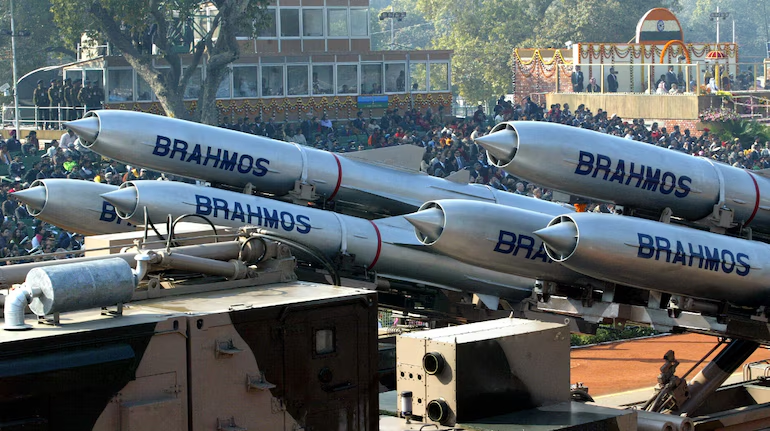
An initiative in work since 2018 and inaugurated by the Defence Minister Rajnath Singh on May 11, 2025, the facility is designed with the objective of designing and performing end-to-end assembly tests for the BrahMos supersonic cruise missile, one of India’s most advanced conventional weapon systems.
The facility works on all possible variants of the missile, ranging from the classic 290 km version to extended-range and next-generation variants, looking at an annual projection target of producing 80-100 missiles with a strong growth projection.
Being defined as a “city within a city, the facility consists of large infrastructure halls, testing infrastructure, and robust quality control setups. It has already employed hundreds directly, including a wide network of Indian suppliers and supports over 200 public and private partners, further boosting employment and technical skill development.
The ongoing discussion and negotiations with international exporters for the BrahMos missiles further reflects that this UP-led initiative is not limited to domestic defence but also looks to leave a mark in the global arms markets as well.
Reports suggest that the defence buildup has increased since the heightened strategic focus during the Operation Sindoor in early 2025, where BrahMos played a key role, reinforcing itself as a credible conventional deterrent, leading the way for a boosted confidence in the Made In India defence systems, further accelerating India’s push towards its Atmanirbhar tag in the field of defence exports.
The Lucknow facility acts as a strong launchpad for this very idea and a great step towards the lighter, next-generation BrahMos-NG, which will be more versatile and integrable on a wider range of platforms.