
By Sinjini Mitra
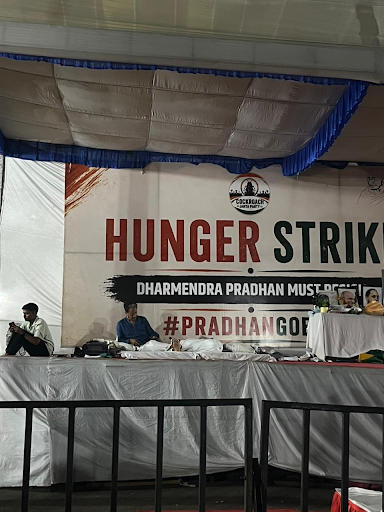
The NEET-UG 2024 paper-leak controversy has brought students to the streets, turning an examination dispute into a larger debate over fairness, accountability and the credibility of India’s competitive examination system. At Jantar Mantar, students gathered demanding answers over alleged irregularities, while activist Sonam Wangchuk joined them and began an indefinite hunger strike.
For the students, the protest is now about more than the exam itself. It concerns the entire education system and the consequences students face after the exam is conducted. NEET determines admission to medical colleges, making it a high-stakes test on which years of preparation, financial investment and career aspirations depend.
“For me, Sonam Wangchuk’s movement represents standing up for students who feel that their concerns are not being heard. His presence gave visibility to an issue that students have been struggling with,” said Aditya Bisht, a NEET aspirant at the protest.
But was the protest about Wangchuk himself, or a larger political issue?
“This protest is not only focused on Sonam Wangchuk. Yes, his presence has given the students a stronger voice, but the real issue is the future of thousands of children who worked honestly for this examination. They deserve a system where their hard work is not undermined by irregularities, where they are appreciated for their effort and get the result they deserve,” said the parent of a NEET aspirant.
The students also questioned whether young people are being heard by political institutions.
“If I’m being real, we students are politically aware of everything, but I don’t think we are always politically heard. For the government, we are just kids busy scrolling through reels. We shouldn’t have to protest every time we want the government to acknowledge our concerns in the first place,” said Amisha Pundir, one of the protesters.
Their message to the government was equally direct: “We want transparency and accountability. Students who worked honestly should not have to pay the price for irregularities in the examination system.”
Anita Das, a political science teacher from Kolkata who attended the protest, believes the student presence reflects a shift in the nature of youth politics in India. According to her, the participation of students shows that young people are not politically unaware or indifferent, they do care. When an issue directly affects their careers and future, they are willing to move from online discussions to physical political participation.
Social media has also transformed student mobilisation. Information about protests and examination irregularities can reach thousands of students within hours through Instagram reels, tweets and memes.
“Social media has made political mobilisation faster and more accessible. Students can share information, organise themselves and create public pressure. But online activism alone is not enough. Digital engagement has to translate into sustained action if students want to influence policy,” Das said.
“Governments respond when an issue develops political significance. Student movements can influence policy when they build wider public support, maintain pressure and ensure their demands remain part of the public conversation.”
The impact, however, will depend on what happens after the protest.
“Politically, we should watch whether the government responds to the demands, and whether those demands lead to any concrete changes. The impact should not be measured simply by the size of the crowd, but by whether the protest produces institutional or policy-level change,” Das said.
For the students gathered at Jantar Mantar, the issue remained deeply personal.
“If we are expected to compete fairly, the system should also be fair to us,” Bisht said.
The NEET controversy has thus become more than a dispute over an examination. It has become a test of trust between young citizens and the institutions responsible for their future. At Jantar Mantar, the students were not simply demanding answers about a paper leak, they were also asserting their stake in the country’s future, both in the physical and digital world.