
By Shivani Menon
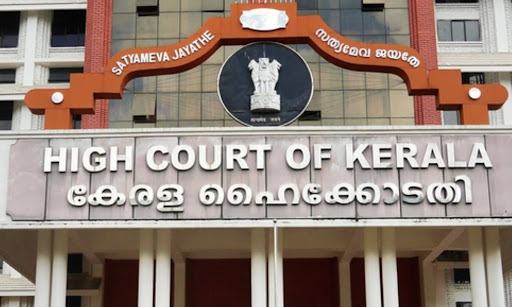
Eight years after the killing of SFI leader and Maharaja’s College student Abhimanyu, the Kerala High Court has granted the Sessions Court four more months to conclude the trial, bringing renewed attention to one of the persistent challenges facing India’s criminal justice system, delays in completing trials.
Justice Kauser Edappagath directed the Sessions Court to conclude the proceedings within four months, making it clear that no further extension would be granted. The direction came after the trial could not be completed within the earlier timeframe fixed by the High Court.
For those involved in a criminal case, a prolonged trial can mean years of uncertainty. While a victim’s family waits for a verdict, an accused person may also remain under the shadow of a pending criminal proceeding. Witnesses are required to return to court repeatedly, while the passage of time can affect the recollection of events.
According to advocate Neeraj Krishnakumar, the four-month deadline is significant because it provides a practical mechanism to move a long-pending case towards completion.
“Eight years is a long time for life to remain on pause after a tragedy. While the rest of the world naturally moved forward, those tied to the case- whether it is a grieving family desperate for answers or individuals waiting for their day in court – have remained stuck in a slow-moving process.” he said.
Advocate Neeraj said the deadline should not be viewed as an attempt to compromise the rights of either side, but rather as a way of ensuring that procedural delays do not prevent the case from progressing. “This isn’t about blaming the trial judge or pointing fingers over past delays—it’s just a practical way to get a stuck case moving again. By setting a strict deadline, the High Court forces the trial court to push this file to the top of the list, hold daily hearings, and question witnesses without long gaps.”
He said the perception that high-profile cases are treated differently does not apply within the courtroom. Criminal trials follow the same legal principles regardless of the amount of public attention surrounding them. “In court, there is no such thing as a ‘high-profile’ or ‘low-profile’ case. Whether you look at the new criminal codes – the BNS and BNSS – or the old IPC and CrPC, every murder trial follows the exact same rules.”
He said the burden of proof remains with the prosecution and the accused continues to have the same constitutional rights irrespective of public interest in a case.
According to Advocate Samyukta P Menon, the larger problem lies in the structural challenges faced by the judicial system. Multiple accused persons may exercise their independent legal rights, while complex forensic material, extensive witness lists, petitions before higher courts and an overburdened subordinate judiciary can all contribute to delays.
“Where multiple defendants are involved, each exercises independent rights to counsel, legal challenges, and interlocutory petitions before superior courts. Layer these procedural safeguards over complex forensic records, extensive witness lists, and an overburdened subordinate judiciary, and delays become structural.” she said.
She also cautioned against allowing media coverage and public opinion to influence judicial proceedings. “A judge cannot determine someone’s guilt based on what is being broadcast on television, the public’s outrage, or the latest trends on social media.”
The four-month deadline places the trial under greater supervisory scrutiny. According to Neeraj, failure to complete the proceedings within the prescribed period would not automatically result in the case being dismissed or the charges being dropped.
However, the reasons for the delay would become significant if further directions were sought.
“When the High Court sets a firm deadline for a trial, missing it is no minor administrative hiccup—it puts the trial judge under direct supervisory pressure from above.”
He said prolonged delay can also become relevant to the accused’s constitutional right to a speedy trial under Article 21, particularly when the delay is not attributable to the defence.
A strict deadline can also change the manner in which the trial is conducted, with fewer routine adjournments and greater emphasis on completing the examination of witnesses and presentation of evidence.
The demand for a speedy trial does not mean that the judicial process should be rushed at the expense of due process. Courts must balance the interests of the victim, the prosecution and the accused.
Samyukta said prolonged delays can have consequences for everyone involved. “When a criminal trial drags on for years, the law doesn’t treat it as business as usual – it is a violation of basic rights. The Supreme Court has made it clear time and again that a speedy trial is a fundamental right under Article 21.”
She said delays can leave victims and their families waiting for closure while accused persons may remain incarcerated for years before their guilt or innocence is determined.
The Abhimanyu case also raises questions about the larger problem of judicial pendency in India.
Neeraj said the issue cannot simply be attributed to judges or trial courts, which themselves operate under considerable pressure and large case backlogs. “Before we criticize the judicial system, we must confront the reality: judges and court personnel are overwhelmed with cases. In both trial courts and High Courts, a single judge frequently manages a daily docket of 150 to 300 cases.”
He argued that increasing the number of judges and improving the judge-to-population ratio should be accompanied by better case management and technological infrastructure.
Among the measures he suggested were filling judicial vacancies, introducing stricter pre-trial case management, improving forensic infrastructure and using technology to reduce logistical delays.
“You can’t demand speed while running courts at half-capacity,” said Samyukta.
Neeraj also suggested digital summons, faster forensic reports and allowing expert witnesses to testify through video links where appropriate. For him, the challenge is ultimately about finding a balance between thorough judicial scrutiny and timely justice. “The struggle of modern criminal jurisprudence is balancing this meticulous, evidence-based process with the public’s demand for swift closure – ensuring that external pressure never replaces the slow, deliberate search for legal truth.”
The High Court’s four-month deadline therefore carries significance beyond the Abhimanyu case. It places the focus not only on bringing a long-pending trial to its conclusion, but also on the larger question of how India’s justice system can ensure that serious criminal proceedings do not remain unresolved for years.