
By Nethra Sailesh
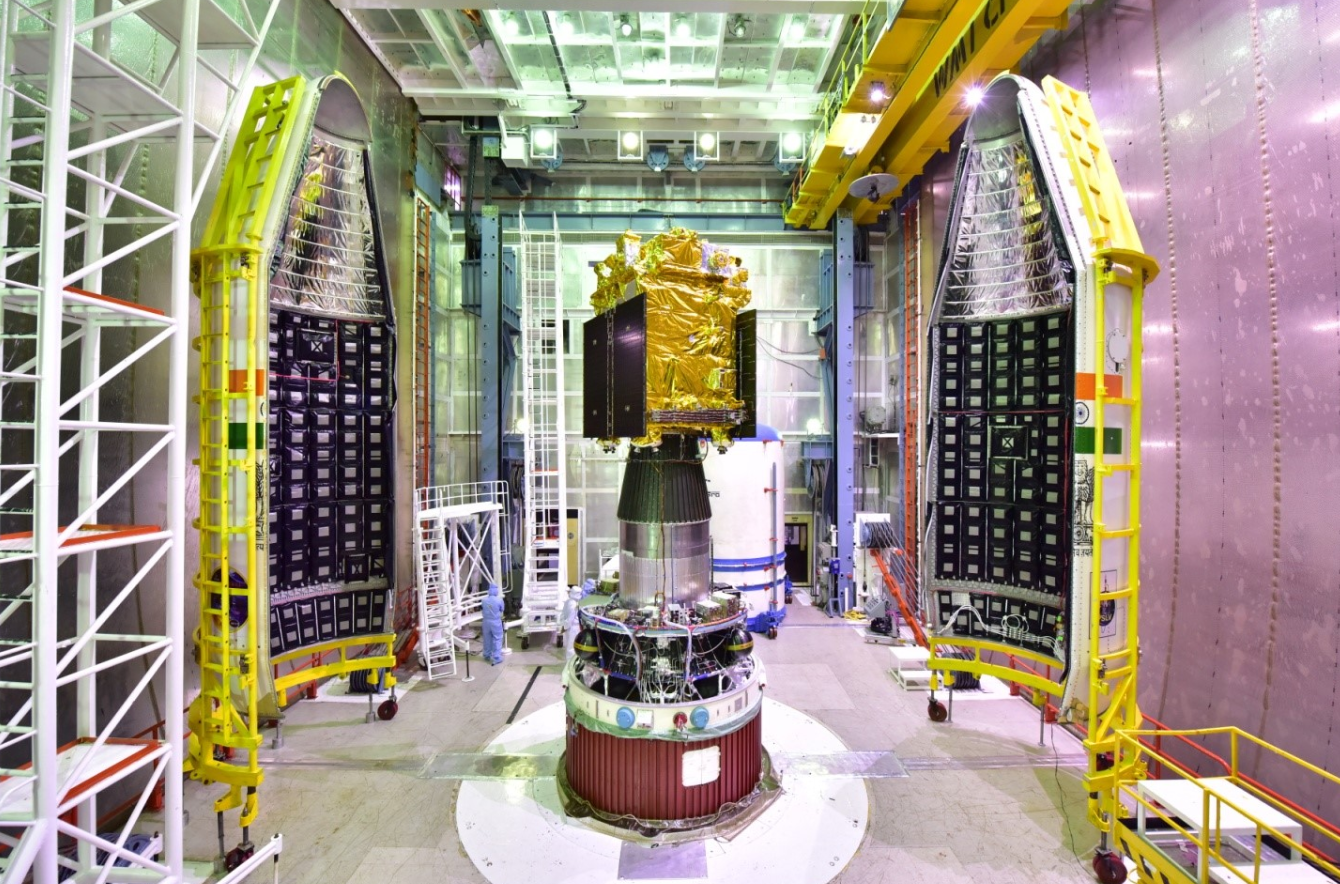
Scientists at the Indian Institute of Astrophysics (IIA), in collaboration with NASA, have used ISRO’s dedicated solar mission spacecraft, Aditya-L1, to estimate the parameters of coronal mass ejections (CMEs).
CMEs are ejections of plasma and magnetic fields from the Sun’s outer atmosphere, known as the corona, into space.
This marks the first spectroscopic observations of CME in a visible wavelength range. In order to do this, they used the Visible Emission Line Coronagraph (VELC) payload on Aditya-L1, which allowed them to the CMEs very close to the Sun’s visible surface itself, for the first time.
As reported by news sources, this mission also provides a view of the sun every day for 24 hours, as it is placed in a location where the sun never sets. Through this, they were enable to gauge the estimated electron density, energy, mass, temperature and speed of a CME very close to the Sun.
Earlier missions would use ultraviolet or X-ray instruments to study solar phenomena. Researchers part of the mission intend to study the eruptions, which will help predict space weather forecasting or predict solar storms before they reach Earth.
This follows after the mission’s success in catching also caught the first-ever image of a solar flare ‘kernel’ back in February. The Aditya-L1 mission was launched on September 2, 2023, by the ISRO PSLV C-57 rocket. In 2024, the spacecraft was placed in an orbit that is 1.5 million kilometres away from Earth towards the Sun.