
By Gitika Sharma
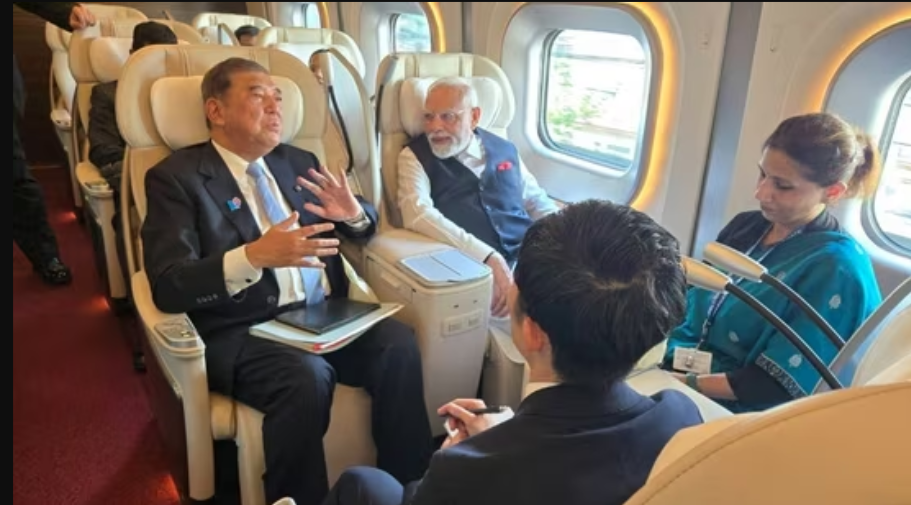
In contrast to US administrations’ tough measures against India’s economy through tariffs, Japan has raised its investment goal from 5 trillion yen ($34 billion) to 10 trillion yen ($68 billion). This move is viewed as a sign of trust towards India after Prime Minister Narendra Modi’s two-day trip to Japan concluded for the 15th India-Japan Annual Summit.
The summit can be called as a positive sign for India with the ongoing turmoil going on with the US President calling India a “dead economy”. The visit marked the beginning of massive investment commitment from Japan’s end, with 13 MoUs signed, semiconductor boost, space cooperation with prefecture-state partnership as the Indian Prime Minister met 16 Japanese governors for state-prefecture collaboration in trade, startups and culture.
Behind the figures showing how much money Japan has invested in India, there’s been a steady flow of positive signals about trust and cooperation between both countries. The goal was to invest $5 trillion in both public and private sectors by 2026. The goal was met by 2025, and it’s now set at 10 trillion yen.
Nippon Steel has invested Rs. according to sources. Gujarat received $170 million, and Andhra Pradesh got $635 million for their steel projects. Over 170 Memorandums of Understanding were signed over two years, totaling commitments worth more than $13 billion.
Moreover, concentrating on SMEs that have Japanese industry partnerships will help Indian SMEs join in global supply chains. With Japanese support helping India’s countryside grow by making use of clean energy and encouraging farming and lasting progress.
India and Japan are creating strong ties for future business deals centered around selling goods and making products together with Japanese companies. Furthermore, by working with Fujifilm and Tata, India’s export growth will be boosted, enhancing its role in international trade networks. Osaka Gas is expanding renewable energy in India for cleaner global power supply.
This would further ensure the motto, “Make in India with Japan, export to the world.” The raw materials for biogas facilities in rural India are supplied by Gujarat, Assam’s port handles cargo for Japan’s research centers, Indian farmers collaborate with AI experts in Bangalore and Tokyo, semiconductor companies exchange knowledge with Japanese firms, these partnerships aim to create a new era of collaboration between India and Japan.
Following this, PM Modi heads to China for the SCO Summit for talks with Xi Jinping and Vladimir Putin. The visits signal at reaffirming strategic and economic ties with nations in the shifting world trade dynamics.