
By Swastika Sahu
On August 29, 2025, the Supreme Court issued a notice to the Centre on a written petition by former Rajya Sabha MP Dr. Subramanian Swamy, asking the Union Ministry of Culture to respond to his plea for declaring the Ram Setu as a monument of national importance.
A Supreme Court bench, comprising Justices Vikram Nath and Sandeep Mehta, “We will issue notice to the Centre and make it returnable in four weeks,” they said. The petition seeks to declare Ram Setu a national heritage monument.
Representing Swamy, senior advocate Vibha Makhija argued that the government is obligated to protect the Ram Setu from any desecration, as it holds immense religious and cultural significance for millions of pilgrims. The petition highlights that the Ram Setu and related historical sites are integral to Indian heritage and that pilgrimages to Kashi are considered incomplete without a visit to Rameswaram.
In his petition, Subramanian Swamy argues that the government is obligated to preserve the Ram Setu, which he considers a matter of faith and a revered pilgrimage site. His advocate, pointed out that Swamy’s request has been with the government since 2023, with a renewed submission in May, yet it remains unanswered. The petition also seeks an official survey by the Archaeological Survey of India and the Geological Survey of India to recognize the Ram Setu as an Ancient Monument of National Importance. Swamy stated that his initial litigation on the matter had already established the existence of the Ram Setu, and despite a 2017 ministerial meeting, his demand for its national monument status has not been fulfilled.
Since 2007, the Supreme Court has halted the Setusamudram Shipping Channel Project. In response, the Central government stated it would explore an alternative route for the project to avoid damaging the Ram Setu, acknowledging the “socio-economic disadvantages” of the original plan.
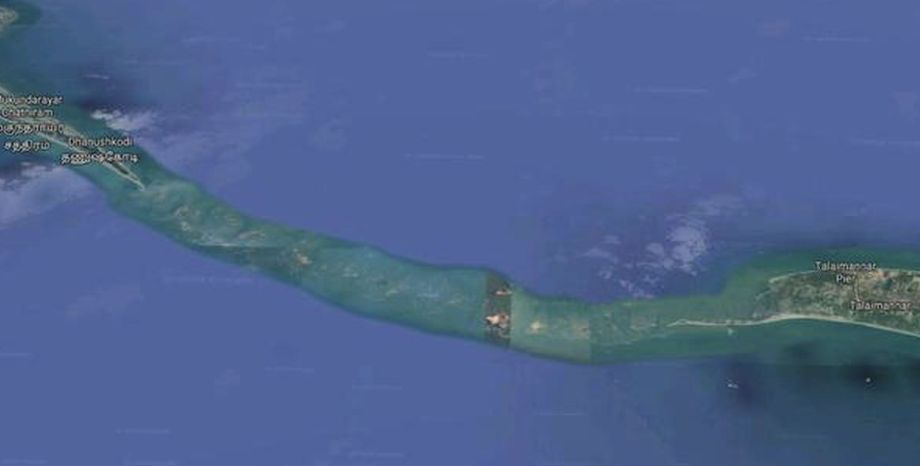
The project, which has faced opposition from various political, environmental, and Hindu religious groups, aims to create an 83-kilometer-long deep-water channel by dredging and removing limestone shoals. This proposed channel would link Mannar with the Palk Strait. The Ram Setu, also referred to as Adam’s Bridge, is a chain of limestone shoals located between Rameswaram Island in India and Mannar Island in Sri Lanka.
In the latest petition, Subramanian Swamy argues that the Ram Setu meets the criteria of an ancient monument as defined by Sections 3 and 4 of the Ancient Monuments and Archaeological Sites and Remains Act, 1958. He contends that this makes it the government’s duty to declare the structure a site of national importance.
The petition also cites Section 16 of the same Act, which mandates the protection of such sites from misuse, pollution, or desecration. Previously, the Supreme Court had criticized the government for its delay in the matter, questioning why it was “dragging its feet” when a counsel requested more time to get instructions and file a response.