
Written by Gitika Sharma
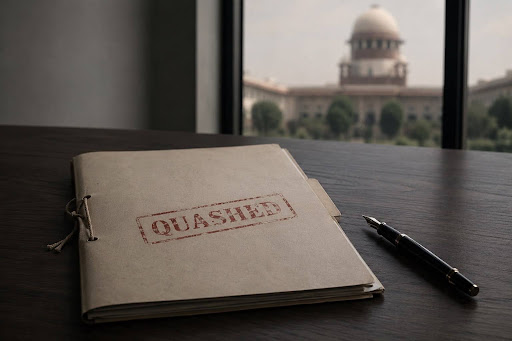
In 2017, a woman walked into a Family Court and asked the law to see something it has historically refused to see: that what happens inside a marriage bed can still be violence. Eight years and one Delhi High Court order later, the case is closed. Not because a judge decided who was telling the truth. Not because the marital rape exception was struck down. But because, somewhere along the way, two people who once fought each other in an FIR decided to stop fighting.
It is a quiet ending to a case that touches one of the loudest unresolved questions in Indian law.
The Complaint
The case, heard before Principal Judge Pawan Singh Rajawat, began with a complaint that read like the private history of a marriage laid bare in legal language. The woman alleged that her husband had repeatedly forced her into sexual intercourse without her consent, coerced her into acts she described as sexual violence, and accompanied it all with threats and intimidation. She said it was not a single bad night but a pattern that repeated itself over years. She sought criminal prosecution under charges including rape and cruelty, and asked the court for protection under the Domestic Violence Act.
Her husband denied all of it. In his written statement, he called the complaint false, born out of a marriage already breaking down over other disputes, not sexual violence.
For years, that was where the case sat: two sworn, opposing accounts, and a docket that neither confirmed nor closed either version.
How It Ended
It didn’t end in a verdict. It ended in a settlement.
Advocate Rishi Tewari, who represented the matter, said the quashing came down to something the criminal justice system sees often in matrimonial cases but rarely gets asked to explain well: two people deciding, on their own terms, that the fight was over. “These cases don’t go for further proceedings when the two parties have mutually decided to this conclusion,” Tewari said, a routine legal mechanism, but one that closes cases quietly, without the public reasoning a full trial verdict would have produced.
Tewari didn’t stop at defending the outcome. He pointed to something bigger. “The laws need some reforms,” he said, “and there has to be a way to go about it,” a lawyer, on the winning side of a quashing, still naming the gap in the very system that let his client walk away.
Counsel for the complainant did not respond to requests for comment.
A Case That Isn’t Really About One Marriage
Ask any criminal lawyer who works matrimonial cases, and they’ll tell you: a quashing on settlement grounds answers almost nothing about the law itself. It closes a file. It doesn’t test an argument.
That’s precisely the caution Advocate Ankit Yadav, who practices at the Punjab and Haryana High Court, raises. “This quashing petition cannot be viewed in isolation,” he said. “It sits within the larger constitutional debate before the Supreme Court on the marital rape exception.” For Yadav, the High Court’s job in a quashing petition was never to rule on whether the exception is constitutional; it was narrower than that.
“The High Court’s role… is not to decide the constitutionality of the marital rape exception, but to determine whether the complaint discloses a prima facie offence and whether allowing the prosecution to continue would amount to an abuse of the legal process,” he said. “If the allegations are specific and supported, the matter should ordinarily proceed to trial; if they are demonstrably mala fide or legally unsustainable, quashing may be justified. The broader question of whether the marital rape exception itself should survive is for the Supreme Court and Parliament, not to be decided indirectly through an individual quashing petition.”
It’s a careful, almost surgical distinction, and it’s exactly the kind of distinction that gets lost the moment a headline says a “marital rape case” was “quashed.”
The Law Underneath the Case
Even though this case turned on settlement, not statute, the provision hovering behind every such complaint hasn’t gone anywhere. Under Exception 2 to Section 63 of the Bharatiya Nyaya Sanhita, 2023, the law that replaced the Indian Penal Code, sexual intercourse or sexual acts by a man with his own wife, provided she is not under eighteen, do not legally constitute rape. It’s the same exception that lived for over a century in Section 375 of the old IPC, carried into India’s new criminal code with its language almost untouched.
That exception is currently the subject of a constitutional challenge before the Supreme Court, with hearings that began in January 2024 after several petitions were clubbed together. In October 2024, the Union government filed an affidavit opposing its removal, arguing that criminalizing marital rape would be “excessively harsh” and could destabilize marriages, and urging the Court to leave the question to Parliament instead. After the retirement of the then Chief Justice, hearings stalled, and as of early 2026, the matter sits before a reconstituted bench with no date set for a final hearing.
Which means the exception this case never directly confronted, the one that decides, in law, whether what a wife experiences can even be called rape, is still waiting on a bench, years after it first reached one.
The Human Stakes Behind the Legal Argument
For gender law expert Dr. Falguni Vasvada, cases like this one are never really about a single marriage, even when they’re filed, argued, and closed as one. “This case is about more than one marriage; it reflects the unresolved tension between bodily autonomy and the institution of marriage in India,” she said. She’s careful not to dismiss the concern that drives much of the resistance to reform. “While courts must guard against false accusations, that concern cannot overshadow the reality that consent does not cease to matter after marriage,” she said. “The larger question is whether the law should continue to treat married women differently when it comes to sexual violence.”
It’s a question this case doesn’t answer. It’s a question this case wasn’t even asked to answer. And that, in the end, may be the real story: not what one file concluded in 2025, but what it never had to.
What’s Left Unresolved
The file is closed now. The woman who filed it, the man who denied it, and the eight years in between are, as far as the court record is concerned, finished business.
But the exception that shaped everything around the edges of this case, that decided what could be alleged, what could be defended, what a settlement could quietly make disappear, is still sitting exactly where it was when the complaint was first filed in 2017: on a Supreme Court docket, waiting for a bench to decide whether marriage should still be a legal boundary around consent.