
By Aditi S Bade
In a major counter-terrorism operation, the Jammu & Kashmir police, together with the Haryana police and other agencies, have brought to light what they call a “white-collar terror module” that is connected to the already banned Jaish e Mohammed (JeM) and Ansar Ghazwat ul Hind (AGuH). The operation was set in motion with a doctor-turned-operational person’s tip-off, which resulted in the confiscation of approximately 360 kg of suspected material for the making of IEDs based on ammonium nitrate from a flat in Faridabad rented for that purpose.
The investigations started when November 19 saw posters in favor of JeM appear in the Bunpora-Nowgam region of Srinagar. The CCTV and forensic traces led to the identification of Dr. Adil Ahmad Rather, a doctor from Anantnag, who was subsequently arrested from Saharanpur, Uttar Pradesh, for his supposed participation in the poster campaign. His questioning opened up another doctor-operational connection in Faridabad, Dr. Muzammil Ahmad Ganaie (also known as Musaib), a lecturer at Al-Falah University, who had taken a flat in Dhouj, Faridabad, about 15 days before the explosives and arms were to be stored there.
During the raid, the law enforcement agencies seized 360 kg of suspected ammonium nitrate which was packed in twelve suitcases and a bucket, and to that added bomb-making tools, an assault rifle with three magazines, 83 live rounds, a pistol with eight live rounds, two extra magazines, 20 timers, four batteries, remote controls, wiring, walkie-talkie sets and heavy metal components. Further inquiry indicated that this was just part of a more extensive haul: approximately 2,900 kg of IED-making (explosives, chemicals, timers, etc.) material were seized in four different places in total.
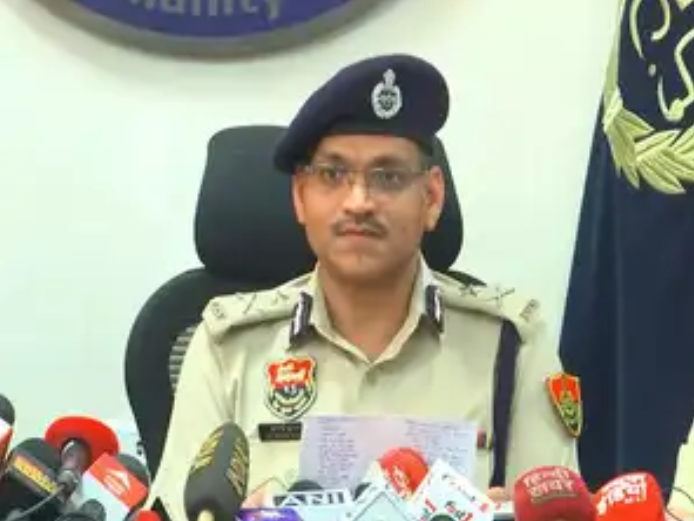
The total weight of the seizure, which was 360 kg at one place, is very scary indeed. Ammonium nitrate in such huge amounts is a powerful explosive and when combined with weapons and timers, it indicates that there are plans for large-scale operations. The Commissioner of Police, Faridabad, Satender Kumar Gupta, called it the destruction of a significant terror module. The police arrested two doctors (and perhaps a network of other doctors/students) which is a clear indication of a change in terrorists’ recruiting methods; it is not fringe elements anymore but professionals who are getting radicalized and used. The Jammu and Kashmir Police referred to this as a “white-collar terror ecosystem” which was taking advantage of the professionalism and academic learning to attract funds and procure logistics under the cover of charity or social fronts.
Police have indicated that more arrests will be made and that the forensic analysis of the confiscated materials is still in progress. Women’s involvement is being focused on a Lucknow-based woman doctor (Dr. Shaheen) and a woman doctor from Al-Falah University whose car was found carrying the assault rifle associated with the case. Authorities are looking into the financial aspect to find out the routing of the money through professional networks for the support of terror activities. The operations across states (J&K, Haryana, and UP) and the involvement of overseas handlers indicate that the module has a trans-national reach.
This incident brings up a lot of issues. First, the connection of terror logistics with the civilian professional networks makes the detection process harder: if doctors, professors, or students become operatives, the usual signs of radicalisation might not be so easy to see. Next, the large quantity of materials like 2,900 kg of IED components denotes plans that are much larger than just single attacks, maybe even several coordinated strikes. Finally, the cooperation between state police departments (in J&K, Haryana, and UP) not only emphasizes the need for inter-jurisdictional cooperation but also points out the fact that terror modules take advantage of jurisdictional gaps.
The bust in Faridabad is a significant setback for the entire terror supply chain that was linked to JeM and AGuH. It points out the technologically advanced methods of terror recruitment and support in India, where professional disguises and academic portals are being utilized for radicalism and operations. Case will, as investigations go deeper, more likely reveal the funding, procurement, and operational architecture of this network thereby teaching how to foil similar modules in the future.