
By Ivashree Saxena
When India and South Africa meet for the T20I series starting December 9, it will feel far bigger than a routine early season bilateral. With the 2026 T20 World Cup just 18 months away the series has quietly become a selection battleground, a tactical workshop and possibly a preview of two evolving contenders.
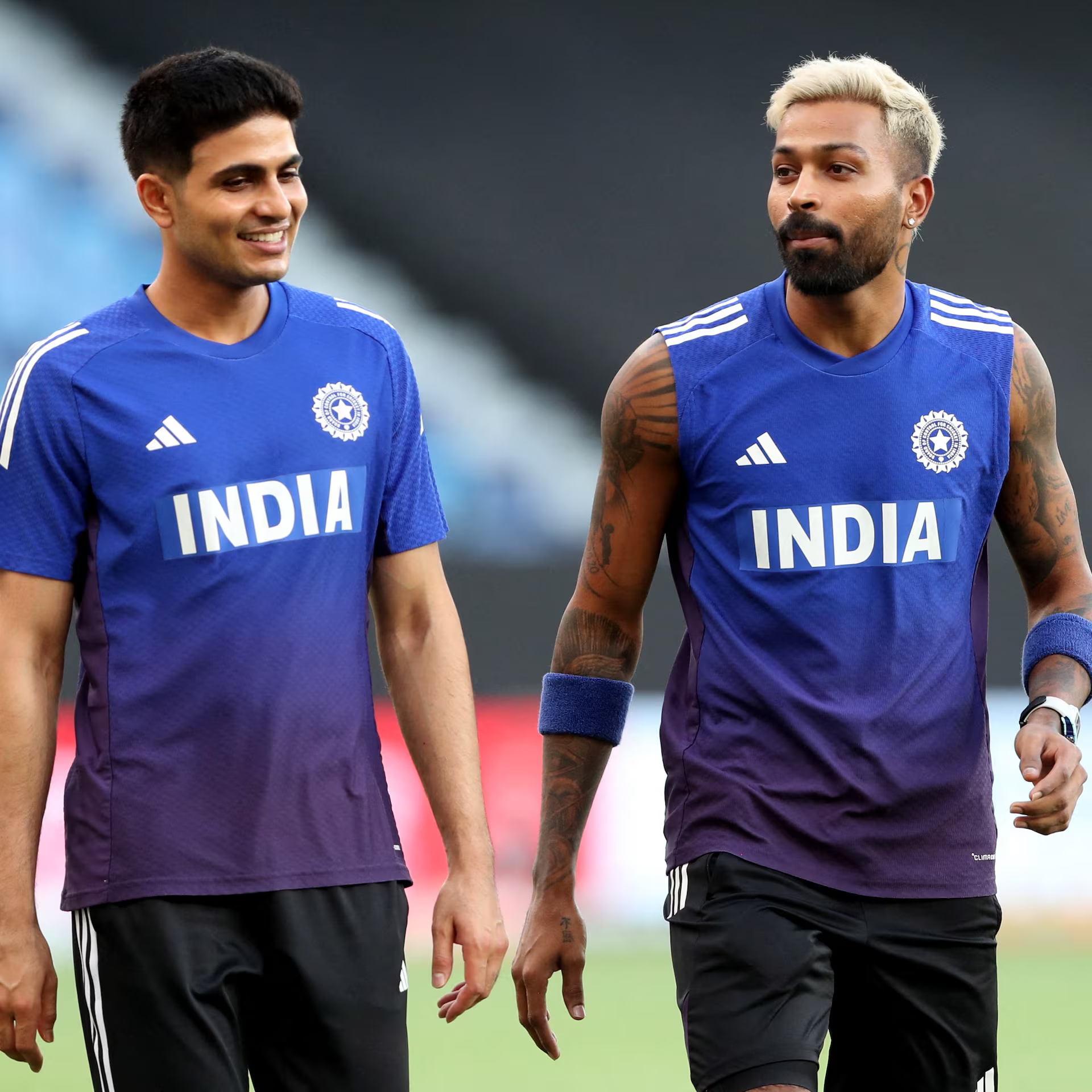
For India, the biggest storyline is the return of Shubman Gill and Hardik Pandya, both cleared after separate injury layoffs. Gill’s comeback gives India stability at the top, he averaged nearly 30 in T20Is last season and produced a century against New Zealand earlier in his short career, proof that he can anchor and accelerate when needed. With Ruturaj Gaikwad, Yashasvi Jaiswal, and Gill all competing for the top two slots, every innings in this series may tilt the balance.
Pandya’s return carries even greater weight. The all-rounder is closing in on two major milestones 2,000 T20I runs and 100 wickets numbers that underline his value as one of the format’s few genuine three dimensional players. His fitness has been a recurring national concern, and this series could be the first sign of whether he can shoulder leadership and all-round responsibility through a full World Cup cycle.
India entered the series with recent momentum too, having dominated four of their last five T20Is against South Africa. Yet history offers a surprising caution India have never won a T20I at Cuttack’s Barabati Stadium, the venue for the opening match. Both previous encounters there went South Africa’s way and the Proteas are only too happy to remind everyone of.
South Africa, meanwhile, arrive with a squad that mixes continuity and urgency. Several veterans including players in their early 30s are fighting to extend their careers into one more World Cup. Younger hitters and bowlers, particularly in the middle order and pace attack, are pushing hard as the Proteas look to rebuild the explosive depth that once defined their white-ball cricket.
Add a new red-soil pitch at Cuttack, expected to offer good bounce and high-scoring conditions, and the series gains another layer of intrigue. Dew is likely to influence matches too, making toss decisions almost strategic experiments.
Both camps are calling this a “dress rehearsal,” but the stakes are clearly more serious. With selection spots, leadership roles, and early World Cup identity on the line, India vs South Africa suddenly feels like the first chapter of cricket’s next big storyline.