
By Kritika Gangwar
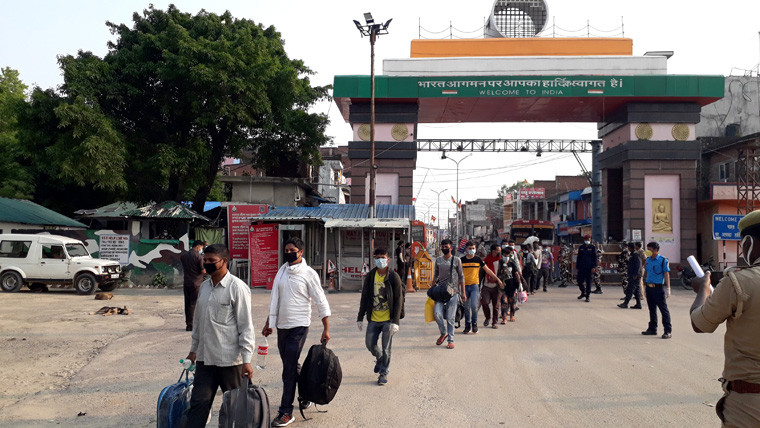
The India – Nepal border is said to remain closed from March 2 midnight to March 5 midnight due to the general elections that are scheduled to take place on March 5 in Nepal, officials said on Friday. The temporary shutting of the border has been announced to make sure the polling carries out smoothly and securely.
Sudhir Sharma, in charge of the Integrated Check Post (ICP) at Rupaidiha in Uttar Pradesh’s district of Bahraich as said by the Ministry of Home Affairs of Nepal in a formal notification issued on February 26 regarding the closure around the border. As per the directive, all the borders sharing a boundary with India, along the Banke district will remain closed while the elections go on. The move is intended to create conditions for free, fair and peaceful elections.
The trade activities like import and export operations through the ICP will also remain paused for the given period of time. However, officials clarified that essential services are not going to be disrupted because of elections. The movement of critical medicines, emergency supplies and similar other necessary products will be allowed to be transported but under strict supervision.
Commandant Ganga Singh Udawat of the 42nd Battalion of the Sashashtra Seema Bal (SSB) said that the security agencies have been told to restrict the movement along the border for the given dates of closure and elections. He noted that security has already been heightened and the people with actual reasons and identification proofs will be permitted to cross after thorough checks.
The citizens have been advised by the authorities of both the countries, India and Nepal to avoid non-essential travelling during the given time period. However, exemptions to some extent may be granted for emergency situations. A large number of Nepali nationals residing in India for employment and business opportunities may get their requests approved to return home to vote. The patients with serious illness and vehicles carrying essential commodities might also receive clearance from security personnel.
The elections that are coming up in Nepal after a period of political unrest triggered by widespread protests last year. Public frustration regarding corruption, unemployment and inequality forced the resignation of the government authorities. Now, voters will be electing representatives to the House of Representatives, the lower house of Parliament, which will determine the next big power, the Prime Minister of the country through votes.